

A laminate décor approved under showroom lighting may later spend every afternoon beside a sunlit window. The sample shows the starting color; it cannot show how that color will hold up over time. Laminate flooring lightfastness testing assesses visible change under defined light exposure. Before approving a décor for a bright room, buyers need to know which finished surface was tested and under what conditions.
What Can Cause a Laminate Décor to Change in Appearance?
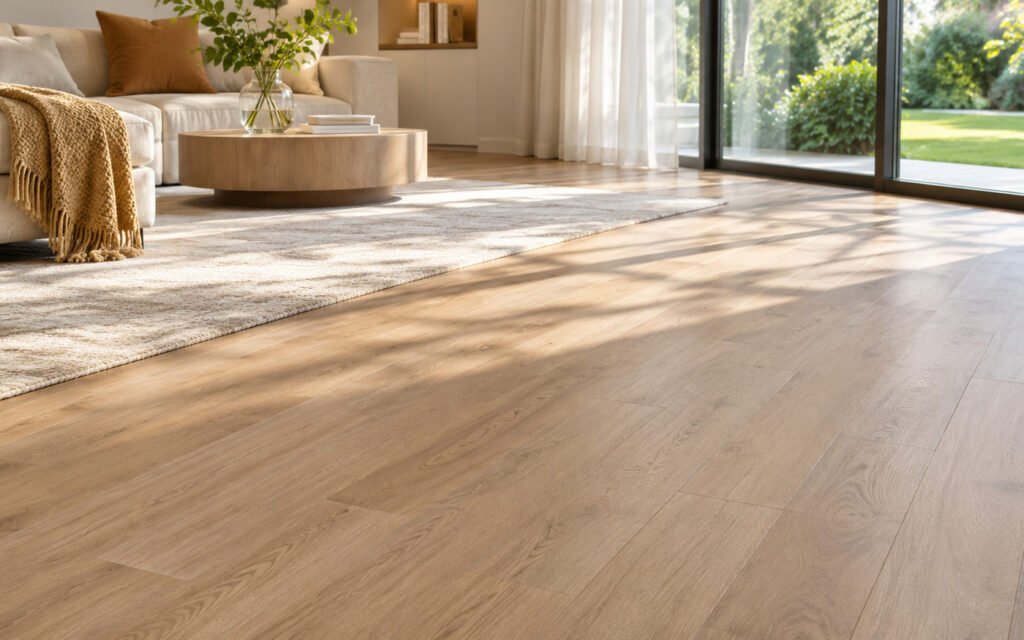
The wood-grain print sits beneath the transparent wear surface. When reviewing a change in color, consider the décor and surface construction alongside the amount and duration of light exposure. The conditions in the room help explain what a test result may mean for the installed floor.
Separate light exposure from other sources of variation
Compare the pieces under the same light and from the same angle before deciding that the décor has faded. Planks from different lots may already differ, while a rug or cabinet can shield one area from daylight. Note where each piece came from and how it was exposed. Lanhe’s explanation of decorative paper preparation for laminate flooring covers the printed layer and its initial color consistency. Assessing later change under light requires a separate test for the finished product.
Treat the complete floor surface as the item to assess
The finished surface includes more than the printed décor alone. Buyers should ask whether any supplied light-resistance information applies to the finished flooring construction and the selected décor, rather than assuming that a raw paper statement or a general product-family claim applies to every design. Lanhe’s laminate flooring range shows the product category, while the order should identify the exact laminate flooring model under review.
How Can Buyers Compare Lightfastness Evidence?
Once the risk is identified, request evidence that is specific enough to interpret. The goal is not to demand an arbitrary certificate, but to understand what was evaluated and whether the result matches the intended use.
Ask what product, method, and exposure the result covers
A useful report or technical statement should identify the tested product or representative construction, the test method or evaluation basis, the exposure conditions, the observation or measurement method, and the reported result. Ask whether the décor in your order is covered, whether the surface was tested as a finished plank, and whether the result is a laboratory comparison or a product specification. If any part is unclear, request the source document or a written explanation before using it in a sales claim.
Compare results only when the conditions are comparable
Two values cannot be meaningfully ranked if they come from different methods or exposure conditions. Avoid comparing unrelated supplier statements as if they were a single universal scale. If a project has strict daylight requirements, agree with the supplier on a suitable test method and acceptance basis before sampling or bulk production, and have a qualified laboratory confirm applicability where needed. The plan should state who selects the method and who interprets the result, so the factory, buyer, and project team do not use different pass criteria.
Keep a control specimen with the test record
Where the agreed method permits, retain an unexposed control from the same décor and finished construction as the test specimen. Record its model, surface, sample revision, and storage conditions alongside the exposed piece. A paired reference helps reviewers distinguish a light-related change from a pre-existing lot or viewing difference, while the laboratory’s method remains the basis for any formal result.
How Should Exposure Risk Shape Product Selection?
Test evidence helps describe material behavior, while the room determines how demanding the exposure may be. The buyer can use the project context to decide what additional evidence or protection is appropriate.
Identify high-exposure areas before finalizing the décor
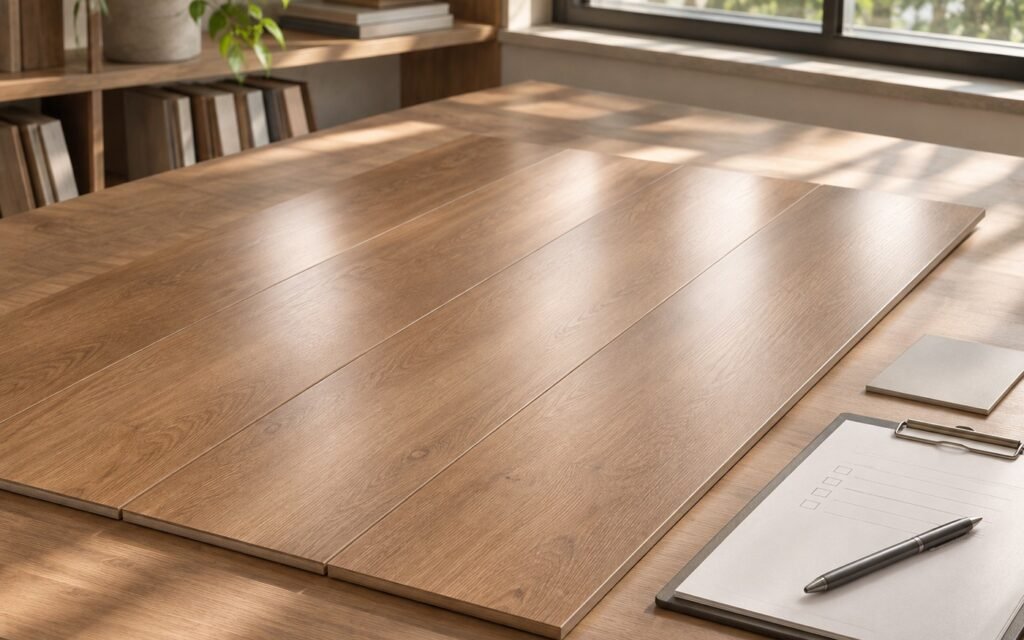
Map large windows, skylights, storefront glazing, and areas where a rug or fixture may create uneven exposure. A sample placed on a desk is not a simulation of months or years in a sunlit room. Where exposure is a concern, discuss window coverings and project conditions with the designer or installer, and avoid promising a specific service life without supporting evidence.
Plan for the visual expectations of the buyer
A retailer may need a consistent display appearance, while a commercial project may prioritize how adjacent areas will look over time. Ask the supplier which product-specific records are available and whether the final specification, sample, and production order refer to the same décor and surface. Lanhe’s article on laminate overlay paper and surface quality control covers a related part of the surface construction, but lightfastness still needs its own supporting evidence.
What Should the Purchase Specification Record?
A written specification helps prevent a broad phrase such as ‘fade resistant’ from being interpreted differently by the buyer and supplier. It should connect the requested performance evidence with the actual décor and order.
Name the décor and supporting document
Record the model or décor reference, the agreed sample revision, the requested lightfastness evidence, and the method or acceptance basis agreed for the project. State whether the supplier must provide an existing report, arrange a test, or simply clarify the published specification. Keep the decision tied to the tested configuration; do not extend one result to unrelated decors without confirmation.
Keep marketing language within the available evidence
If a report describes a defined test outcome, preserve its scope and wording in product literature. Do not convert a laboratory result into an unqualified claim that the floor will never fade.
Evaluating Laminate Flooring Documentation with Lanhe
Lanhe Flooring describes its flooring business and publishes laminate flooring options. Buyers considering a décor can contact the team with the model, project exposure, and requested test evidence to clarify which current product details or reports are available.
Conclusion
Buyers can assess laminate flooring lightfastness by connecting a real exposure concern to product-specific evidence. Identify the décor and room conditions, confirm what the test actually covers, compare only like-for-like results, and put the agreed document and wording into the purchase specification. That process supports a sound selection without promising that any laminate surface is immune to change.
FAQs
Does laminate flooring never fade because it has a wear layer?
No. A wear layer protects the surface for specified functions, but it does not justify an unlimited no-fading claim. Buyers should request evidence that applies to the product and décor being purchased.
Can a décor sample prove how the floor will look after long-term sunlight exposure?
No. A sample helps approve appearance, but it does not reproduce extended exposure. Use product-specific test information and consider the actual project conditions.
What should an importer request from a supplier?
Ask which décor and construction were assessed, what method and exposure conditions were used, and how the result should be interpreted. Confirm that the evidence applies to the ordered product before making a sales claim.
