

The HDF core is the structural center of laminate flooring, affecting click-joint strength, machining accuracy, dimensional stability, moisture response, and service life. Buyers who specify only plank thickness or AC rating may receive products that look similar but perform differently. A reliable purchase specification should therefore define density, moisture content, internal bond strength, thickness swell, dimensional tolerances, emission level, and required test reports.
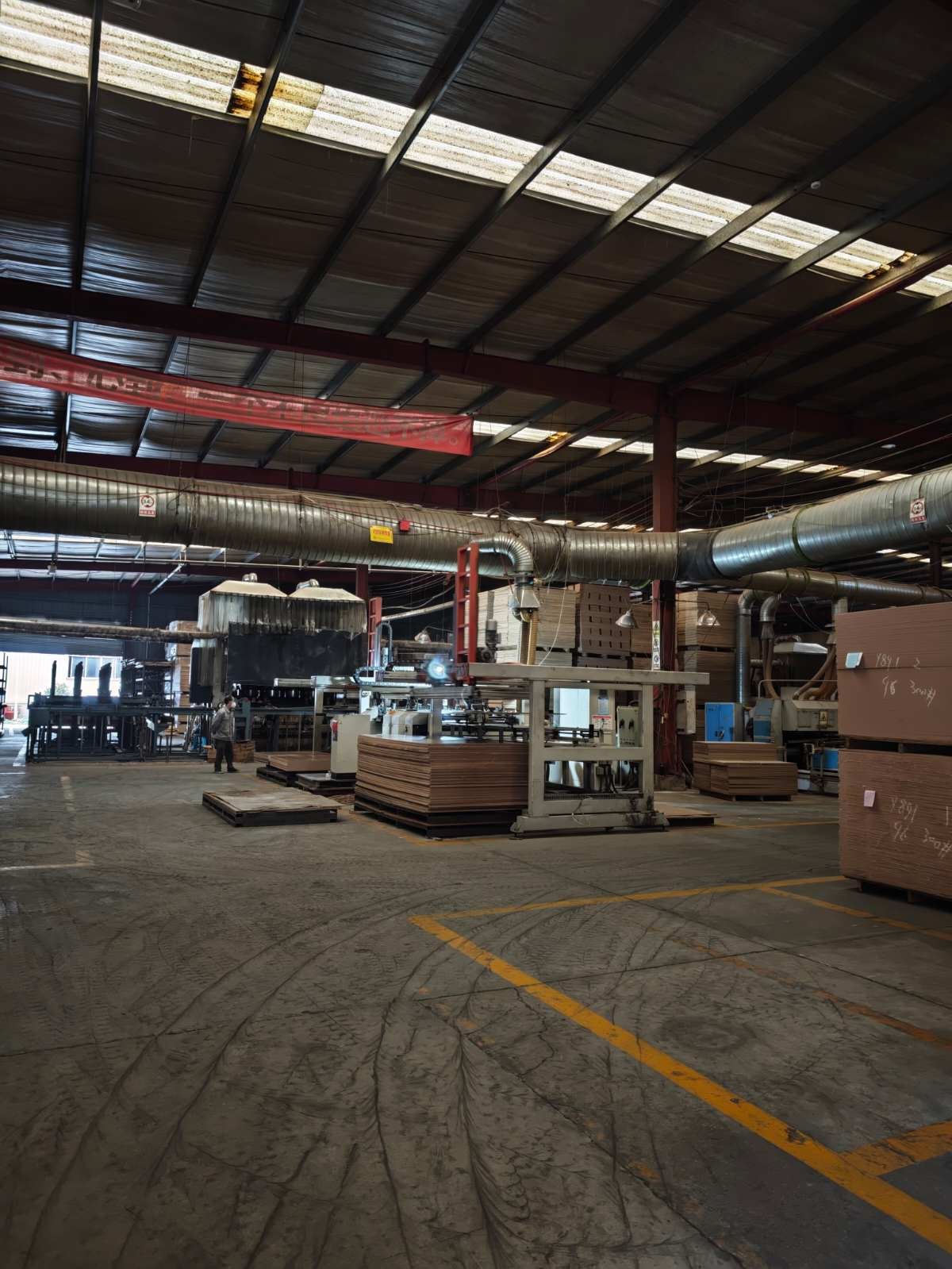
Why Is the HDF Core Important to Laminate Flooring?
Laminate flooring contains several bonded layers, but the core carries most of the plank’s structure. Its quality affects both factory processing and finished-floor performance.
It Supports the Click Profile
The locking profile is milled directly into the board edge. A uniform core helps the tongue and groove retain their shape during cutting, transport, and installation. Weak edge zones may chip, loosen, or break.
Core quality becomes particularly important for wide planks, herringbone flooring, and products with complex click-lock profiles. These designs place greater demands on machining accuracy and edge strength.
It Helps Control Flatness
HDF reacts to changes in temperature and humidity. Uneven density or moisture distribution can contribute to bowing, edge lift, and dimensional variation.
Lanhe’s product documentation shows a layered laminate structure using fiberboard as the substrate. It lists HDF or MDF cores with densities from 720 to 1,000 kg/m³, several flooring thicknesses, and multiple click systems.
How Should Buyers Specify HDF Core Density?
Density is widely used to compare HDF boards, but one average number does not describe the entire panel. A useful specification should cover both the target density and acceptable variation between production batches.
Match Density to the Flooring Product
Higher density can support cleaner click profiling, stronger edges, and better resistance to impact. However, the highest possible density is not automatically the best option.
Board weight, manufacturing cost, resin distribution, plank dimensions, and locking design must also be considered. Wide planks, commercial flooring, herringbone products, and demanding click systems may require different density ranges.
Buyers should therefore connect the density requirement to the intended application rather than applying one figure to every laminate flooring order.
Verify Density Consistency
Ask whether the quoted density applies to the raw HDF board or the finished laminated plank. The supplier should also explain how density is checked during production.
Inspection records should cover several boards and batches. Where possible, measurements should include both center and edge areas because an acceptable average may hide local variations that affect click-lock machining.
What Moisture Requirements Should Buyers Include?
Moisture content affects hot pressing, plank flatness, edge profiling, packaging, and transportation. HDF that is too wet or too dry can create avoidable production and installation risks.
Define the Range and Test Method
The purchase specification should state the accepted moisture-content range, measuring method, and sampling frequency. It should also require suitable board conditioning before lamination and click profiling.
Buyers should request batch records and confirm that HDF boards are protected from wet floors, open storage areas, and rapid environmental changes. One handheld reading should not be used to approve an entire order.
Consider the Destination Climate
A dry inland market and a humid coastal market can expose laminate flooring to very different moisture changes.
Packaging materials, container moisture protection, warehouse conditions, and acclimation instructions should support the agreed HDF requirement. The selected range should suit the product, shipping route, and destination rather than being treated as a universal figure.
Why Should Internal Bond Strength Be Specified?
Internal bond strength indicates how firmly the fibers are bonded through the thickness of the HDF board. It is especially relevant because the click profile depends on core integrity, not only surface hardness.
Density Does Not Prove Bond Quality
Two boards can have similar density but different internal strength. A poorly bonded core may split, crumble at the edge, or lose part of its locking profile during installation.
The technical specification should name the required test method and acceptance limit. Test reports should identify the core type, thickness, production date, and batch instead of presenting a generic certificate unrelated to the order.
Add Practical Factory Checks
Laboratory results can be supported by practical inspections during production.
Useful checks include click assembly, edge-chipping inspection, joint pull testing, and controlled disassembly and reinstallation. These procedures can reveal weaknesses caused by poor fiber bonding or inaccurate profiling.
How Should Thickness Swell Be Evaluated?
Thickness swell measures how much the HDF core increases in thickness after controlled water exposure. It is a useful indicator of moisture resistance, but it does not prove that laminate flooring is completely waterproof.
State the Test Conditions
A meaningful requirement should define:
The test method
Exposure period
Water conditions
Sample preparation
Maximum acceptable result
Without these details, percentages reported by different suppliers may not be directly comparable.
Buyers should also distinguish between testing raw HDF and testing a finished laminate plank. Surface layers, waxed edges, grooves, and locking joints can change how the product responds to water.
Inspect Edges and Click Joints
For water-resistant laminate flooring, buyers should check edge swelling, joint peaking, groove damage, and locking integrity—not only the center of the plank.
Lanhe lists lock-edge sealing wax and water resistance among its laminate flooring options. Its documentation also includes Carb2, E0, and E1 core-material levels.
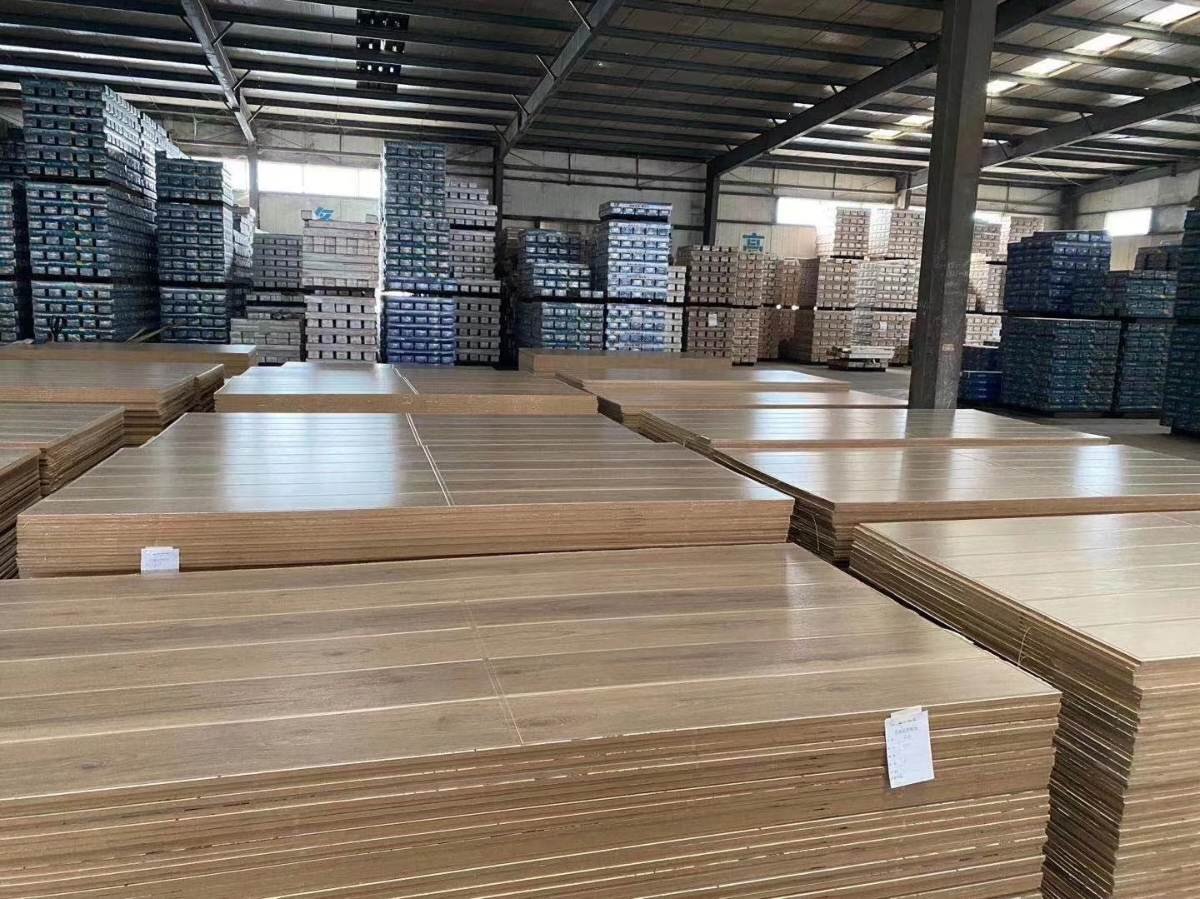
What Should Appear in an HDF Core Specification Sheet?
The document should be concise enough for production teams to follow and detailed enough to prevent unapproved material substitutions. It should be attached to the purchase order and approved sample record.
Essential Specification Items
A complete specification should include:
HDF core type and approved source
Target density and tolerance
Moisture-content range and test method
Internal bond requirement
Thickness-swell limit and test conditions
Board and finished-plank thickness tolerances
Required formaldehyde emission level
Click-profile and edge-strength checks
Batch traceability requirements
Required laboratory and inspection reports
Any proposed change to the HDF source, resin system, density range, or board construction should require written approval from the buyer.
Why Choose Shandong Lanhe Import and Export Co., Ltd.?
A reliable laminate flooring supplier should coordinate specifications, quality inspections, export requirements, and repeat-order consistency—not only product appearance and price.
Flexible Laminate Flooring Supply
Shandong Lanhe Import and Export Co., Ltd. supplies wood-grain, stone-effect, parquet, herringbone, and fishbone laminate flooring. Available options include HDF or MDF cores, multiple thicknesses, AC wear classes, several click systems, edge sealing, and customized colors and dimensions.
The company states that specialists control raw-material procurement, processing, quality inspection, and delivery for products supplied to overseas markets.
Conclusion
A sound HDF core specification should go beyond density. Buyers should define moisture content, internal bond strength, thickness swell, dimensional tolerances, emission requirements, test methods, and batch controls.
The final requirements must match the plank format, locking system, destination market, and intended application. Clear specifications, approved samples, and order-specific reports can help reduce edge damage, joint failure, swelling complaints, and inconsistent bulk deliveries.
FAQs
Is Higher HDF Density Always Better for Laminate Flooring?
No. Higher density can improve edge strength and machining accuracy, but performance also depends on fiber distribution, resin bonding, moisture control, and locking-system design.
Can Buyers Accept a Generic HDF Test Report?
A generic report can provide background information, but it should not replace order-specific verification. Buyers should check the core type, board thickness, production date, test method, and batch reference.
Does Low Thickness Swell Make Laminate Flooring Waterproof?
No. A low thickness-swell result indicates better resistance under the stated test conditions. Finished-floor performance also depends on edge sealing, joint fit, installation quality, spill duration, and maintenance.
