

Office-chair wheels concentrate repeated loads along short tracks. A floor may look convincing in a showroom but develop dull patches, fine scratches, or joint problems after months of chair movement. For office fit-outs, the key question is not simply whether SPC flooring suits commercial traffic. It is whether the proposed plank, caster, backing, subfloor, and maintenance routine will work together at desks where chairs move all day. Importers and contractors should therefore request application-specific evidence instead of relying on a generic “heavy-duty” description.
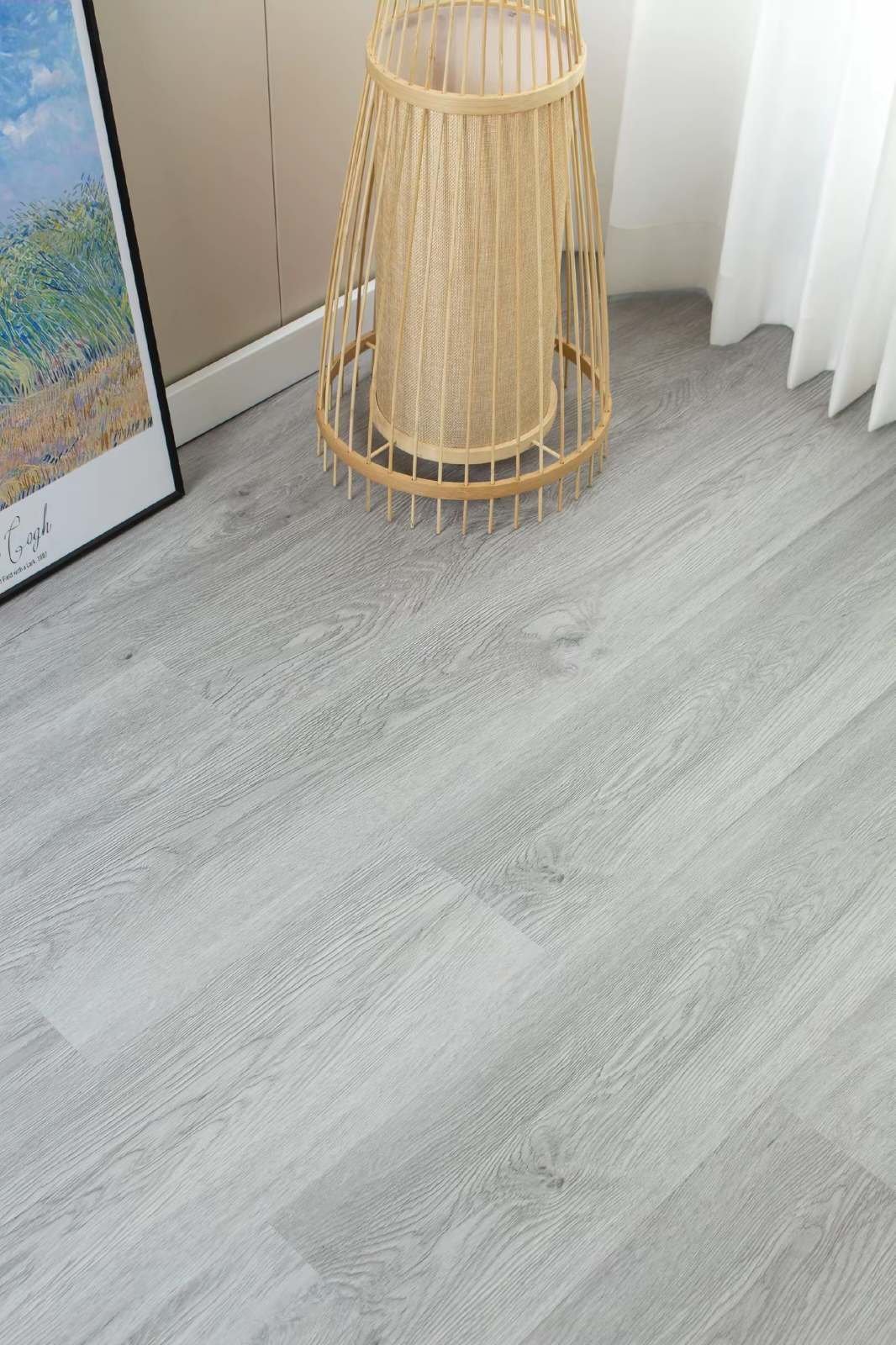
Why Do Rolling Office Chairs Create a Distinct Flooring Load?
Walking distributes pressure differently from repeated movement under narrow wheels. Chair use also brings turning, stopping, and local abrasion into the same small area.
Which problems should an office-flooring sample reveal?
Look for changes to the surface finish, localized impressions, joints that open, edge chipping, or backing that compresses unevenly. Loose grit trapped under a wheel can scratch a surface even when the wear layer remains intact. The size and material of the caster, occupant weight, chair design, and duration of use all alter the load. A product should be evaluated under conditions resembling the proposed office rather than through a single hand-operated chair demonstration.
Which Tests Should Buyers Request for SPC Flooring?
A test report becomes useful only when its scope matches the flooring supplied and the requirement written into the contract.
What is the role of a castor-chair test?
ISO 4918:2016 describes a castor-chair method for assessing changes in appearance, stability, and damage such as opening of joints in resilient and laminate floor coverings. Buyers may use a relevant castor-chair test as part of a performance request, subject to the product’s applicable standard and the project specification. Ask the laboratory or supplier to identify the tested construction, caster type, loading, test cycles, underlay, and observed damage. The report should concern the actual SPC plank rather than an unrelated vinyl product or a different backing.
Does a high wear-layer specification answer the question?
No. A wear layer can help resist daily abrasion, but it does not by itself establish rolling-load resistance or joint stability. Lanhe offers a range of wear-layer and rigid-core configurations in its SPC flooring collection. Ask for the complete product specification and any relevant project test evidence. Do not treat a thicker transparent layer as proof that a floor will remain free of marks from every caster.
How Do Castors, Backing, and the Subfloor Interact?
The same SPC plank may behave differently when installed over another subfloor or used with a different chair wheel.
Why should buyers confirm caster type?
Hard, narrow, contaminated, or damaged wheels can increase local stress. Confirm whether the facility plans to use hard- or soft-tread castors and whether chair manufacturers recommend a floor-compatible wheel. Cleaning wheels and removing grit from workstations should be part of maintenance instructions. Desk-chair mats can protect high-use points, but a mat should not be used to conceal a product that fails the project’s specified requirements. For shared desks, include the frequency of chair changes and the possibility that users will bring different caster types. Ask the facilities team to select a wheel specification that can be maintained consistently throughout the floor’s expected service period. A maintenance instruction that no one can enforce should not be counted as a substitute for product suitability.
Could a soft backing increase joint movement?
Backing influences support, comfort, and installed height. Excessively compressible combinations may allow more deflection under repeated localized loads, so ask for a configuration approved by the floor manufacturer. The site needs a suitably flat, dry, and sound subfloor; attached padding is not a substitute for correcting significant unevenness. Lanhe’s discussion of SPC core and backing specifications gives useful background, but office-chair suitability still needs product- and installation-specific verification.
What Should a Practical Office Mock-Up Include?
A trial installation helps facilities teams compare appearance and joint behavior before committing a large area.
How should the test area be arranged?
Use the selected plank, underlay configuration, subfloor, and actual chair model. Connect multiple boards so the caster crosses both long and short joints. Photograph the floor before and after a defined trial period, record wheel condition, and inspect in consistent lighting. This mock-up supplements—not replaces—standardized testing. If a buyer changes the backing, chair caster, or floor assembly, the earlier result may no longer describe the revised proposal.
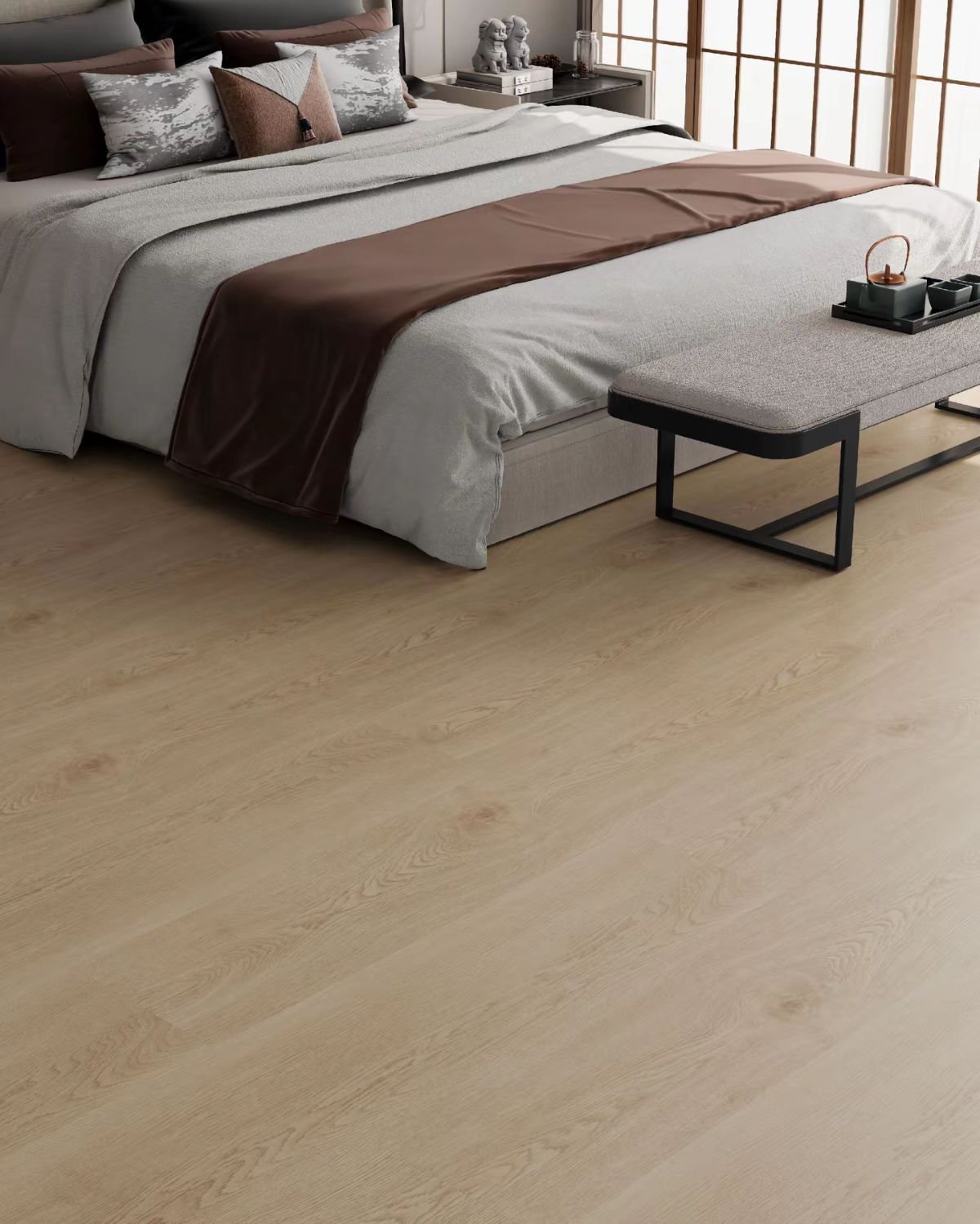
What Should Buyers Include in an SPC Office-Flooring RFQ?
Describe the workstations as an application with repeated castor traffic, not merely as “commercial use.”
Record décor, total thickness, wear layer, core construction, click system, backing, approved subfloor, intended caster type, expected load conditions, maintenance plan, and the exact test documents required. State whether the contract covers workstations only or also circulation routes and meeting rooms. Before shipment, inspect several cartons and assemble samples to check joint engagement; Lanhe’s factory inspection guide offers a broader framework for documenting the delivered goods.
How Can Lanhe Support Office SPC Flooring Sourcing?
Shandong Lanhe Import and Export Co., Ltd. supplies SPC flooring with multiple plank formats, wear-layer options, wood and stone looks, and click-system choices for residential and commercial projects. Buyers can use this selection to prepare an office sample request, while asking Lanhe to confirm whether the exact proposed configuration has supporting castor-chair test data. Application suitability should be agreed from the chosen product and project conditions, not assumed from a catalogue label.
Conclusion
Rolling-chair performance is a system question: caster material, grit, plank construction, joint accuracy, backing, subfloor, and maintenance all matter. Specify the actual office conditions, obtain relevant test evidence, and compare an installed mock-up with the approved sample. This gives procurement teams a more dependable basis for selecting and accepting SPC flooring in desk-heavy spaces.
FAQs
Can SPC flooring be used under office chairs?
It can be considered, but suitability depends on the product, caster type, installation, and relevant performance evidence for the intended use.
Will a thicker wear layer prevent all caster marks?
No. Wear-layer thickness is one variable; wheel material, grit, loading, backing, and surface treatment also affect results.
Should a chair mat always be specified?
Not necessarily. It can protect heavily used desks, but the flooring must still meet the project’s stated performance and maintenance requirements.
