

SPC flooring Oak 31805-12 is supplied as finished planks that must fit together across an entire room or commercial project. A plank can have an attractive décor and a strong rigid core but still cause installation problems if its length, width, straightness, or squareness varies. Small deviations may accumulate across connected rows, producing uneven joints, drifting layout lines, or visible gaps. For importers, distributors, contractors, and private-label brands, dimensional control should therefore be treated as a manufacturing requirement, not simply a final carton measurement.
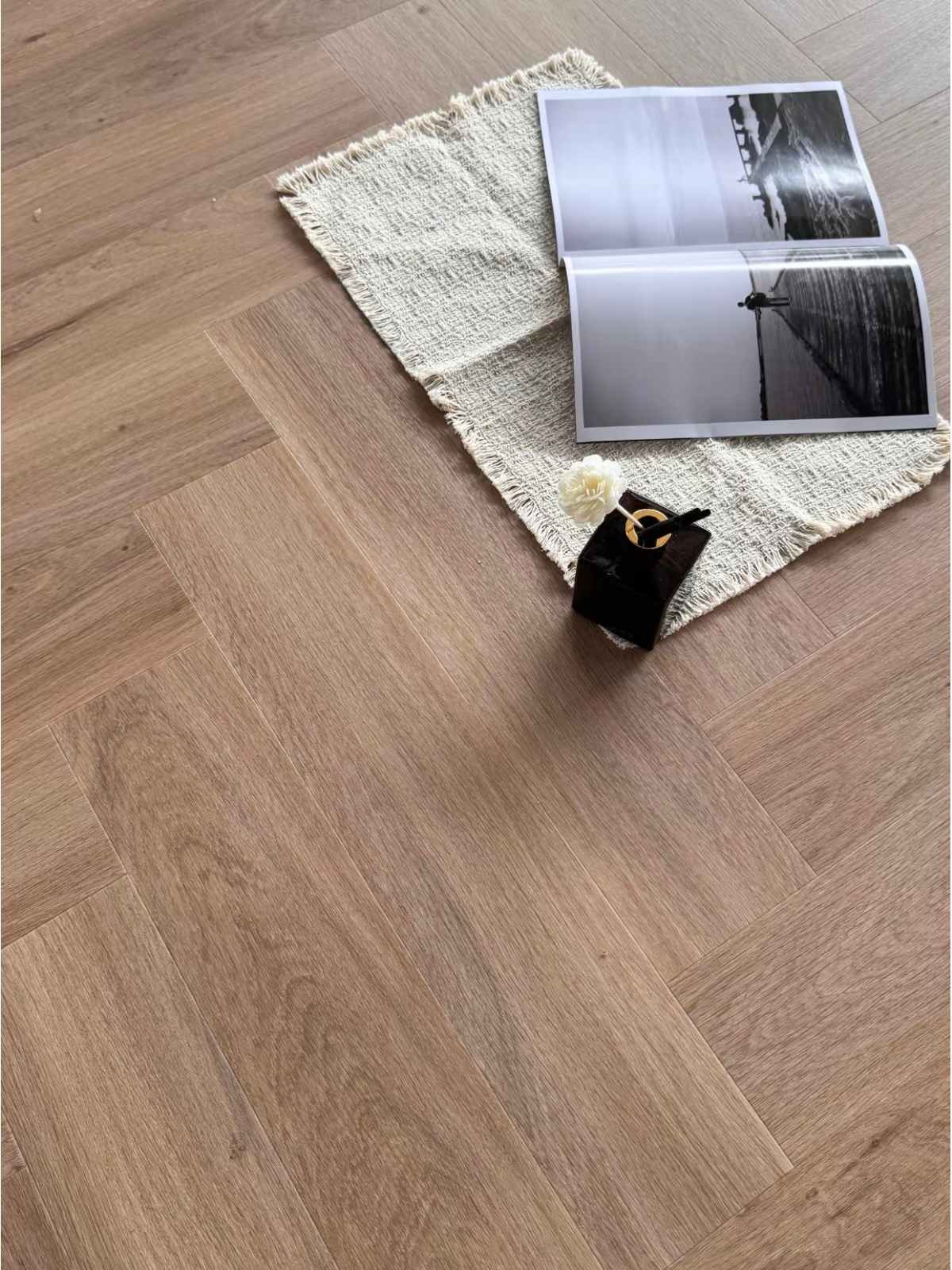
Why Do Finished SPC Plank Dimensions Matter?
SPC flooring is installed as a connected system. Each plank contributes to the geometry of the next, so repeated variation can become more noticeable than the deviation on one loose board.
How Can Small Size Differences Affect Installation?
If widths vary, adjacent rows may not remain parallel. If lengths vary, end joints can become difficult to align. A plank that is not square can force the installation away from a straight reference line even when its click profile closes. These effects are especially important in larger rooms and repeated commercial layouts.
Are Dimensions and Dimensional Stability the Same?
No. Finished dimensions describe the plank at the time of measurement. Dimensional stability describes how it changes under specified environmental conditions. Buyers should define both separately. A plank may be accurately cut but respond poorly to heat, while a stable core may still be cut outside the agreed size tolerance.
How Are SPC Sheets Cut Into Planks?
Lanhe SPC flooring is available in different sizes, thicknesses, click systems, and edge treatments. After sheet formation and conditioning, production equipment divides the larger sheet into the required plank format before or alongside final edge profiling.
Why Must the Sheet Be Conditioned Before Precision Cutting?
A sheet that still carries uneven temperature or residual stress may change after cutting. Controlled cooling and conditioning allow the material to reach a more stable state before dimensions are finalized. Buyers should avoid assuming that a measurement taken directly at an earlier hot stage represents the packed product.
Which Cutting Variables Need Control?
Feed position, cutting reference, blade condition, machine alignment, line speed, and material support can influence the result. Worn tools may create chipped or rough edges, while poor machine alignment can introduce tapered widths or non-square corners. Production records and scheduled tool checks help the factory detect drift before it affects many cartons.
What Do Length, Width, Straightness, and Squareness Mean?
These measurements describe different aspects of plank geometry. They should not be combined into a vague request for accurate size because each requires its own method and acceptance criteria.
How Should Length and Width Be Checked?
The buyer and supplier should agree on the measuring points, instrument, sample condition, and tolerance. Measurements should be taken from multiple planks and cartons. An average alone can hide a pattern in which some boards are consistently oversize and others undersize.
How Are Straightness and Squareness Evaluated?
Straightness checks whether an edge remains true along its length. Squareness checks whether adjacent edges form the required corner geometry. A diagonal comparison or an agreed square-measurement method can reveal errors that ordinary length and width checks miss. The exact procedure should follow the purchase specification or applicable test standard.
How Does Click Profiling Interact With Plank Geometry?
Cutting and click milling are closely linked. The profiling machine uses the plank edges as references, so an inaccurate blank can make it harder to maintain a consistent locking shape and joint appearance.
Why Is a Trial Assembly More Useful Than One Loose Plank?
SPC click-lock inspection should include connecting random boards from different cartons. A trial area can expose cumulative width variation, staggered end joints, abnormal gaps, edge-height differences, or a layout that drifts out of alignment. These problems may not be visible when every plank is measured separately.
Can Edge Profiles Hide Dimensional Problems?
Bevels and grooves can change how joints look, but they should not be used to disguise inaccurate machining. Micro-bevel, painted bevel, or square-edge products still require consistent plank geometry. Buyers should inspect both the visible joint line and the mechanical fit underneath it.
What Should Buyers Include in a Dimensional Inspection Plan?
The plan should identify the approved plank size, measuring method, tolerance, sampling level, conditioning state, and response when results fall outside the limit. It should also distinguish product dimensions from packaging dimensions.
How Should Samples Be Distributed Across the Shipment?
Pre-shipment SPC flooring inspection should draw cartons from different pallets and positions rather than one convenient stack. Inspectors should record individual results, compare them with the approved specification, and assemble a representative group of boards. This creates clearer evidence than a general pass or fail note.
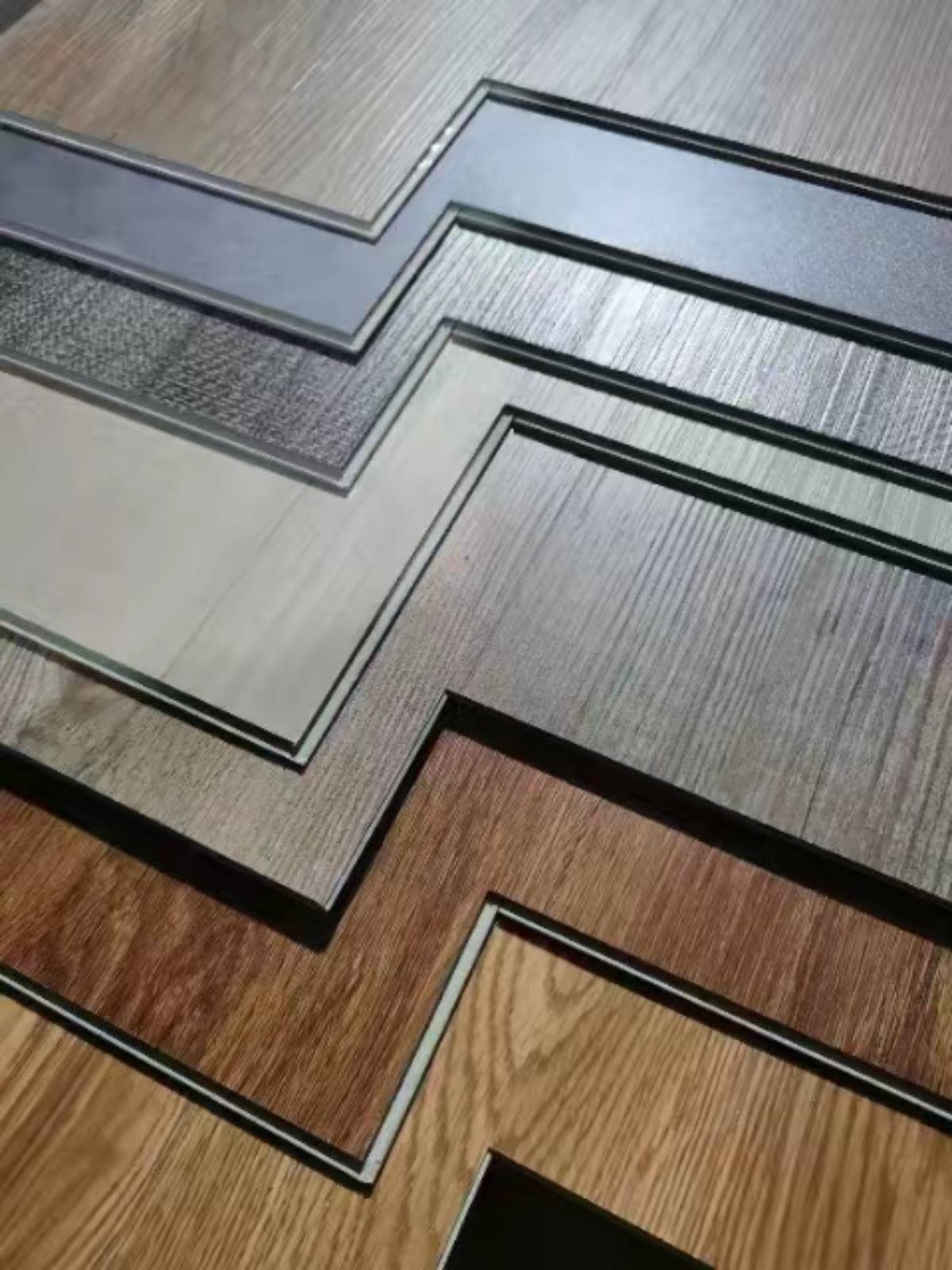
Why Choose Lanhe Flooring for SPC Flooring Supply?
Shandong Lanhe Import and Export Co., Ltd. supplies SPC flooring in multiple plank formats, surface treatments, edge styles, and click systems. Buyers can coordinate dimensional requirements with the selected construction and golden sample. Where a numerical tolerance is important, it should be agreed in writing rather than inferred from a catalog description.
Conclusion
Accurate SPC plank dimensions depend on stable material, controlled cutting, maintained tools, precise edge profiling, and representative inspection. Length and width measurements alone are not enough; straightness, squareness, click fit, and trial assembly also matter. Buyers should define the method and tolerance before production, sample across the shipment, and compare results with an approved reference. A clear dimensional plan reduces installation disputes and makes corrective action possible before container loading.
FAQs
These questions address common purchasing concerns about SPC flooring size and manufacturing accuracy.
1. Is plank thickness part of dimensional inspection?
Yes, but it should be measured separately from length, width, straightness, and squareness. Total thickness may also differ from core thickness when an attached backing is included.
2. Can buyers use one plank to approve a production batch?
No. One plank cannot show variation across machines, shifts, cartons, or pallets. A representative sampling plan and trial assembly provide more useful evidence.
3. Should every SPC order use the same dimensional tolerance?
Not automatically. The product format, click design, destination standard, contract, and test method should determine the agreed limits. Unsupported tolerances should not be copied from another product.
