

Bulk ordering SPC flooring involves much more than just picking a color, thickness, or price. For importers, wholesalers, contractors, retailers, and project buyers, strict quality control truly decides if the final flooring will install smoothly. It also determines if the planks look consistent, resist daily wear, and lower post-delivery complaints. A tiny flaw in thickness, click-lock accuracy, surface finish, carton strength, or batch color can easily turn into a huge headache. This happens when thousands of square meters reach a warehouse or jobsite. Lanhe Flooring operates as a production-and-export flooring manufacturer. They maintain quality management from raw materials all the way to delivery. Therefore, buyers need to use a clear inspection checklist before they confirm large SPC flooring orders.
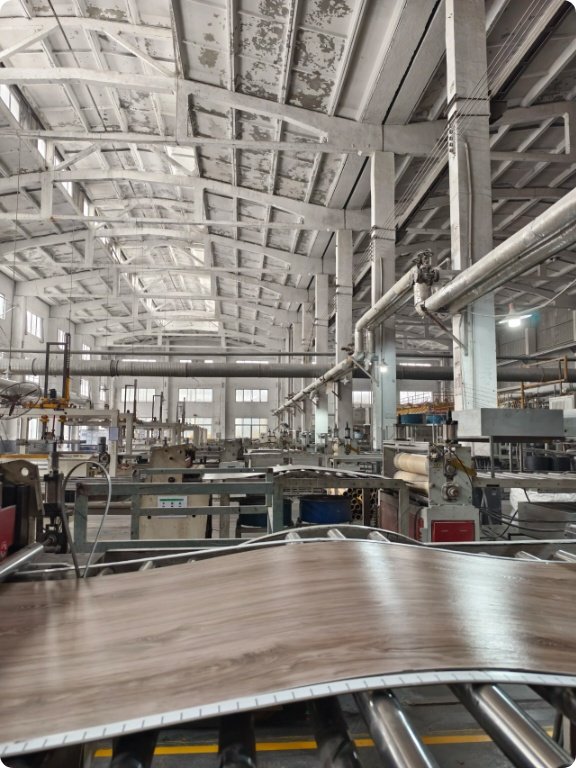
Why Should Buyers Inspect SPC Flooring Before Bulk Orders?
People widely use SPC flooring in homes, apartments, offices, hotels, retail stores, and commercial spaces. It is highly durable, waterproof, and simple to install. It also fits many interior designs perfectly. However, these great benefits rely heavily on stable factory production and careful inspection prior to shipment. Lanhe’s SPC flooring page points out key product advantages. These include great durability, waterproof performance, scratch resistance, and easy installation. They also highlight formaldehyde-free material, noise reduction, and anti-slip use.
Bulk Orders Increase Quality Risk
A single sample might look fantastic, but mass production brings different challenges. Large orders mix various raw material batches and decorative film batches. They also require extrusion consistency, surface coating, click-lock profiling, packing, and container loading.
Buyers must never approve bulk production based solely on photos. A thorough inspection helps verify that the actual goods perfectly match the approved sample and the purchase agreement.
Quality Control Protects Buyer Reputation
For B2B buyers, flooring quality impacts much more than a single order. Suppose the SPC floor shows color variation, weak click-lock edges, bad surface coating, or ruined packaging. In that case, the buyer will likely face installation complaints, returns, discount claims, or costly project delays.
A detailed factory quality control checklist helps buyers cut down these risks before the goods ever leave the factory.
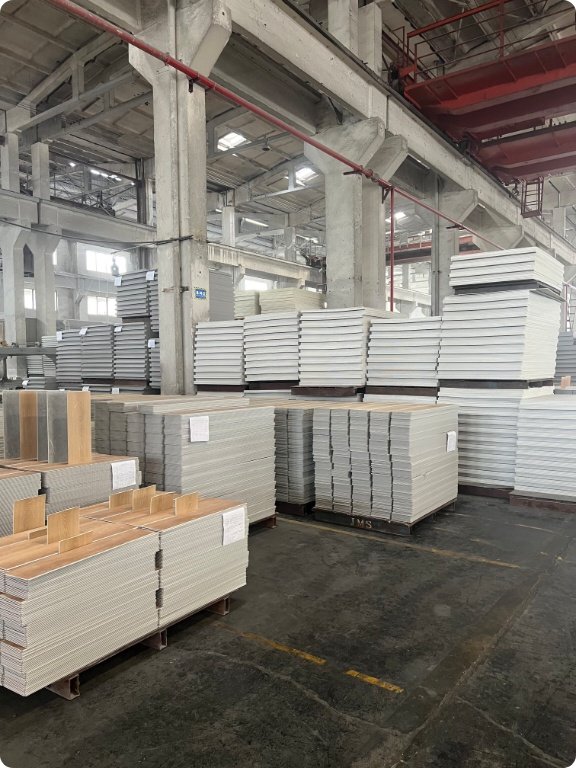
What Raw Materials Should Buyers Check First?
Raw materials deeply affect the core strength, dimensional stability, surface quality, and overall long-term performance of SPC flooring. Buyers must ask the factory exactly how materials are chosen, stored, and tested before production begins.
SPC Core Material
The SPC core serves as the solid foundation of the plank. A truly stable core needs to feel rigid, flat, and dense enough for tough daily use. If the core material remains unstable, the floor might bend, chip, or break apart during installation.
Buyers should carefully check the core color, density, and thickness consistency. They also need to see if the sample feels firm and solid when handled.
Decorative Film and Surface Layer
The decorative film provides the wood-look, stone-look, or custom visual style. Buyers must compare the actual production sample right next to the approved color board. The pattern, shade, gloss, and texture must remain perfectly consistent.
This step is extremely important for retailers and project buyers. Mixed color batches will definitely create ugly visual differences across the floor after installation.
Wear Layer and Surface Protection
The wear layer directly controls scratch resistance and daily durability. Buyers need to confirm the exact requested wear layer before mass production starts. This matters most when selling to busy commercial spaces or high-traffic areas.
A thicker or better-protected surface might cost a bit more. Yet, it can greatly reduce complaints in active homes, busy shops, modern offices, and rental properties.
Which Size and Thickness Details Should Be Inspected?
Installers place SPC flooring plank by plank, making dimensional accuracy absolutely vital. Tiny size errors will quickly cause gaps, uneven joints, or severe installation difficulty.
Thickness Tolerance
Buyers must inspect whether the actual floor thickness matches the exact order requirement. For instance, if the order demands a specific thickness, random planks must be measured. These planks should come from different cartons and various production batches.
Thickness inconsistency will negatively affect installation height, underlay matching, and overall floor stability.
Length and Width Accuracy
Length and width definitely need to be checked as well. If planks lack consistency, installers will struggle hard with alignment. This issue can seriously slow down the project and create very visible joint problems.
For big bulk orders, buyers must ask the factory to measure samples from several different cartons. They should never check just one single piece.
Flatness and Dimensional Stability
SPC flooring must remain completely flat before installation begins. Buyers need to watch out for warping, curling, bending, or edge lifting. These annoying problems might stem from poor material balance, weak production control, bad storage conditions, or heavy packing pressure.
Dimensional stability is particularly vital for huge large-area installations.
How Can Buyers Check Click-Lock Quality?
Click-lock quality stands as one of the most crucial inspection points for SPC flooring. Even if the top surface looks gorgeous, bad locking will cause wide gaps, loose joints, and angry installation complaints.
Edge Milling Accuracy
The click-lock profile must be clean, precise, and completely free from broken edges. Buyers need to thoroughly inspect both the long-side and short-side locking areas.
Rough edges, chipped corners, or uneven milling will make installation incredibly difficult. This also increases the likely chance of plank damage.
Trial Installation
A quick, simple trial installation must be done before shipment. Inspectors can easily connect several planks together. Then, they can check whether the planks lock tightly, sit perfectly flat, and separate only when intended.
This practical test works great because it shows the real experience of professional installers and everyday end users.
Gap and Joint Inspection
Right after the trial installation, buyers must look closely for visible gaps, height differences, loose joints, or edge lifting. A high-quality SPC floor will always create a tight, smooth, and stable surface when installed correctly.
What Surface Defects Should Buyers Look For?
Surface quality heavily affects both the product appearance and total customer satisfaction. Since flooring covers a massive visible area, even tiny defects will become very noticeable after installation.
Scratches, Spots, and Coating Problems
Buyers need to inspect the top surface for ugly scratches, black spots, white marks, uneven gloss, weird bubbles, dents, and coating defects. These annoying problems will quickly reduce shelf value and hurt project acceptance.
Lanhe has shared useful content around UV coating and surface quality. They note that the surface coating can strongly influence scratch resistance, stain resistance, and final performance.
Color Consistency
Color consistency must be checked closely, carton by carton. Buyers need to compare the bulk planks directly with the approved sample board under proper, bright lighting.
For big project orders, it is always better to use the exact same production batch for the same installation area whenever possible.
Texture and Embossing
If the SPC flooring features embossed texture, EIR texture, wood grain, or stone texture, buyers must check it. They need to see if the texture is crisp, clear, and perfectly aligned with the design expectation.
The physical touch and visual effect must match the intended product positioning perfectly.
How Should Packaging Be Inspected Before Shipment?
Excellent SPC flooring can still arrive completely ruined if the packaging is weak. Export packaging is especially crucial for overseas buyers. The goods will likely go through long-distance transport, rough warehouse handling, and heavy container loading.
Carton Strength
Cartons must be tough enough to fully protect the delicate floor edges and corners. Buyers need to check the carton thickness, sealing quality, carton printing, and clear shipping marks. They also need to ensure the cartons are very easy to identify in a busy storage area.
Flimsy, weak cartons will surely lead to severe corner damage and expensive customer claims.
Labels and Batch Information
Every single carton must display clear, accurate product information. This includes the model name, color, size, exact quantity, batch number, and the buyer label if required.
Helpful batch labels allow buyers to manage their inventory easily. This prevents mixing different color lots during a big installation.
Pallet and Container Loading
Buyers must confirm the pallet packaging, moisture protection, strong corner protection, and the exact loading method. If the shipment is loaded poorly, cartons might shift heavily or collapse entirely during rough transport.
For smart B2B buyers, strict packaging inspection is a major part of overall product quality control. It is never just a minor logistics detail.
Why Choose Shandong Lanhe Import and Export Co., Ltd. as an SPC Flooring Supplier?
Choosing the perfect supplier can make bulk SPC flooring procurement much easier and far safer. Buyers desperately need a strong factory partner. This partner must support tight production control, flexible customization, clear product communication, and reliable export service.
Manufacturing and Export Focus
Shandong Lanhe Import and Export Co., Ltd. shows up on its official website as a dedicated production-and-export enterprise. It is a highly professional flooring manufacturer. Its wide product range includes premium SPC flooring and laminate flooring for many global markets.
Custom Flooring Support
Lanhe’s About page clearly states that the company offers customized flooring designs and exact specifications. They export goods to North America, Europe, Australia, Southeast Asia, and various other markets. This makes them highly relevant for busy importers, big wholesalers, and project buyers who seek tailored flooring solutions.
Practical Buyer Support
For serious bulk SPC flooring buyers, Lanhe stands out as a solid choice. They are great when you are sourcing waterproof SPC flooring and custom designs. They also handle sample confirmation, production communication, export packaging, and careful order planning very well.
Conclusion: What Should Buyers Inspect Before Ordering SPC Flooring in Bulk?
Before placing a massive bulk SPC flooring order, buyers must inspect many things. They need to check raw materials, core quality, wear layer, color consistency, and thickness tolerance. They must also review plank size, flatness, click-lock accuracy, surface defects, packaging strength, carton labels, and the loading method. A complete, detailed checklist helps greatly reduce annoying installation problems, shipping damage, customer complaints, and ugly post-delivery disputes.
SPC flooring quality relies heavily on both smart product design and strict factory control. For B2B buyers, a truly reliable supplier must provide very clear samples, consistent production, stable packaging, and fast, responsive communication. Shandong Lanhe Import and Export Co., Ltd. can strongly support buyers who are looking for top SPC flooring products, customized flooring solutions, and reliable export-ready supply.
FAQs
What should buyers inspect before ordering SPC flooring in bulk?
Buyers must inspect thickness, size accuracy, click-lock quality, color consistency, and surface finish. They also need to check the wear layer, flatness, carton strength, batch labels, and the precise packing method before confirming any bulk orders.
Why is click-lock quality important in SPC flooring?
Click-lock quality heavily affects installation speed, joint tightness, overall floor stability, and total customer satisfaction. Bad locking will quickly cause wide gaps, loose joints, nasty edge damage, and angry installation complaints.
Can SPC flooring be customized for wholesale or project orders?
Yes. SPC flooring can very often be customized by color, pattern, texture, size, thickness, and wear layer. Buyers can also customize the underlay, carton design, and private label requirements. This depends entirely on the specific supplier’s production capability.
