

Custom SPC flooring gives distributors, property developers, retailers, and private-label brands greater control over colors, textures, plank sizes, wear layers, backing materials, and packaging. However, buyers are often surprised when a factory cannot produce a very small quantity of a fully customized design. The minimum order quantity, or MOQ, is not simply a sales rule. It reflects the materials, equipment setup, labor, testing, and production losses required to manufacture a stable commercial batch.
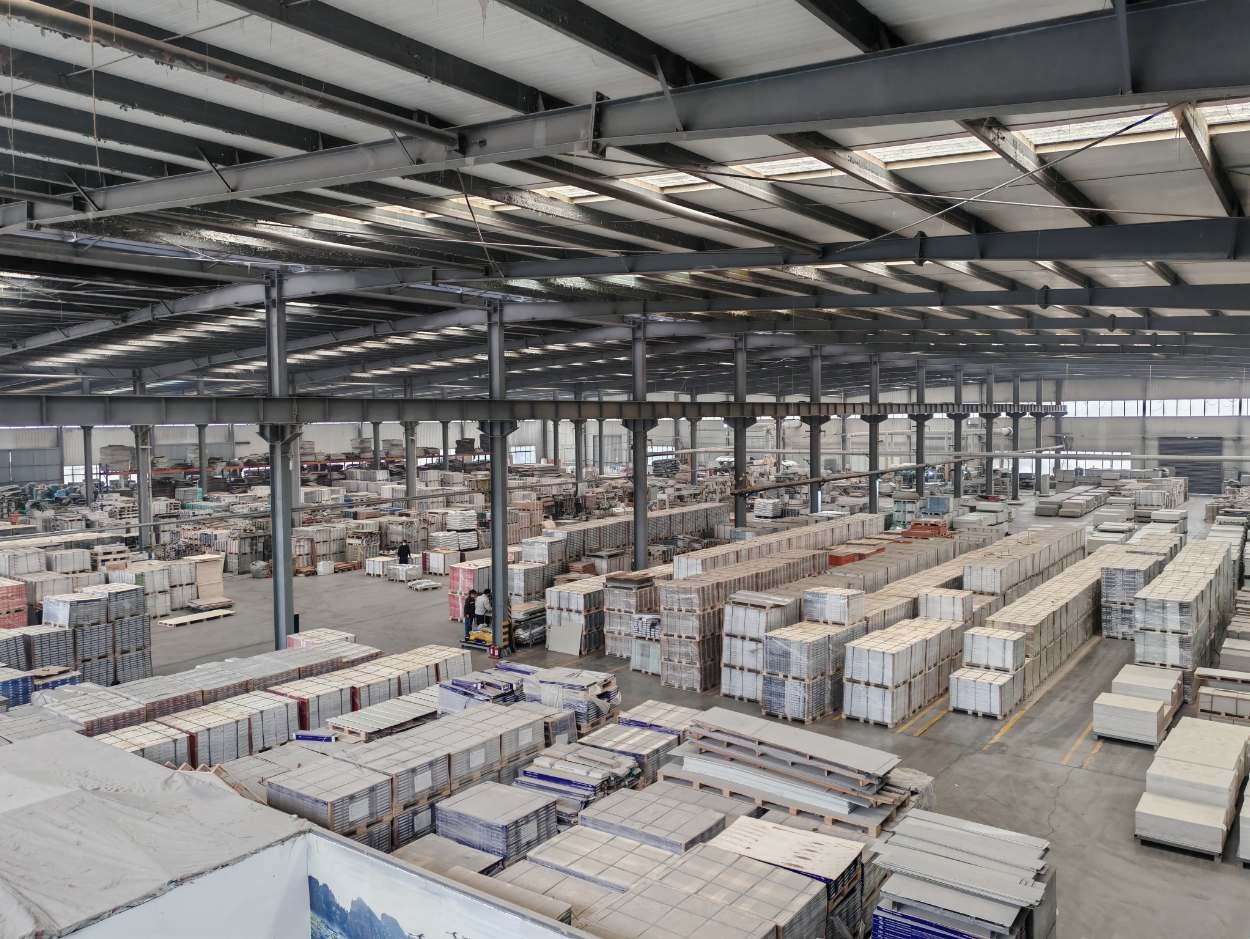
Why Do SPC Flooring Factories Set a Minimum Order Quantity?
Every customized order creates fixed production costs before the first saleable plank is completed. A factory must prepare materials, adjust machinery, approve samples, inspect trial pieces, and organize packaging.
Fixed Costs Must Be Spread Across the Order
Producing 100 square meters and producing 1,000 square meters may require many of the same setup procedures. These can include:
Preparing the SPC core formulation
Loading the selected décor film
Adjusting lamination temperature and pressure
Installing or aligning embossing equipment
Setting cutting and click-lock machines
Testing dimensions, appearance, and joint performance
Cleaning the line before the next design
When the order is too small, these fixed costs are divided across fewer square meters. The cost per square meter can then become commercially impractical.
Lanhe’s standard SPC flooring MOQ is listed as 800 square meters. Its available specifications include customized thicknesses, dimensions, surfaces, colors, backing materials, and click systems.
How Does Custom Décor Film Affect the MOQ?
Décor film creates the visible wood, stone, marble, or patterned design below the transparent wear layer. It is one of the most important materials in a customized SPC flooring collection.
Décor Film Is Usually Produced in Full Rolls
A flooring factory normally purchases décor film from a specialized printing supplier. A completely new pattern may require artwork preparation, color separation, printing-cylinder setup, trial printing, and a minimum film-roll quantity.
Even when a buyer selects an existing pattern, the factory must reserve enough film for continuous production. Additional material is also needed for machine adjustment, color approval, defective-sheet removal, and pattern alignment.
The selected film must coordinate with the flooring surface. A walnut print, for example, may look different under a matte finish, standard wood embossing, or EIR texture. For this reason, buyers should approve a complete plank sample rather than judging the décor film alone.
Why Can EIR Flooring Require a Higher MOQ?
Embossed-in-register flooring, commonly called EIR flooring, aligns the surface texture with the printed wood pattern. A visible knot in the décor film should correspond with a physical indentation or raised detail on the surface.
EIR Plates Must Match the Printed Pattern
A standard embossed surface can use a general texture across many colors. EIR production is more demanding because the embossing plate or roller must match the layout and repeat of a particular décor design.
A new EIR collection may involve:
Developing a matching texture
Producing or sourcing the embossing plate
Aligning the plate with the décor film
Running trial boards
Correcting registration differences
Approving the final texture and gloss level
These steps create development expenses that cannot be efficiently absorbed by a very small order. Selecting an existing EIR combination from the supplier’s collection can often reduce the MOQ, development cost, and lead time.
Lanhe offers EIR, matte, high-gloss, crystal, stone-grain, and customized surface treatments, along with wood, marble, and stone-effect designs.
How Do Tooling and Product Dimensions Change the MOQ?
Custom flooring is not limited to color. Buyers may request a special plank length, width, total thickness, bevel, click system, or herringbone format.
Cutting and Click-Lock Tools Need Accurate Setup
After lamination and surface treatment, large SPC boards are cut into planks. Their edges are then milled to create the locking profile. Changing the plank size may require machine repositioning, different cutters, new calibration, and additional dimensional checks.
Click-lock tolerances are particularly important. A small machining deviation can cause loose joints, difficult installation, edge damage, or locking-system failure.
The supplier’s technical information lists multiple standard and customized sizes, thicknesses from 3.5 to 8 mm, and Unilin or Valinge locking options. Its product brochure also presents wood-grain, marble, herringbone, and fishbone formats with several plank dimensions.
Choosing an established plank specification generally requires fewer adjustments than developing a completely new format.
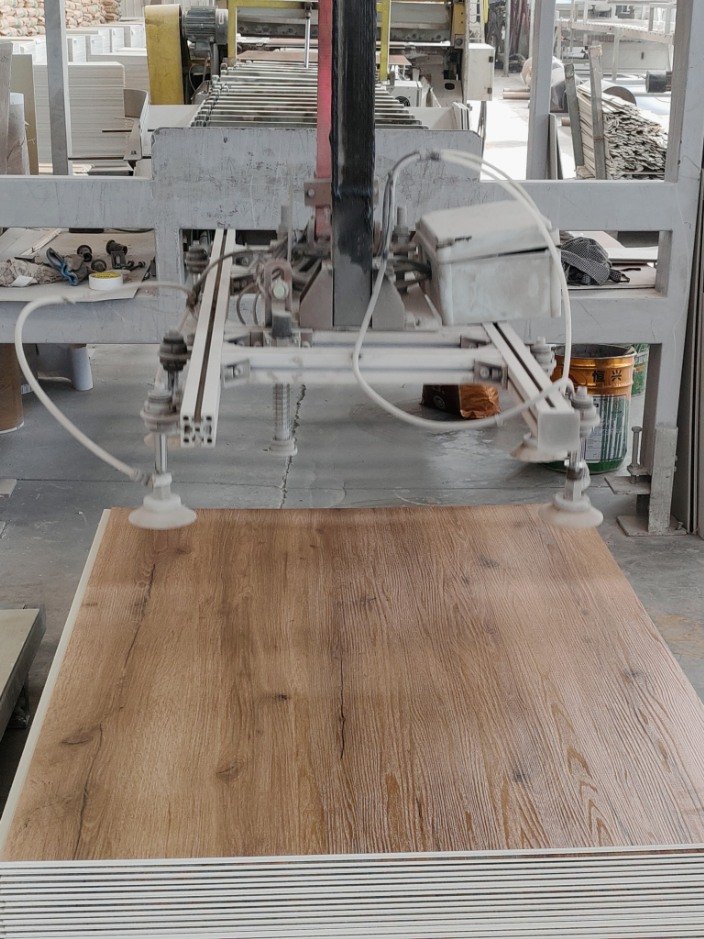
Why Do Production-Line Changeovers Create Extra Cost?
SPC flooring is manufactured through several connected stages, including raw-material mixing, extrusion, lamination, UV coating, cutting, click profiling, backing attachment, inspection, and packaging.
A Line Changeover Produces Time and Material Loss
When a factory changes from one order to another, production may need to stop. Operators must remove the previous materials, clean the equipment, install the next décor film, reset processing parameters, and inspect initial boards.
The first boards may not meet final requirements while temperature, pressure, alignment, dimensions, and surface appearance are being adjusted. This startup material becomes part of the production loss included in the order cost.
Frequent short production runs also reduce factory efficiency. A reasonable MOQ allows the approved specification to remain on the line long enough to achieve stable output and consistent quality.
Can Custom Packaging Increase the Minimum Order?
Private-label buyers often request printed cartons, logos, labels, installation instructions, barcodes, and pallet marks. These elements can create separate purchasing requirements.
Printed Cartons Have Their Own Production Minimums
Packaging suppliers may require a minimum quantity for custom-printed cartons. Artwork preparation, printing plates, ink setup, and sample approval create costs similar to those involved in décor-film production.
A buyer ordering less flooring than the carton supplier’s minimum may need to purchase excess packaging or select a neutral carton with customized labels. This is often a practical solution for a market trial.
How Can Buyers Reduce the MOQ for a Custom SPC Order?
Customization does not always require developing every component from zero. Buyers can reduce cost and complexity by separating essential brand features from optional changes.
Use Standard Components Where Possible
A lower-risk custom order may combine:
An existing décor film
A standard plank size
A standard embossing texture
A common wear-layer thickness
An available IXPE or EVA backing
Customized cartons or labels
Lanhe lists wear layers from 0.2 to 0.5 mm, IXPE and EVA backing options, multiple standard dimensions, and customized colors and finishes. The company’s published product information states an MOQ of 800 square meters and a typical delivery time of 15–21 days.
Buyers should send a complete specification sheet and expected annual volume when requesting a quotation. This helps the supplier recommend the most economical production route.
Why Choose Shandong Lanhe Import and Export Co., Ltd.?
Selecting a reliable supplier is especially important when a flooring program includes custom specifications, private-label packaging, or repeat orders.
Flexible SPC Flooring Options and Quality Control
Shandong Lanhe Import and Export Co., Ltd. supplies SPC flooring for residential and commercial applications. Available options include wood, marble, parquet, herringbone, and fishbone designs, along with customizable sizes, surfaces, wear layers, backing materials, and locking systems.
The company states that its production and quality teams control raw-material procurement, processing, inspection, and delivery. Its products are supplied to overseas markets including Europe, Australia, and Southeast Asia.
Conclusion
Custom SPC flooring has an MOQ because each order requires more than raw materials. Décor-film procurement, EIR plate development, machine tooling, line changeovers, quality inspections, startup losses, and custom packaging all create fixed costs.
Buyers can often reduce the required quantity by selecting existing colors, standard dimensions, available embossing patterns, and established click systems. A clear specification and realistic order forecast also help the supplier calculate a more efficient production plan.
FAQs
What Is the MOQ for Lanhe Custom SPC Flooring?
Lanhe’s published standard MOQ is 800 square meters. The final requirement may vary according to the décor film, dimensions, EIR surface, click system, backing, packaging, and level of customization.
Can I Order a Small Quantity for Market Testing?
A small trial order may be possible when it uses an existing design and standard specifications. Fully customized décor film, EIR tooling, plank sizes, or printed packaging may require a larger quantity.
Does a Higher MOQ Reduce the SPC Flooring Price?
It often reduces the unit cost because setup expenses and production losses are spread across more square meters. Final pricing also depends on the core material, thickness, wear layer, surface treatment, backing, locking system, packaging, and certification requirements.
