

Selecting the correct laminate flooring supplier is no longer merely a question of price. A reliable supplier is one who is able to provide consistent, durable goods that will have a long term and adequate performance. The Flooring Supplier connects flooring distributors and importers with laminate flooring manufacturers, as well as with flooring contractors and flooring brands. In order to avoid production defects and subsequent customer complaints and warranty claims, Flooring Supplier explains how a laminate flooring factory can control quality during production.
A reliable laminate flooring factory always implements quality control measures at every production stage. From selecting high-density fiberboard (HDF) and decorative papers to monitoring pressing temperature, precision milling, surface finish, and final product check, each step in the production line is critical to enhance wear resistance, dimensional stability, click-lock accuracy and environmental-friendliness of laminate flooring.
In this guide we describe how quality is maintained in professional laminate flooring manufacturers from raw material to finish and including the relevant international test standards. We also outline the production processes that buyers should investigate when choosing a manufacturer.
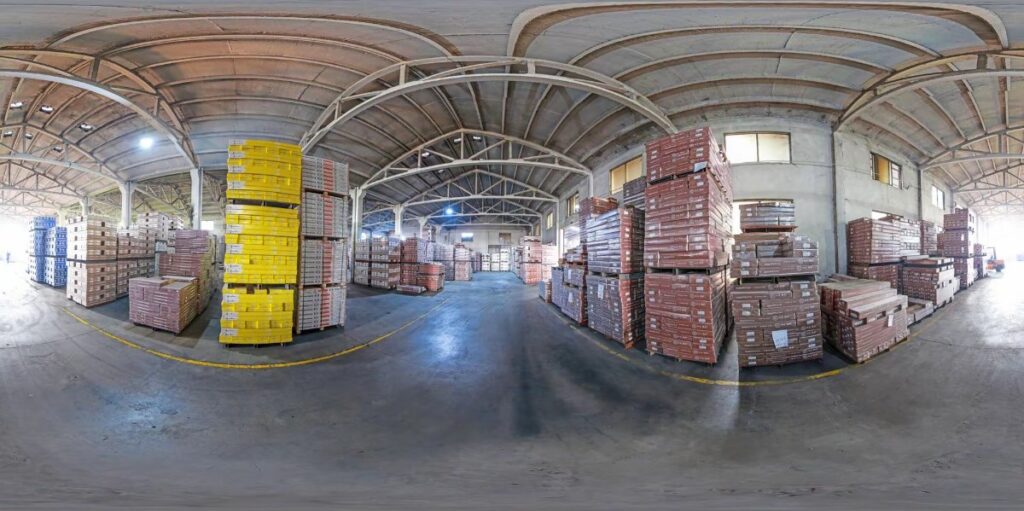
What Role Does Raw Material Selection Play in Quality Control?
A fundamental factor to be considered in the production of laminate flooring is the selection of raw materials used in the process. A factory floor that selects high-quality raw materials is able to manufacture flooring products that have sufficient durability and meet environmental requirements as well as customer requirements. Known by many as “diamond board”, laminate flooring is more formally referred to as “impregnated paper laminated wood flooring” or composite wood flooring. These types of flooring are made using a variety of materials including hardboard and medium-density fiberboard as the core and impregnated paper film as the veneer layer. The surface of laminate flooring is then coated using wear-resistant materials. Melamine and aluminum oxide are two of the most common types of coating used for this purpose. Understanding the various layers of laminate flooring is crucial to recognizing the challenges faced in selecting core materials that meet density, moisture resistance, and bonding requirements.
Criteria for Selecting Core Materials
High-density fiberboard (HDF) or medium-density fiberboard (MDF) forms the core of laminate flooring. These boards must meet specific density ranges—typically between 720–1000 kg/m³—to ensure dimensional stability under pressure. The wood fibers used are sourced from sustainable forests, aligning with global eco-certification systems that verify responsible forestry practices. Resins and adhesives are tested for formaldehyde emissions to comply with E0 or E1 environmental protection grades. The base material layer is composed of wood fiber and resin adhesive, which is treated with high pressure and high temperature, providing the stability, firmness and durability of the floor. This ensures that the resulting flooring meets both mechanical strength and health safety requirements.
Testing Incoming Materials for Consistency
All incoming raw materials are put through extensive testing before they go into production. For example, the moisture content is measured and kept at the optimum level to stop the boards from warping during pressing. The particle size distribution test is used to check the consistency of the board’s make up. The materials are also randomly tested to check for consistency from batch to batch. The testing of each individual component entering the production line is kept to the same strict quality control measures to guarantee the highest quality during production.
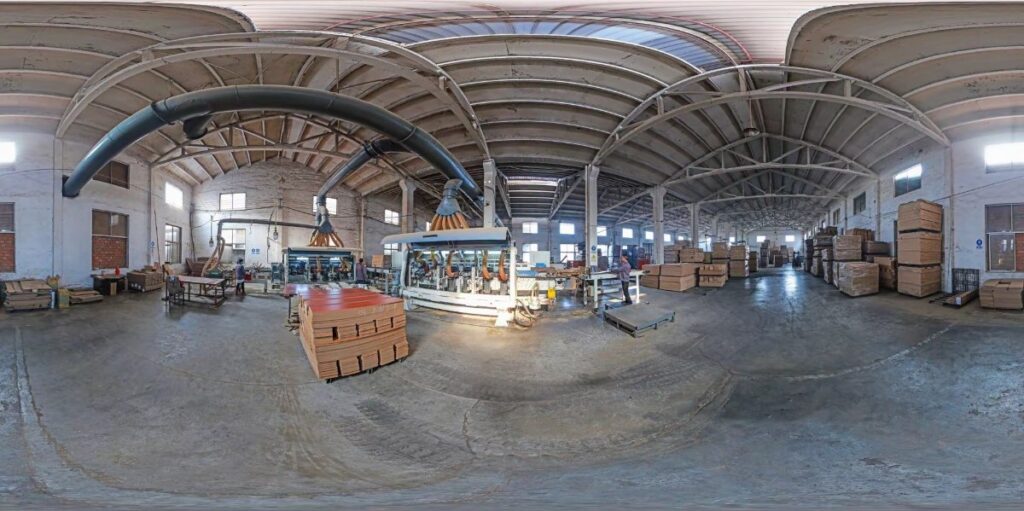
How Is Quality Maintained During the Pressing and Lamination Process?
Once materials have been inspected during receiving and storage they are ready for the pressing and lamination phase, where flooring receives its structural stability as well as its surface color. Most laminate flooring consists of four layers of material: the wear resistant layer, the decorative layer, the base material layer and the balance layer. During production all of the single layers are precisely bonded under strictly controlled conditions in order to achieve a stable end-product.
Monitoring Temperature and Pressure Parameters
Temperature, pressure and time for pressing are being controlled automatically to guarantee a good bond between the single layers. Should there be any deviation from the above mentioned parameters an alert will be triggered to enable an operator to intervene in due time. In order to avoid air inclusion as well as delamination a constant pressure has to be kept up during the process. As a rule hot pressing is being carried out at high temperatures in order to guarantee a sufficient bonding of thermosetting materials between the single layers by fusing them.
Surface Layer Inspection During Lamination
The decorative paper layer can be visually attractive, but the color must be accurate under different lighting conditions. The overlay films are tested for abrasion resistance according to the EN 13329 standards. The wear-resistant layer is the surface layer of a floor. This layer provides a floor with wear resistance and scratch resistance and also prevents penetration of moisture, of stains and of everyday wear and tear to the floor layer. Optical scanners can detect unevenness, uneven gloss and micro-scratches. These defects must be removed before they can be processed further.
How Are Milling and Profiling Operations Controlled?
Precision machining determines the quality of the installation. The reliability of the click-lock system is determined by the precise profiling, which can be achieved with advanced CNC milling equipment.
Calibration of Cutting Equipment
CNC machines are recalibrated on a daily basis in order to maintain the most precise of dimensional accuracy by means of a tolerance of ± 0.05 mm. The sophisticated monitoring of blade wear on saws and rip saws functions on the basis of the cycle count. The actual number of cycles, which a specific blade has undergone is registered in real time. This is subsequently analyzed by the system and, on the basis of predetermined, saved values it determines the required point in time for the changeover to a new blade in order to prevent any degradation in cut quality. Digital maintenance logs are created for every single calibration process which then permits a traceability of the respective CNC machine.
Locking System Verification
For each batch of locking rails tensile load testing is performed with corresponding installation stress. In the manual assembly check smooth engagement of end caps without any gaps or excess material is verified. Dimensional stability tests are performed by exposing the test samples to varying levels of humidity. This is crucial for controlling of expansion in different climate zones and ensuring long-term performance of the lock system.
What Happens During Surface Finishing and Coating?
Finishing treatments provide a product not only with aesthetic value but also protection from external factors such as scratches and stains.
Application of Protective Layers
UV-curable coatings are applied using roller systems equipped with viscosity sensors for even distribution. Anti-scratch additives enhance surface resilience in high-traffic environments such as commercial spaces or hallways. Gloss level meters measure reflectivity consistency across batches for uniform appearance standards expected by premium brands.
Environmental Testing After Coating
Following the coating application, the panels undergo an accelerated aging test, simulating in a test chamber the effects of several years of weathering under different combinations of high temperature, high humidity and light. The test for stain resistance is carried out with coffee and/or oil and the assessment of slip resistance refers to the relevant national building regulations for residential and commercial use.
How Is Final Inspection Conducted Before Packaging?
The final inspection is the point where human expertise and automation meet, with the goal of delivering zero defects from the factory to its customers.
Visual Examination by Trained Inspectors
Our skilled quality control inspectors thoroughly inspect each batch of printed circuit boards under daylight simulation lamps, assessing for correct registration, consistent tone and obvious defects such as pinholes or edge damage. Random samples are then compared to master approved samples endorsed by our quality engineers to grant release for dispatch.
Automated Dimensional Verification and Packaging Control
Various Laser measurement devices check thickness, width and length of boards for production against tolerance as stated in documents. Intactness of packaging in cartons is checked for various scenarios of transportation stresses, such as moisture as well as various stacking loads during logistics. Each of the pallets is marked with a unique barcode to connect digitally with quality documentation of products for complete traceability in distribution chain.
Why Choose Shandong Lanhe Import and Export Co., Ltd.?
Shandong Lanahe Import and Export Trade Co., Ltd. is a production, export as one of the enterprises, with a complete and scientific quality management system. Our company integrates fully automated machinery across all production stages from material procurement to inspection. We are a most advanced, professional fully automated machines manufacturer. All processes from raw materials procurement to production, processing, inspection and delivery are strictly controlled by professionals. Shandong Lanhe is an advanced manufacturer which produces high quality products with long durability and also satisfies environmental protection standards when exporting to Europe, Australia, North America, Southeast Asia and other countries. International quality certificates such as CE and SGS are issued for our production processes.
What Are the Key Insights from the Quality Control Process?
Modern laminate flooring factories have proven that quality control in flooring production goes beyond end-of-line checking. It starts from purchasing raw materials and continues through all processes until the product is packaged and ready for distribution. Lanhe Flooring conducts quality control at every stage of production to ensure that every floor covering produced is durable, safe and of high aesthetic value. Our approach to quality control enables us to consistently provide flooring products of robust quality which meet the design requirements of architects and designers from all over the world.
FAQs About Quality Control in Laminate Flooring Production
1. How often are quality control checks performed during production?
Quality checks are carried out on an ongoing basis at all manufacturing stages. These include when the raw materials are received, during pressing, milling, coating and packaging. This way, any errors can be detected quickly before they result in any defective articles.
2. Which international standards guide laminate flooring quality testing?
Our factories follow EN 13329 (Europe) for abrasive belts, ISO 9001 for quality management, ISO 14001 for environmental management and CE certification. Our assessment for durability of our products is in line with global benchmarks for emissions and mechanical performance.
3. How does automation improve consistency in laminate flooring production?
Automation increases stability of production by strictly controlling all relevant variables, such as temperature of pressing and dimensions to be cut. It thus minimizes the influence of human error and ensures constant high quality of production, also at high volumes. This is particularly important for large supply chains of high-end laminate flooring, which also have to fulfill ecological criteria and be sold on all markets worldwide.
