

SPC flooring has become one of the fastest-growing flooring solutions worldwide. With SPC flooring being extremely durable, completely water-resistant, dimensionally stable and extremely easy to install, it’s no surprise that SPC is gaining so much popularity. As demand for SPC flooring increases within residential, commercial and industrial markets worldwide, it’s becoming increasingly important for consumers to gain insight into how SPC flooring is manufactured, as well as the factors that determine the quality of the product.
The SPC flooring manufacturing process includes many stages of high precision starting from raw materials preparation, through extrusion, lamination, profiling, to inspection and packaging. All production stages are crucial for high quality product with desired characteristics, attractive look and durability. Modern SPC factories are equipped with highly advanced automated production lines, with modern machinery, high quality control system, that guarantee high quality of production in line with global market requirements.
This guide to how SPC flooring is produced has been written for the distributors, importers, contractors and project developers that source products from SPC flooring manufacturers. It provides a description of the manufacturing process, an overview of the technologies involved and looks at the various challenges encountered by manufacturers. It highlights why choosing an experienced quality manufacturer such as Shandong Lanhe Import & Export Co., Ltd could be crucial to delivering products that have the correct quality and to meeting the demanded levels of supply.
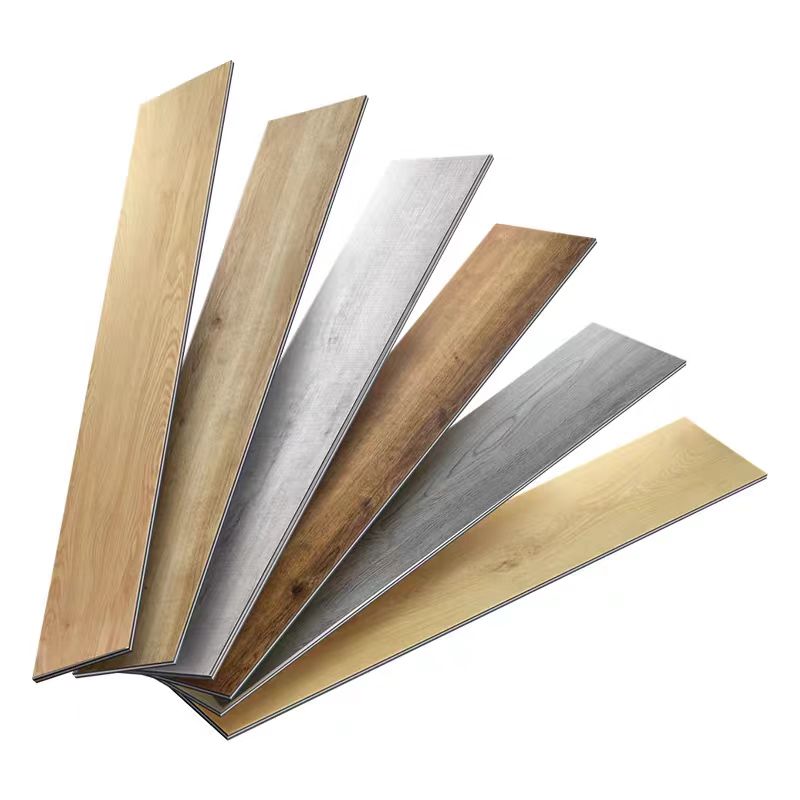
What Materials Are Used in SPC Flooring Production?
Before we go through the process of how SPC Flooring is made it is best to understand all the layers of the flooring and the individual design of each of the layers in order to highlight the features and benefits of each layer to provide strength, stability and looks to the Flooring.
Core Components of SPC Flooring
Our SPC (Stone Plastic Composite) flooring is an Engineered Hardwood Flooring. SPC flooring is manufactured with a mix of natural stones and high-quality synthetic with just the right amount of each to provide a rigid core and high flexibility.
- Calcium Carbonate (Limestone Powder): This mineral acts as the structural foundation of SPC flooring, providing rigidity and dimensional stability that ensures minimal expansion or contraction under temperature fluctuations.
- Polyvinyl Chloride (PVC) Resin: Serving as the binding polymer, PVC resin enhances flexibility while maintaining the core’s toughness.
- Plasticizers and Stabilizers: These compounds improve elasticity, thermal stability, and processability during manufacturing.
- Decorative Film Layer: A printed film replicates authentic wood grains or stone textures using high-definition printing technology.
- Wear Layer: The top transparent coating protects against scratches, stains, and abrasion—essential for long-term durability in both residential and commercial spaces.
The Role of Additives in Material Performance
Additives play a major role in optimizing material performance.
- UV inhibitors prevent discoloration caused by prolonged sunlight exposure.
- Anti-bacterial agents enhance hygiene in high-traffic environments such as hospitals or offices.
- Impact modifiers strengthen resistance against heavy loads and foot traffic.
How Is the Core Layer Formed During Extrusion?
After raw materials have been prepared, they are extruded in a process that is crucial for core board’s density, evenness and mechanical properties of SPC.
Mixing and Compounding Process
Limestone powder is mixed with PVC-resin. Stabilizers and additives are weighed out precisely and mixed with the limestone powder on high-speed mixers. After the mix has cooled off it is introduced into the extruder where all the components are dispersed consistently.
Extrusion and Sheet Formation
The compound is then processed in an extruder, where temperature and pressure are kept under control in order to melt the compound. After melting, the compound is then extruded through a T-die die which is cut off to form extremely long and very thin sheets of constant thickness. These long thin sheets are then cooled by calendring rolls in order to produce two smooth surfaces and to fix the dimensions of the sheet for subsequent lamination operations.
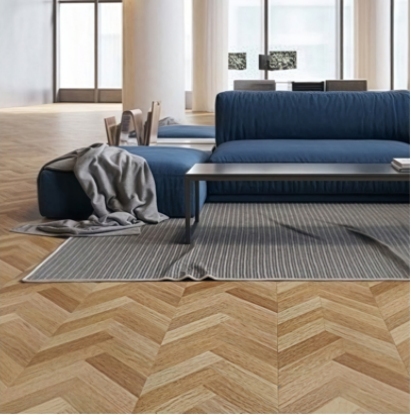
How Is the Decorative Layer Applied?
These Core Sheets are produced as described above and then covered with a wide variety of surface films, which can resemble the look and feel of a variety of natural materials including real oak and even marble stone. The finished surface has been cleverly engineered using modern engineering techniques.
Lamination Process
Our decorative films are heat-laminated by hot pressing onto SPC core. Our films guarantee visual realism and mechanical robustness. They are glued perfectly, without any air bubbles, and do not come off.
Wear Layer Application
The transparent wear layer on top of the design film is usually between 0.3 mm and 0.7 mm thick in order to absorb scuffs and dirt in order to prevent stains while maintaining the design impression.
What Happens During Cutting and Profiling?
Large SPC panels after lamination are cut into planks or tiles in line with market requirements with the aid of accurate machinery.
Precision Cutting Techniques
Our computer-controlled saws are precision cut to exact size with minimal waste of trim. Our edge finishing also helps to produce straight and accurate wood installation.
Click-Lock Profiling Process
Special machines are used to mill the edges of Flooring. These machines create the connecting system between the Flooring planks such as Unilin or Valinge click-lock system. No nails, no glue – installation with tools only.
How Are Surface Finishing and Quality Inspections Conducted?
Hardwood floor planks are inspected multiple times before they are packed to check that they meet the necessary international performance criteria.
Surface Treatment Options
Les fabricants utilisent plusieurs techniques pour améliorer la surface :
- Embossing in Register (EIR): Aligns texture with printed patterns for lifelike tactile realism.
- Matte or Gloss Coatings: Adjust surface sheen according to design preferences or market trends.
- UV Coating: Provides additional stain resistance while preserving color vibrancy over time.
Quality Control Procedures
At Lanhe Flooring, Quality Control is of utmost importance to us. We have implemented strict production procedures within our factory to guarantee that our products will last. All of the flooring items that we manufacture are inspected for any surface defects before being case made and before they are shipped off to other countries around the world. Our Dimensional Accuracy testing checks for flooring planks of uniform thickness, Mechanical Testing examines a product’s impact resistance and heat resistance, and Visual Testing looks for any surface defects of a floor covering before it is case made. In addition to these tests, we also test our products for wear, for impact and for water resistance.
Why Choose Shandong Lanhe Import & Export Co., Ltd as Your SPC Flooring Supplier?
Shandong lanhe import and Export Co., Ltd. is one of the leading exporter in China. As a production as well as export-oriented company, we have an advanced and complete Quality Management System. We have advanced fully automated production lines to control every process from procurement of raw material to processing by professional.
Lanhe Flooring is a manufacturer of floorcovering of premium quality, innovative design and great service, exceeding customer’s expectations. The worldwide markets we supply are spread over North and South America, Europe, Australia and Southeast Asia. The products we deliver all over the world are of high quality and this is the reason for the big trust that is placed in us by costumers from all over the world.
At Lanhe we incorporate all the sustainable practices of sustainable manufacturing to offer a wide range of high performance eco-friendly flooring products. We are able to offer very flexible flooring solutions for all types of domestic and commercial worldwide projects. With a background of Performance engineering we are one of the largest flooring manufacturers. We can provide a wide range of floor covering solutions with many different designs to meet all of our clients’ requirements.
What Are Common Challenges Faced During SPC Flooring Manufacturing?
As production goes on at even the most advanced factory with modern technology, such as Lanhe’s fully automated plant, there will always be some problems to solve.
Material Homogeneity Issues
Differing levels of impurities in raw materials can create problems in terms of achieving consistent extrusion. By using strict sourcing and a batch testing regime to check for uniformity we are able to combat these effects.
Temperature Control During Extrusion
Local variations in heating profiles that create stresses within layers can be monitored and controlled using modern monitoring systems in order to guarantee a suitable temperature for melting the compounds.
Adhesion Between Layers
Failure of delamination can be caused by incorrect lamination temperature or by not applying sufficient pressure during lamination. Continuously optimizing lamination parameters is required to achieve good bond quality and ensure that the product’s properties are maintained over its lifetime.
How Does Packaging Prepare Products for Global Distribution?
After all the checks and the panel is deemed complete, it is then dispatched to an automated packaging line where it is very rapidly packed up with other panels to be sent off to your location by the very best logistics service.
Automated Packing Systems
The planks are stacked automatically. Then they are put into cartons, which are equipped with corner protectors. For export business the packing is made strong enough to ensure that the goods arrive in perfect condition.
Labeling and Palletizing
Each carton will have identification tags with details such as batch number, production date, size of carton and any other relevant certification. These identification tags will enable traceability even through global supply chains managed by local distributors.
Final Thoughts on SPC Flooring Manufacturing Process
All processes from raw materials to packaging are carried out through precision engineering with automation technology. Lanhe Flooring has a modern workshop, where a series of fully automated production lines operate at maximum efficiency and produce high precision, consistent quality flooring products. The processes through precision engineering and automation technology are perfectly combined with manual workmanship. Each floor plank produced with high precision mechanical properties is also a long-lasting design to decorate a modern home or commercial premises all over the world with high-end quality flooring products.
Frequently Asked Questions (FAQs)
1. What distinguishes SPC flooring from traditional vinyl flooring?
SPC flooring is fitted with a stiff limestone composite core. Thanks to this SPC floor has much better dimensional stability than other typical floor coverings made of flexible vinyl, so-called conventional flooring.
2. Can SPC flooring be installed over existing subfloors?
Yes. Click-lock flooring can be laid straight away over most sub floors without the need for adhesives or time consuming preparation of the sub floor that is required for most other floor coverings.
3. How does temperature variation affect SPC flooring performance?
The dense composite structure has a very small degree of expansion and contraction due to temperature variations. The shape of the structure is retained in the long term.
4. What maintenance practices extend SPC flooring lifespan?
Daily sweeping of the floor and occasional cleaning with damp mops and neutral cleaning products will help protect the surface of the floor from damage. Using abrasive cleaning tools could quickly wear away any protective floor coatings.
5. Is SPC flooring environmentally friendly?
Many manufacturers such as Shandong Lanhe Import & Export Co., Ltd use materials that are recyclable and free from harmful substances like formaldehyde and heavy metals. Eco-certifications are used to verify sustainable compliance throughout their production processes.
