

In the hospitality business, moisture remains a persistent headache that can disrupt daily operations and erode profit margins, whether from guest room bathroom leaks or the inevitable water tracked into corridors on stormy days. SPC flooring for hotels: solving moisture problems in guest rooms and corridors stands as a proven fix, relying on a stone plastic composite core that mixes limestone with stabilizers to achieve total waterproofing and rock-solid stability. Materials like this shrug off spills, sudden humidity surges, and the grind of constant use, sidestepping the warping or mold buildup that dooms older choices such as carpet or solid wood. For properties dealing with packed lobbies and endless check-ins, SPC brings the kind of toughness that keeps floors looking sharp and performing reliably season after season.
Over the years, the industry has pivoted toward hardier surfaces as owners grapple with rising repair bills and tighter budgets. Figures from trade analyses peg moisture-driven damage at around 20% of yearly upkeep expenses for many establishments, especially those in muggy zones or by the sea. SPC tackles this head-on through its unyielding build, serving as a sensible swap that holds its form amid temperature swings and damp spells. Outfits fitted with SPC often see fewer hiccups, freeing up resources to boost guest loyalty instead of patching floors endlessly.

Understanding Hotel Moisture Issues: Guest Rooms and Corridors
Moisture creeps into hotel setups from all angles, each source carrying the risk of snowballing into major headaches if left unchecked. Guest rooms, particularly the bathrooms, deal with steady dampness from steamy showers and faucets, where beads of water gather and the odd drip finds its way through seals. When humidity pushes past 70% in these spots, conventional coverings soak it up, resulting in bulges that warp the layout and encourage mold to take root underneath. Not only does this breach cleanliness protocols, but it also sparks grievances from visitors prone to allergies.
Corridors crank up the stakes with their nonstop bustle. Patrons haul wheeled suitcases stuffed with gear, dragging in grit, pebbles, and rainwater from doorways, as maintenance crews roll bulky carts loaded with mops and detergents over the same stretches. In areas battered by rain or hugging the coast, this imported wetness pools into hazards, slicking paths during rush times. Insights from sector groups reveal that hallway surface breakdowns, frequently linked to scraping alongside sogginess, play a big part in halting business, at times demanding whole-area overhauls right in the thick of high season.
These damp troubles spill over into wider headaches. Buckled floors throw off level ground, hastening damage to fixtures and amplifying echoes that bother adjacent suites. Carpet, still a go-to in many places, locks in fluids and breeds germs, whereas laminate gives way to curling edges in steamy spots. SPC flooring fights back with its sealed makeup, keeping liquids at bay for simple cleanup without letting them burrow into the base.
From hands-on experience, properties in steamy spots like Florida or parts of Southeast Asia log fewer mold outbreaks after adopting SPC, with service records noting a plunge in related fixes by up to 30%. Hallways, pounded by footsteps and rollers, gain from the product’s knack for fending off water while standing up to the scrape of particles. This mix halts the slow breakdown typical of weaker alternatives, safeguarding both user safety and visual appeal across long hauls.
The cumulative effect shows in operational flow: fewer shutdowns for repairs mean smoother check-ins and happier stays, especially in boutique spots where ambiance counts. Larger chains, too, find that addressing these moisture pitfalls early cuts down on warranty claims and vendor calls, streamlining the whole maintenance cycle.
Core Advantages of SPC Flooring: Waterproof, Wear-Resistant, Easy to Clean
SPC flooring sets itself apart in tough hospitality roles via a core crafted from compacted stone plastic composite, fusing calcium carbonate and PVC into a base that defies surrounding pressures. This design secures absolute waterproofing, where even hours of liquid contact won’t trigger swelling or breakdown. In guest room wash areas vulnerable to splashes or in foyers by main doors, SPC stays level, dodging the distortions that sideline rooms in sites stuck with timber derivatives.
The protective wear layer, usually 0.3 to 0.7 mm deep and bolstered by UV shields, guards against routine scrapes. Busy passages in hotels take hits from shoe soles, marks from baggage, and thuds from fallen objects, but SPC’s outer skin endures, holding onto its feel and hue. Lab evaluations, mimicking endless steps, prove it outpaces standard vinyl by double or more in endurance for business use.
Hotel cleaning regimens call for speed, and SPC fits right in. Messes vanish without traces, thanks to the airtight finish that pushes back discolorations from drinks or solvents. Upkeep boils down to routine dust removal then mild wiping, skipping the rough brushes that ruin gentler bases. In setups where room flips happen fast between departures, this swift rebound trims staff time and supply spends.
Adding to its fit, SPC weaves in grip-enhancing traits via patterned tops that cling firm in damp states, curbing mishaps in wet-prone sections. Establishments rolling out this flooring observe better alignment with safety codes, notably in hallways where rain-slick or mop-damp floors meet crowds on the move. The product’s heat steadiness also blocks shrinking in cooled interiors, keeping joints snug and hazard-free.
Field stories highlight these perks: beachfront retreats in humid belts note SPC holds strong in deck paths and eatery zones against nonstop mugginess without dulling, as city lodgings commend its fight against street dirt in entry halls. This adaptability covers style choices too, with timber-mimic or rock designs that echo high-end stuff minus the weak points, letting planners hit luxury looks within real-world costs.
Durability ties into sustainability angles, with lower replacement rates meaning less waste headed to landfills—a point that resonates in eco-focused certifications. Hotels pushing green initiatives find SPC aligns, often carrying low-emission ratings that support broader environmental goals without skimping on performance.
Focus: Corridor Luggage and Cleaning Cart Pressure Testing
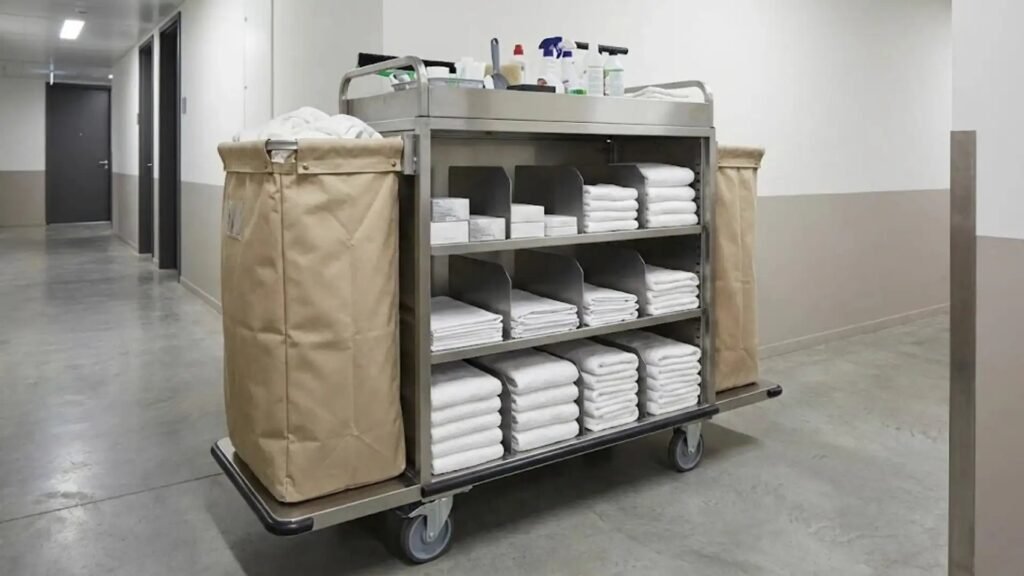
Hotel hallways act as the main arteries for guest traffic, taking a beating from wheeled gear that pushes flooring to its edges. Baggage trolleys, often tipping 40 to 60 kg fully packed, cross these paths over and over each day, channeling force via slim casters. Janitorial rigs, bulkier at 80 to 120 kg with tools aboard, tag along during quiet shifts, frequently over still-wet patches from swabbing.
SPC flooring rises to this through its high-pressure core, spreading weights to dodge lasting pits. Benchmarked trials, like caster roll mimics across 10,000 loops, show tiny surface shifts, easily beating out laminate or rugs in bounce-back. The built-in flex lets it snap back from knocks, preserving flatness key for easy trolley paths and visitor security.
On-site outcomes spotlight SPC’s advantage here. Venues with lengthy passages mention that old-school floors groove from ongoing cart trails, sparking patchy erosion and swaps every couple years. SPC, though, hangs tough, with reviews from franchise groups indicating 15-20 year runs under like loads. This strength limits halts, since fixes drop off, and meshes with subfloor warmth setups in newer constructions.
Shifts in hallway temps near outer entrances throw extra strain, but SPC’s steady mix wards off splits or openings that might crop in less flexible types. Paired with its water-repelling side, this suits buffer areas where damp and mechanical hits overlap, staving off the layered harm common in muggy lodgings.
Maintenance teams appreciate how this resilience cuts emergency calls, allowing scheduled checks instead of reactive patches. In peak seasons, when every room counts, such reliability keeps corridors operational, avoiding the chaos of cordoned sections.
Actionable Solutions: From Selection to Installation
Picking SPC flooring kicks off with a solid site rundown, charting flow routes and damp hotbeds to align specs. For sleeping quarters, lean toward 5-7 mm thick versions with built-in cushions for hush, whereas passages call for 7-9 mm with beefed-up guards against rollers.
Laying out follows a clear path: bases need under 5% wetness, smoothed to 3 mm flat over 3 meters to block pattern bleed. Snap-together joints speed placement, wrapping a typical space in mere hours sans glues, matching refit schedules in live hotels. Edge buffers handle subtle moves, locking in fit for the long term.
After setup, care routines stress forward thinking. Everyday steps cover sucking up sand that might grind tops, teamed with fortnightly light scrubs using balanced mixes. Every few months, scans spot rim fray or joint slips, nipping budding woes. Properties sticking to these see stretched service lives, with tallied cuts in refresh rounds.
Weaving in extras like doorway bridges boosts use, as picking toxin-light certified goods syncs with eco builds now standard in lodging ratings. This full view not just fixes pressing wet and tough needs but gears sites for lasting runs.
Training staff on these protocols ensures consistency, turning potential weak spots into strengths. Over time, this builds a culture of prevention, where floors contribute to overall efficiency rather than draining resources.
About Shandong Lanhe Import and Export Co., Ltd.
Shandong Lanhe Import and Export Co., Ltd. centers on crafting and shipping top-tier flooring, with a keen eye on SPC ranges built for trade needs. Sited in Jinan, the outfit runs cutting-edge lines with tight oversight from sourcing to end checks. Lanhe’s SPC lines draw on clean PVC and rock blends, yielding strong water barriers, scrape defense, and even sizing.
With FloorScore and CE stamps, the firm stresses green methods and steady output. Shipments span North America, Europe, Australia, and Southeast Asia, offering tailored tweaks and prompt hauls to back varied hospitality ventures.
Conclusion
SPC flooring arms hotels to squarely face damp hurdles in sleeping areas and passages, merging sealed cores with top-notch stamina and basic tending. This pick slashes ongoing outlays and lifts the setting, smoothing workflows and fostering good visitor vibes. Going with builds made for these trials lets sites dodge usual snags and hone in on service highs.
FAQs
What makes SPC flooring suitable for hotel corridors with heavy luggage carts?
SPC flooring’s packed stone plastic base takes indents from moving masses like baggage and scrub rigs in stride. Strength checks affirm it keeps form amid steady heavy flows, curbing pits and backing prolonged duty.
How does SPC flooring handle moisture in hotel guest room bathrooms?
SPC flooring hits full water block, stopping ingress at the heart to dodge bends, bloat, or fungus from drips and thick air, suiting baths and akin damp pockets.
Is SPC flooring easy to clean and maintain in busy hotel environments?
SPC flooring calls for scant work in care, with messes lifting quick by wet rags and its closed face shunning soil piles, lightening loads on upkeep crews.
Can SPC flooring reduce noise in hotel corridors?
SPC flooring dishes solid sound muffling via its firm makeup and optional hush pads, trimming step rings to build calmer vibes for lodgers.
Why choose SPC flooring over traditional options for hotel renovations?
SPC flooring fuses water guard, scrape hold, and trust, fixing standard woes like soak hurt and crowd grind. It brings thrift through trimmed tending and bigger span against rug or timber.
