

For many overseas buyers, SPC flooring looks simple on paper—PVC, stone powder, a click system, and a UV coating. But anyone who has spent time sourcing in this industry knows that two SPC planks that look identical online can behave very differently once they reach the job site. The difference rarely lies in the formula alone. It starts inside the factory: the machines, the workflow, the level of automation, and the discipline behind the production line.
This guide takes you inside a professional SPC flooring factory and breaks down what global buyers should verify before placing their first container order. With demand growing in North America, Europe, and Southeast Asia, selecting the right factory can reduce complaints, color claims, and costly quality issues.
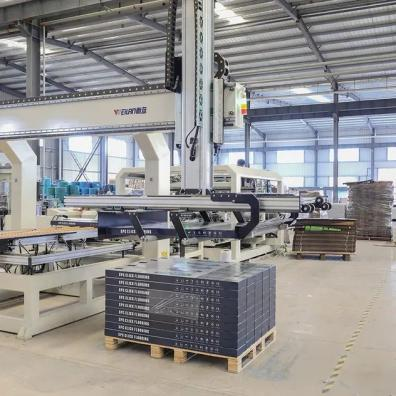
Img.Inside an SPC Flooring Factory What Global Buyers Should Look for Before Signing a Contract.png
Understanding What an SPC Factory Really Does
SPC production is not just extrusion
At a glance, SPC manufacturing may appear to be a single continuous extrusion process. In reality, it’s a series of tightly linked stages:
- raw material batching and high-speed mixing
- twin-screw extrusion and sheet formation
- calendering for density, thickness, and texture
- cooling and stress conditioning
- precision CNC milling for click-lock edges
- UV coating for scratch and stain protection
- quality inspection, packing, and palletizing
Any weakness in one stage shows up later as:
- plank curling
- locking system breakage
- thickness inconsistency
- surface waves or gloss unevenness
This is why buyers must evaluate capability, not just product samples.
Automation Level—The First Indicator of a Reliable SPC Factory
Why automation matters
A highly automated SPC production line produces:
- more consistent density
- lower color variation
- fewer dimensional deviations
- reduced human-caused contamination
Buyers should check whether the factory uses:
- automated feeding and metering systems
- continuous extrusion lines with closed-loop temperature control
- robotic or mechanical sheet transfer mechanisms
- inline thickness monitoring
Factories still relying heavily on manual feeding or manual lifting typically show higher defect rates.
What automation looks like on the shop floor
A buyer visiting a modern SPC factory should see:
- sealed feeding systems with dust removal
- real-time dashboard screens displaying line speed, temperature, and pressure
- calender rollers controlled by servo motors
- automated stacking arms
If the workshop feels “quiet and orderly,” chances are the factory has invested in modern automation.
Calendering Equipment—The Heart of SPC Dimensional Stability
Why calendering defines plank quality
The calendering unit determines:
- density uniformity
- thickness stability
- embossed texture clarity
- internal stress distribution
Professional buyers know: if the calender is unstable, no amount of QC will save the product.
What buyers should check
When evaluating an SPC factory’s calendering setup, verify:
- whether they use 3-roller or 4-roller systems
- roller diameter (larger allows more stable pressure)
- temperature control zones
- embossing roller variety
- the presence of alignment correction systems
Factories using older or inconsistent calendering systems often struggle with batch-to-batch thickness drift and corner curling.
UV Coating—Where Surface Durability Is Truly Made
Why UV coating is not a cosmetic step
This layer determines:
- scratch resistance
- stain resistance
- abrasion level (AC3/AC4/AC5)
- gloss uniformity
A buyer should ask:
- how many UV lamps are used?
- what is the coating sequence—base coat, wear layer, top coat?
- how is dust controlled in this room?
A clean UV line usually indicates a factory that understands long-term durability.
Common issues tied to UV lines
When the UV process is substandard, defects appear such as:
- streaks
- pinholes
- uneven gloss
- weak surface hardness
These are expensive to correct after delivery, making UV-line capability a critical evaluation point.
MES Quality Tracking—The New Standard in Modern SPC Factories
Why MES matters
A Manufacturing Execution System (MES) is no longer something only large factories use. It allows:
- batch traceability
- real-time defect recording
- automated production logs
- data-backed QC reports
For overseas buyers, MES provides something invaluable: accountability.
What buyers should verify
Ask the factory:
- Can each shipment be traced back to its production line and formula batch?
- Do they store digital QC records?
- Is there a process for analyzing defect trends?
Factories that track data tend to deliver more stable long-term performance.
Stable Supply Capacity—The Real Pain Point for Global Buyers
Why supply stability often matters more than price
Large flooring distributors and wholesalers frequently complain about:
- unstable lead times
- sudden capacity shortages
- inconsistent color batches during repeat orders
A factory’s true capacity is shown not by its sample room, but by:
- number of active extrusion lines
- daily output per line
- warehouse inventory handling
- labor stability
- raw material storage planning
Signs a factory can support long-term supply
Look for:
- multiple synchronized extrusion lines
- large mixed-material silos
- temperature-controlled coating rooms
- extensive finished-goods staging areas
Factories with insufficient storage often develop color variation issues because batches cannot be produced continuously.
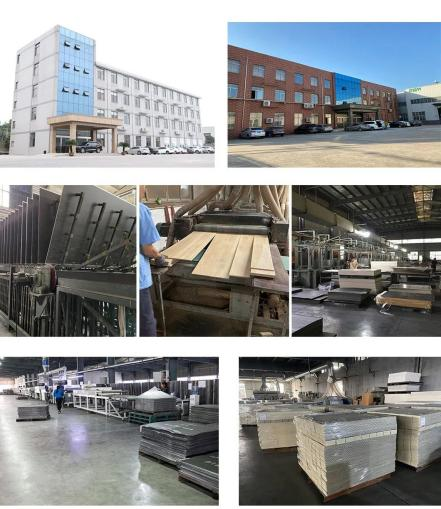
Img.Inside an SPC Flooring Factory.png
Shandong Lanhe Import and Export Co., Ltd.—A Factory Partner Built Around Consistency
While many factories produce SPC flooring, only a smaller portion do it with consistency, which is ultimately what global buyers value most.
According to its company profile, Shandong Lanhe Import and Export Co., Ltd. works closely with manufacturing partners equipped with automated extrusion lines, controlled calendering systems, and specialized UV-coating equipment. The company emphasizes formula stability, batch traceability, and quality monitoring—capabilities that align well with the factory standards discussed above.
Lanhe’s role as both exporter and product specialist allows it to coordinate production scheduling, maintain color consistency across repeat orders, and manage inspection workflows for overseas clients. For buyers who need stable output without being physically present in China, this hybrid model reduces risk and improves order predictability.
Conclusion
Selecting an SPC flooring factory is fundamentally a technical decision—not a price comparison exercise. The factories that invest in automation, advanced calendering equipment, clean UV lines, and MES-driven quality tracking are the ones capable of supporting long-term partnerships. Price variations may appear small, but differences in stability, defect rate, and on-time delivery quickly become visible once mass production begins.
Buyers who verify these factory capabilities before signing the contract avoid most of the headaches associated with SPC sourcing. For importers seeking reliable production planning and consistent quality, working with experienced suppliers such as Shandong Lanhe Import and Export Co., Ltd. adds a layer of coordination and technical oversight that simplifies cross-border flooring business.
FAQs About SPC Flooring, Factory Audits, and Manufacturing Quality
What should buyers inspect first when evaluating an SPC flooring factory?
Check automation level—especially feeding systems, extrusion line controls, and calendering stability. These determine density, thickness, and long-term performance more than any other factor.
Why is calendering equipment so important for SPC flooring quality?
Calendering defines surface texture, thickness accuracy, internal stress distribution, and plank stability. Weak calendering leads to curling, thickness drift, and poor embossing clarity.
How does MES quality tracking help SPC flooring buyers?
MES provides batch traceability, digital QC records, and defect-pattern analysis. It is valuable for buyers who require consistent repeat orders and transparent production documentation.
What affects the surface durability of SPC flooring?
The UV coating line plays the main role—lamp energy, dust control, and coating sequence affect scratch resistance, stain performance, and gloss consistency.
How does Shandong Lanhe support global buyers in SPC sourcing?
Lanhe collaborates with stable factories, coordinates production schedules, monitors batch consistency, and manages quality checks, helping overseas buyers secure reliable supply without on-site supervision.
