

A request for “custom laminate, 1200 × 180” leaves several important decisions open. Is the unit millimeters? Does the stated size include the click joint? What tolerance is acceptable, and which decor, core and thickness should the sample represent? Buyers can avoid costly revisions by setting these details before approving a custom production run.
Lanhe’s Laminate Flooring page lists standard size examples of 1218×198, 1218×168, 1215×145, 810×151 and 810×130, alongside 6, 7, 8, 10, 11 and 12 mm thicknesses and AC1–AC5 abrasion classes. The site also lists E0, E1 and E2 emission grades and customizable patterns. These are range options, not a promise that every decor and construction is available in every dimension.
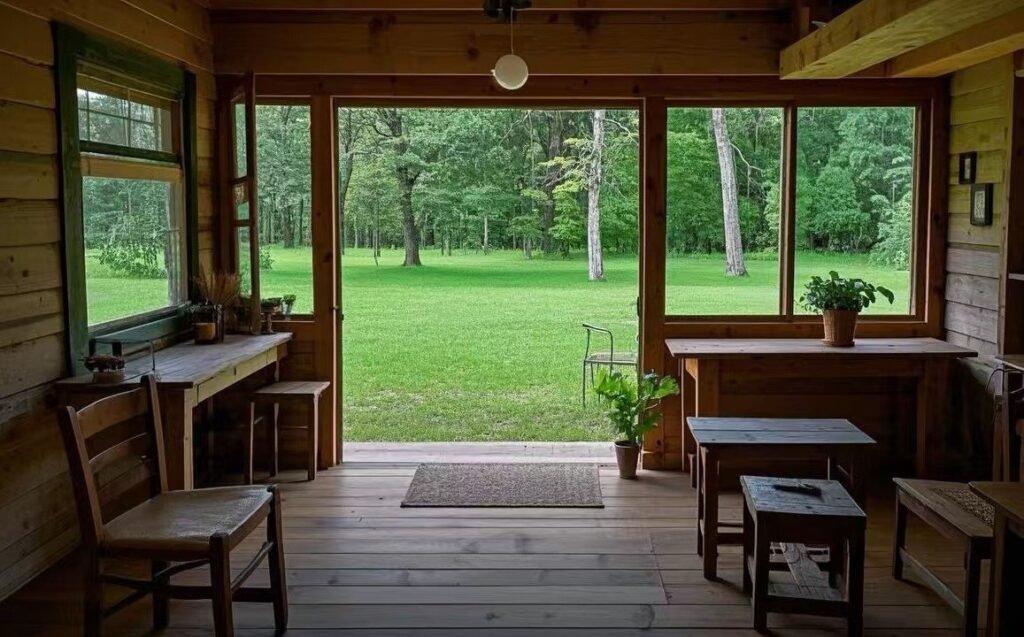
Official Lanhe country cottage flooring scene from lanheflooring.com.
Give the request a job to do
Start with where the floor will be installed. A distributor may want consistent board dimensions across several decors; a refurbishment project may need shorter boards for narrow spaces. The application defines what the sample needs to demonstrate, from appearance and laying pattern to packaging efficiency.
Give the collection a reference, such as R-01. For each zone, record floor area, laying direction, doorways, corridors and transitions. Where the new laminate meets an existing floor, measure both finished levels. A dimensioned layout is more useful to the supplier than a color name and nominal board size alone.
Decide how the size will be judged
Write the board dimension in a consistent length × width × thickness format and state millimeters explicitly. Use that same format on the quotation, approved drawing, sample label, carton artwork and purchase order. “About 1200 × 180” cannot function as an acceptance tolerance.
The website dimensions are standard examples, not manufacturing tolerance limits. Ask whether the requested size is an existing line setting or requires custom tooling, and what tolerance applies to length, width, thickness, squareness and flatness. Clarify whether measurements refer to the physical board or effective installed coverage after the click joint engages.
Approve a dimensioned sample or technical drawing before finalizing carton quantities. Measure several pieces from the sample batch, not just one. For a particularly tight fit or repeat display layout, write the acceptance range into the purchase order and confirm the measurement method.
| RFQ field | Specify | Evidence to approve |
| Board dimensions | Length × width × thickness; mm | Dimensioned drawing and sample |
| Tolerances | Length, width, thickness, squareness | Acceptance method / agreed range |
| Construction | Core, click joint, bevel, surface | Sample and technical sheet |
| Packing | Pieces and m² per carton | Final pack specification |
Keep the construction next to the size
Lanhe lists 6, 7, 8, 10, 11 and 12 mm thickness options. Thickness affects the finished height, door clearance, underlay selection, transition profile and carton weight. If thickness changes after a sample is approved, review the edge details and doorway transitions again.
The listed AC1–AC5 abrasion classes help define surface wear performance, but do not by themselves establish moisture resistance, impact behavior, joint strength or suitability for every room. Specify the actual use and request test evidence for the quoted construction.
Keep board size, tolerances, thickness, core construction, abrasion class, finish, decor, bevel and click profile as distinct fields. This makes a proposed substitution visible and makes it clear when a fresh sample or test report is needed.
Look at the decor in the requested proportion
Oak, Ash, Birch, Maple, Walnut and Beech are among the patterns listed by Lanhe. A woodgrain repeat may look balanced on a long board but busy on a shorter format. Review several planks installed together in the proposed direction, under the lighting expected at the job site.
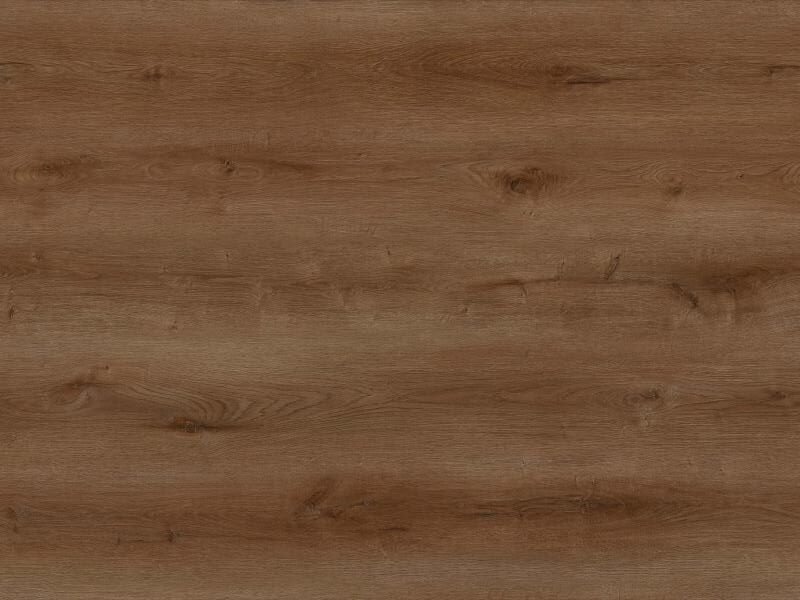
Official Lanhe laminate flooring product image (model not verified).
Keep a sample reference with the approved decor, finish, size and revision. Check the group with the skirting, Reducer or T-Moulding that will be visible at the wall or doorway. Lanhe’s Floor Accessories range shows the accessory categories, but finish matching and profile dimensions should be approved for the specific floor.
For private-label orders, retain a signed physical reference sample. Place the decor code, nominal size, thickness, abrasion class and revision on the carton artwork; this gives both incoming inspectors and repeat-order buyers a consistent reference.
Check the environmental paperwork
Lanhe lists E0, E1 and E2 on its laminate page, but those labels alone do not identify the test standard, test method, emission limit or destination-market acceptance. Request the applicable standard and a supporting laboratory report for the exact quoted construction. Do not assume an E-grade designation by itself proves compliance in every export market.
Check that the report or certificate covers the relevant core, thickness, surface and production scope, and record the document’s issue date and sample identification. Ask which documents must be supplied before production and which will accompany shipment.
Bring the doorway into the sample review
Custom dimensions can also change the way a plank meets a neighboring floor. Submit the edge or click detail, intended laying direction and measured finished floor heights. A step may require a Reducer, while a level joint may be suited to T-Moulding, subject to the approved installation system.
Select transitions from the measured section, not from a generic matching color. Ask Lanhe to confirm the usable cover width, fixing method, length and packing for the chosen profile. Keep the transition detail and floor sample on the same revision.
Find out what the carton means
New board dimensions can change pieces per carton, square meters per carton and loading efficiency. Ask for these figures along with carton dimensions, gross weight and pallet arrangement. Recalculate the order quantity only after effective coverage and pack size are confirmed.
Confirm whether the requested dimension is a retained standard or a project-specific production run. Record MOQ, sampling time, production lead time, artwork approval and replacement-carton identification on the quotation. These conditions must be confirmed by Lanhe; they cannot be inferred from the public size list.
Build the RFQ around the sample
Send Lanhe an RFQ with project destination, required area, length × width × thickness, tolerance and measurement method, core and click profile, abrasion class, decor and surface, environmental documentation, carton format, MOQ, accessories and target delivery date. Attach an annotated layout and mark questions that still require supplier confirmation.
Use the Lanhe Contact Us page and attach the layout. Say whether the package needs skirting, T-Moulding or Reducers so the floor and transitions are reviewed together.
Release check
Before releasing production, check that drawing, golden sample, test report, carton label and quotation all identify the same specification and revision. A change to size, click profile or core after sampling should trigger a new technical and appearance review.
FAQ
Does customization mean any laminate size can be ordered?
No. Lanhe offers customization, but feasibility depends on construction, decor, tolerance and production conditions.
Should board size and thickness be approved together?
Yes. They affect the installed build-up, door clearance, transitions and packing calculations.
Is AC5 automatically suitable for every commercial floor?
No. Match the abrasion class and other performance requirements to the actual project and supporting test evidence.
Do E0, E1 and E2 automatically establish export compliance?
No. Check the named test standard, current report scope and the destination market’s requirements for the quoted product.
