

Manufacturers build laminate flooring around an HDF or MDF core. The profiled edges of every plank turn into crucial zones after workers mill the locking system. Because of this, certain laminate flooring specifications mandate wax sealing on the click edges. This specific treatment adds extra defense around the profiled joint. It can also help the locking system engage much more smoothly. However, people must not confuse wax sealing with making the whole floor totally waterproof. Distributors, contractors, and private-label buyers often ask more practical questions. They want to know where the factory applies the wax. They also ask how the factory controls the consistency and how inspectors should check the goods before shipment.
Why Are Laminate Flooring Edges Important for Moisture Protection?
A wear-resistant layer and a decorative layer make up the surface of laminate flooring. Meanwhile, the central structure typically relies on an HDF or MDF core.
Factories machine click profiles directly into the plank edges. Once this happens, specific parts of that core turn into the actual joint structure.
Why Can the Joint Area Require Extra Protection?
People use these floors every day. During this time, minor liquid spills or wet mopping can introduce moisture to the plank joints. Prolonged water contact does the exact same thing.
The top decorative surface and the exposed profiled edge react differently to moisture. Therefore, factories use edge treatment as an extra protective step around the click area.
Wax sealing stands out as one valid option within Lanhe laminate flooring specifications.
Does Wax Sealing Make Laminate Flooring Waterproof?
No. Buyers must not view wax sealing as a guarantee. It does not mean the laminate flooring can survive endless water exposure.
You should view this treatment as just one piece of a larger moisture-management plan. True protection also relies on core quality, edge machining, and tight joint fit. Good installation, proper maintenance, and fast spill removal matter just as much.
This clear distinction remains very important. It helps brands create honest product claims for their retail or project markets.
What Is Laminate Flooring Edge Wax Sealing?
Wax sealing means adding a specific wax treatment around the profiled locking edges. Factories do this right after the machining phase.
The main goal is to coat the targeted edge area evenly. The factory must do this without messing up the locking geometry.
Where Is the Wax Applied?
This treatment targets the click edges. It does not replace the top wear-resistant surface layer.
Different laminate products feature different groove and locking designs. Because of this fact, buyers need to confirm exactly which profiled edges fall under the specification. They should never assume every single product gets the exact same treatment.
Lanhe laminate flooring supports many different locking options. These include Unilin and Valinge systems. The factory also offers several distinct groove styles.
Why Should Wax Application Be Controlled?
The wax coverage needs strong consistency. This achieves the desired edge treatment. At the same time, it prevents heavy residue buildup.
Uneven application causes noticeable variations between the planks. On the other hand, too much material around the locking profile creates problems. It can ruin the clean look or block the joint engagement.
Therefore, the factory must aim for stable and repeatable coverage. They should not just smear on as much wax as possible.
How Does Click Milling Affect Wax-Sealed Laminate Flooring?
Factories apply wax sealing around a previously shaped edge. This edge already features a precise locking profile.
That specific detail means the base milling quality stays highly important.
Why Must the Click Profile Be Accurate First?
Wax will never fix a badly machined locking edge.
Suppose the tongue-and-groove geometry lacks accuracy. In that case, installers might struggle to connect the boards. The joints might fail to close properly. The finished floor could even display uneven gaps right after installation.
Because of this, factories must secure stable dimensions and perfect click machining first. After they do that, they can apply the requested edge treatment.
Can Wax Hide Edge Defects?
Manufacturers must never use wax for that reason.
Buyers still need to look out for chipped edges and rough machining. They must check for profile damage and bad click fitting. A coated edge does not automatically equal a properly manufactured edge.
You can easily test a few connected boards. This practical step shows whether the waxed profile still locks together smoothly.
What Happens if Too Little or Too Much Wax Is Applied?
A good edge treatment relies on steady consistency. Extreme amounts rarely help.
Both insufficient and excessive wax applications cause serious headaches during bulk production.
What Can Happen With Insufficient Coverage?
A specification might demand wax sealing. However, some parts of the profiled edge might get zero treatment. When this happens, that specific batch will fail to match the approved product.
Uneven coverage also triggers bad inconsistency between different cartons. This becomes a huge issue when a buyer tries to build a uniform private-label collection.
Therefore, random checks across multiple production cartons work best. This method beats checking just one single sample board.
Why Can Excess Wax Also Be a Problem?
Adding extra material does not guarantee superior protection.
Too much residue makes the edge look dirty. It can also alter how the click area feels when you assemble the floor. The factory must apply just enough material to satisfy the approved specification. At the same time, they must keep the locking profile clean and fully functional.
A physical reference sample clearly shows the expected final appearance.
How Should Buyers Inspect Wax-Sealed Laminate Flooring?
Inspectors can include edge sealing checks during standard incoming evaluations. They can also do this during pre-shipment quality control.
The main trick involves checking the treatment itself. Inspectors must also examine the complete flooring construction.
What Should Be Checked Visually?
Buyers can look to see if the wax coverage looks consistent along the agreed profiled edges.
They must also hunt for chipped corners and damaged locking profiles. They should spot any heavy residue or glaring differences between samples pulled from separate cartons.
You should compare the actual production boards against the approved sample. This makes the visual checks much more objective.
Why Should Click Fitting Also Be Tested?
The click edge serves a functional purpose. It is never just decorative.
Inspectors should snap several boards together. This confirms that the locking system engages properly. It also proves that the finished joints stay perfectly even. During this test, buyers can check the joint line, edge condition, board height, and overall fit.
What Should Buyers Include in a Laminate Flooring RFQ?
Does wax sealing matter to your specific program? If yes, buyers must write it directly into the purchasing specification. They should never just assume the factory will add it.
Which Related Specifications Should Be Confirmed?
The RFQ needs to outline the HDF or MDF core details. It must state the board thickness, AC wear class, and décor. Buyers must also list the surface treatment, groove shape, click system, emission grade, plank dimensions, and packaging rules.
If a buyer wants edge wax sealing, they must state this demand clearly. They also need to confirm the target visual appearance with their supplier.
For repeat orders, a golden sample proves very helpful. It helps the factory maintain the exact same edge treatment, décor, gloss, and profile standard.
Why Is Shandong Lanhe Import and Export Co., Ltd. a Reliable Laminate Flooring Supplier?
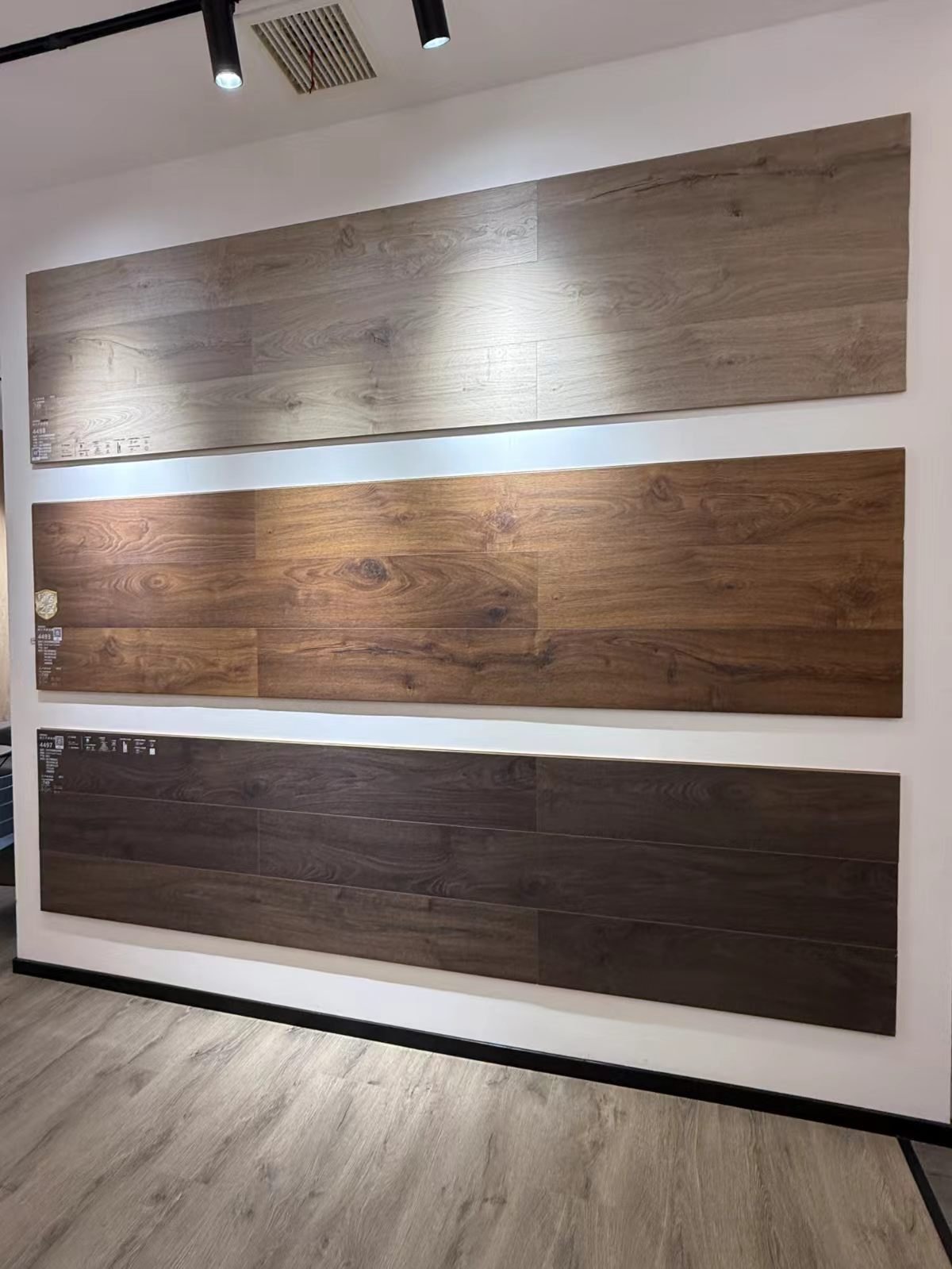
Shandong Lanhe Import and Export Co., Ltd. provides laminate flooring across many distinct designs. These include wood-grain, stone-grain, parquet, herringbone, and fishbone patterns.
Its laminate flooring specifications offer HDF and MDF core options. Buyers can pick different thicknesses and AC wear classes. The company provides several surface treatments and multiple click systems. They also offer lock-edge wax sealing. This broad specification range grants distributors and project buyers great flexibility. It helps them build successful products for varied markets.
Conclusion
Wax sealing seems like a minor manufacturing detail. However, it can easily become a vital piece of a complete laminate flooring specification.
You must consider its true purpose alongside core quality and edge machining. Click accuracy, installation methods, and moisture exposure matter too. Brands should never market this wax treatment as a standalone waterproof fix.
Smart buyers follow a clear approach. They state the edge sealing requirement upfront. They approve a physical sample. They check the coverage across several random cartons. Finally, they test the assembled click joints prior to shipment. Strict and steady production control always beats simply slathering on a thicker layer of wax.
FAQs
1. Does Wax-Sealed Laminate Flooring Become Waterproof?
No. Wax sealing simply adds a bit of defense around the profiled joint. The overall moisture performance still relies heavily on the core, joint fit, proper installation, and routine maintenance.
2. Should Every Laminate Flooring Order Include Edge Wax Sealing?
Not necessarily. It all depends on your product specification, target market, and specific buyer demands. If you truly need it, you must confirm the details before production starts.
3. How Can Buyers Check Wax Sealing Before Shipment?
Buyers need to pull random planks from various cartons. They must compare the edge coverage against the approved sample. They should look for heavy residue or broken profiles. Finally, they must assemble a few boards to verify the click fitting.
