

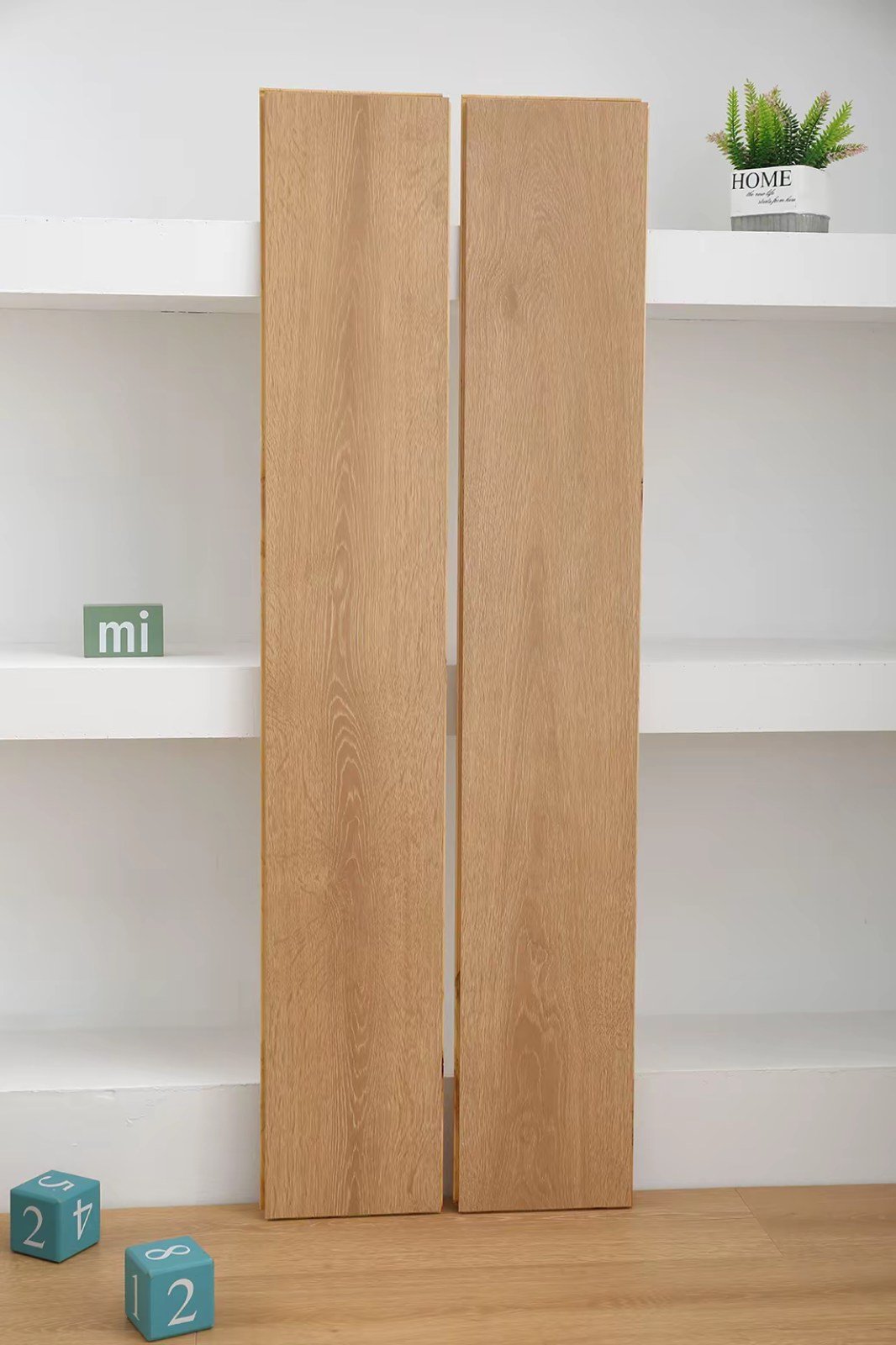
Embossed-in-register is widely known as EIR. People use it often in laminate flooring. This technique creates a highly realistic wood look. Ordinary embossed flooring is different. EIR makes sure the physical surface texture matches the printed wood grain. It aligns perfectly with the knots and pores found on the decorative layer.
Laminate flooring manufacturers must work carefully to get a good EIR effect. They need exact control over press plates and decorative paper positioning. Hot-pressing parameters and batch consistency are also crucial. Distributors, importers, and private-label flooring brands pay attention to these details. These factors directly change how premium the finished flooring appears.
What Makes EIR Laminate Flooring Different From Standard Embossed Flooring?
Both EIR and ordinary embossing give texture to the flooring surface. However, the main difference lies in the alignment.
How Does Ordinary Embossing Work?
Standard embossed laminate flooring relies on a textured press plate. This tool creates a wood-like surface. However, the embossed pattern might not match the decorative wood grain printed below.
This method definitely provides texture. Yet, the surface structure and the visual pattern often operate independently.
How Does EIR Improve the Surface Effect?
EIR focuses on aligning the embossed structure with the printed décor.
For example, the decorative layer might show an oak knot. The matching embossed texture must appear in that exact position. Wood pores and grain lines can also match the surface structure. Natural variations follow this rule too.
This careful coordination builds stronger visual depth. It helps the laminate flooring look much more like natural wood.
How Do Press Plates Create EIR Laminate Flooring?
The press plate acts as a crucial tool during EIR manufacturing.
Laminate flooring generally consists of four main layers:
Wear-resistant layer
Decorative layer
Balance layer
Workers bond these layers together during hot pressing. At the same time, the textured press plate transfers the needed surface structure. This structure goes right onto the top of the flooring.
Which Pressing Parameters Affect EIR Quality?
Several factors must stay stable throughout production:
Temperature
Pressure
Pressing time
Decorative paper position
Press plate condition
Surface cleanliness
These parameters might fluctuate sometimes. If they do, the finished texture can become inconsistent. This happens even if you use the same décor and press plate.
Why Does Press Plate Condition Matter?
The press plate needs to stay clean. It must also remain in excellent condition.
Dust and residue can harm the transferred texture. Scratches or plate wear cause similar problems. A damaged plate section might create the exact same surface defect repeatedly. This issue will show up across many boards.
Regular inspection of the press plate is highly important for EIR products. This practice maintains a consistent appearance.
Why Is Registration Accuracy Important for EIR Laminate Flooring?
Registration accuracy shows how well the physical embossing matches the printed design.
Buyers should inspect this specific quality point carefully. It is crucial when they source EIR laminate flooring.
What Does Poor EIR Registration Look Like?
Typical problems often include the following:
Embossed knots positioned away from printed knots
Grain texture shifted from the printed grain
Different alignment between boards
Inconsistent texture between production batches
Surface patterns that look artificial from normal viewing distance
The flooring might feature deep embossing. However, poor registration will still ruin the natural wood effect.
How Should Buyers Check Registration?
Buyers need to compare several full planks. They should never inspect just a small sample.
The inspection must focus on these areas:
Grain-to-texture alignment
Knot positioning
Surface clarity
Gloss level
Overall consistency
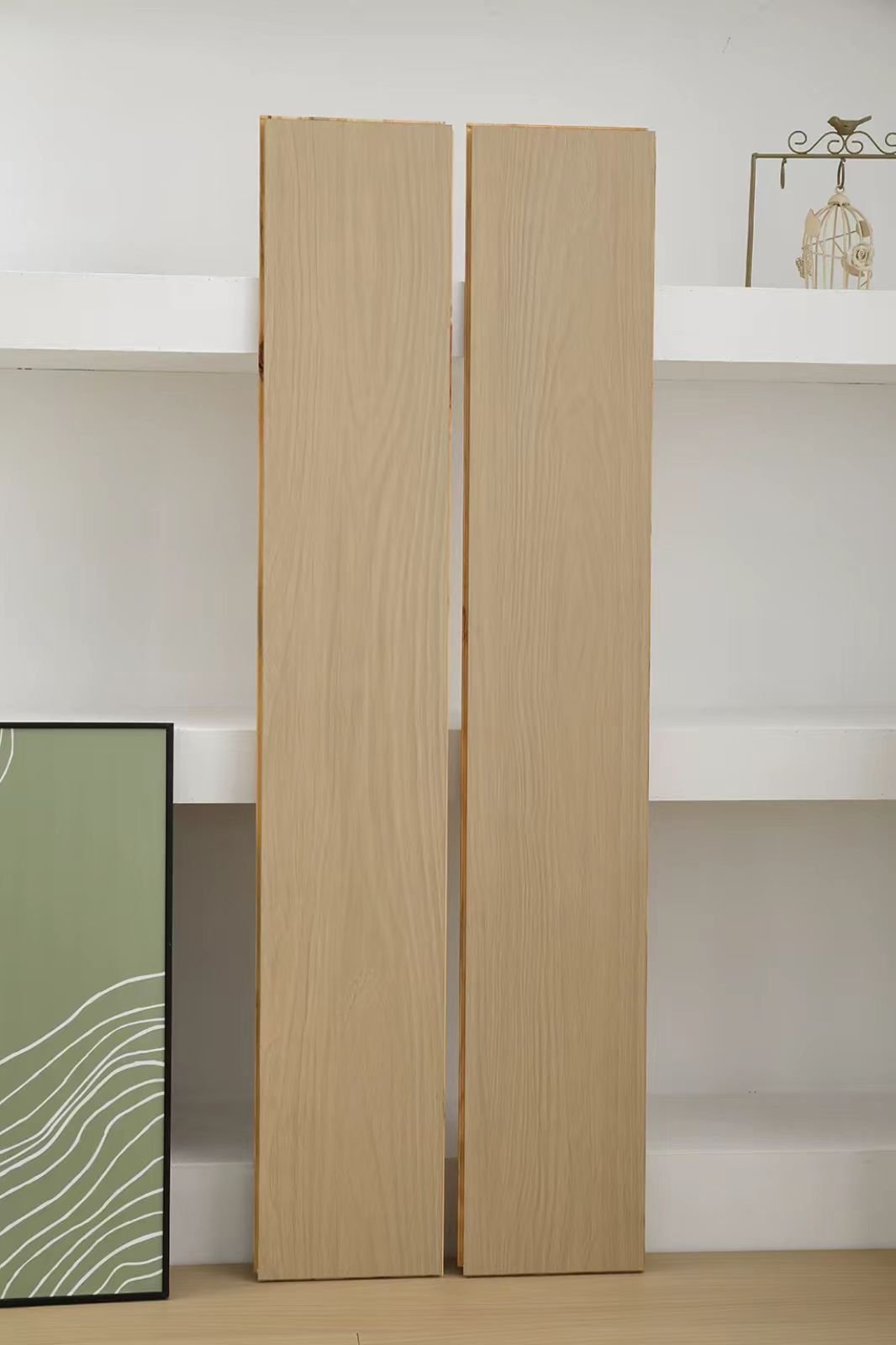
An approved physical sample works well for OEM or private-label projects. It provides a solid reference for later mass production.
Does Deeper Embossing Mean Better EIR Laminate Flooring?
That is not always true.
Texture depth must match the decorative design. It should never just be as deep as possible.
Why Should Texture Depth Match the Décor?
A light and clean oak design usually needs a subtle surface texture. On the other hand, a rustic wood décor can support deeper grain structures.
The texture might be too strong for the printed pattern. If so, the flooring will look quite unnatural.
Consistency between the visual grain and the tactile surface remains the primary goal.
Why Is a Golden Sample Useful?
Buyers and manufacturers might interpret descriptions differently. Terms like “deep embossed,” “natural texture,” or “premium EIR” often cause confusion.
A physical golden sample solves this problem. It gives both sides a clear reference for:
Texture depth
Gloss level
Décor color
EIR alignment
Surface appearance
This tool proves especially useful for repeat orders. It also helps greatly with private-label collections.
How Do Factories Maintain EIR Consistency Across Production Batches?
Creating a single good sample is fairly easy. Reproducing that exact result across thousands of square meters is much harder.
Factories must control their raw materials carefully. They also need to manage pressing parameters, plate condition, and inspection procedures.
Which Specifications Should Stay Consistent?
Important variables include these items:
HDF or MDF core
Core density
Board thickness
Decorative paper
Wear-resistant layer
Pressing parameters
Surface finish
Lanhe laminate flooring comes with HDF or MDF core materials. It offers multiple AC wear classes and different thicknesses. Buyers can choose from several surface treatments. These include EIR, embossed, matte, high gloss, and handscraped finishes.
How Should Batch Inspection Be Performed?
Workers should take samples from various parts of the production batch.
Inspectors can then compare:
Décor color
EIR alignment
Texture depth
Gloss consistency
Board dimensions
Edge quality
Click-lock fitting
Factories should keep approved samples and production records. This habit makes repeat-order comparison much easier.
What Should Buyers Include in an EIR Laminate Flooring RFQ?
Buyers must write the EIR requirement clearly into their product specification.
Which Details Should Be Confirmed Before Production?
A standard RFQ usually includes:
HDF or MDF core
Core density
Flooring thickness
AC rating
Décor code
EIR surface requirement
Gloss level
Groove type
Click system
Emission grade
Packaging
Golden sample approval
Buyers need to confirm another detail. They should check if the selected décor already has a matching EIR press plate.
A completely new surface might be required. In this case, the factory will need additional plate development.
Why Choose Shandong Lanhe Import and Export Co., Ltd. for Laminate Flooring?
Shandong Lanhe Import and Export Co., Ltd. supplies top-quality laminate flooring. They serve residential, commercial, and wholesale markets.
Available options feature wood grain and stone grain. Parquet, herringbone, and fishbone designs are also ready. Surface choices cover EIR, embossed, matte, and mirror styles. High gloss and handscraped finishes complete the list.
Buyers can select different thicknesses and AC wear classes. They can pick groove profiles and locking systems too. These choices depend entirely on their specific project requirements.
Conclusion: What Determines Good EIR Laminate Flooring?
High-quality EIR laminate flooring relies on accurate coordination. The decorative pattern must match the embossed surface perfectly.
Press plate condition and registration accuracy influence the final result. Texture depth and stable pressing parameters matter just as much. B2B buyers should approve a physical sample first. They must also check multiple boards from bulk production. This process helps reduce visual variation.
Buyers should not focus only on deep embossing. Instead, they need to look for consistent texture alignment. Repeatable production quality is equally important.
FAQs
1. Is EIR the Same as Regular Embossed Laminate Flooring?
No, they differ greatly. Regular embossing simply adds texture to the board. Meanwhile, EIR ensures the texture follows the printed wood grain closely.
2. Can Custom Laminate Flooring Require a New EIR Press Plate?
Yes, it certainly can. The existing press plate might not match a new décor. When this happens, the factory must create customized tooling.
3. How Can Buyers Check EIR Quality Before Shipment?
Buyers should compare random production planks with the approved sample. They need to inspect grain alignment and texture depth. Gloss, color, and overall consistency across cartons require careful checking too.
