

SPC flooring is widely loved because it features a solid rigid core, excellent water resistance, and a fast floating installation method. However, broken click edges, open joints, or separated planks can still happen. These issues usually appear when the locking profile, core formulation, subfloor preparation, transportation, or installation techniques lack proper control. For homeowners, this poor control leads to ugly visible gaps, unwanted movement, and annoying noise. For distributors and contractors, these flaws often result in costly claims, product replacements, and a serious loss of customer trust. Therefore, finding the exact root cause is highly important before you decide if the product, the installer, or the jobsite is truly to blame.
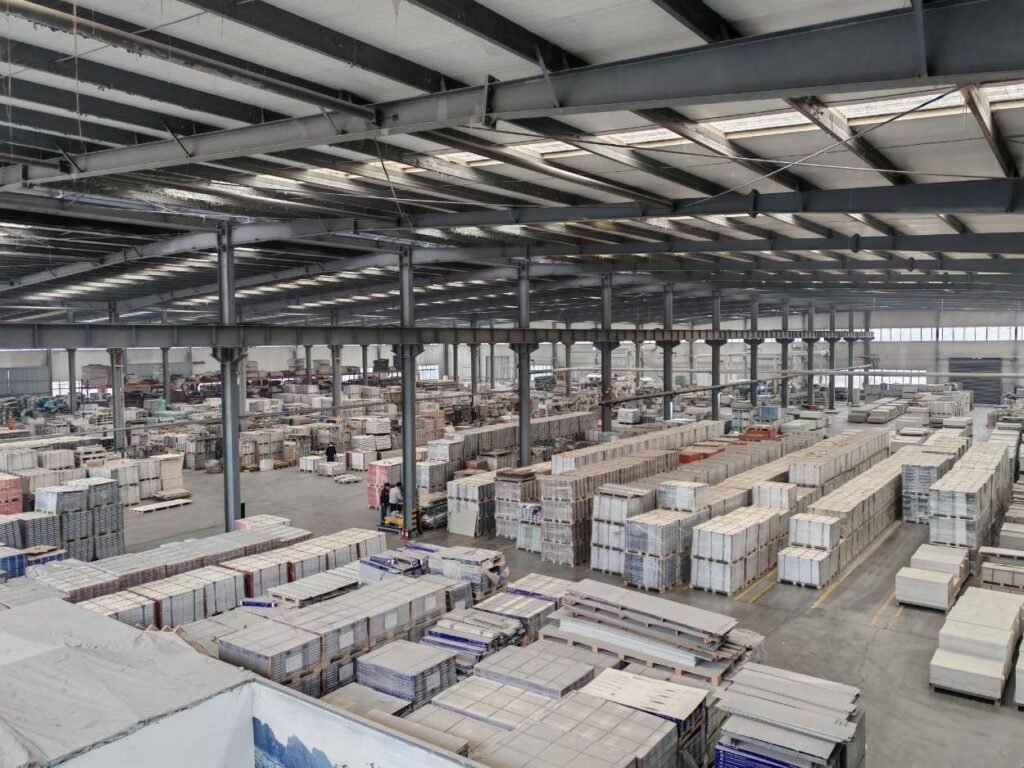
Why Can SPC Click Locks Fail During Manufacturing?
Good click-lock performance starts right with the core material. This quality process continues smoothly through extrusion, cooling, profiling, and final inspection. Even tiny production mistakes can severely weaken a joint. That joint might actually look perfectly fine during a fast visual check.
Brittle Core Formulation
An SPC core needs to be very rigid, but it must never become too brittle. Using too much mineral filler or adding inconsistent recycled material causes trouble. Poor material fusion and an improper additive balance also create severe problems. These bad formulations can easily cause the locking tongue to chip during routine installation or normal transportation.
Looking at core density alone does not guarantee that a plank is truly strong. A dependable SPC flooring manufacturer always inspects the core cross-section carefully. They must also test the overall rigidity along with basic impact resistance. The core material has to stay dimensionally stable. At the same time, it needs plenty of toughness to handle connection, gentle tapping, and everyday movement.
Inaccurate Click-Profile Milling
The tongue and groove parts demand highly exact dimensions. Worn-out cutting tools, heavy machine vibration, or bad equipment settings cause major defects. They frequently produce a very thin tongue, a dangerously narrow groove, or an incomplete locking angle.
These specific defects easily stop the planks from locking together completely. The finished floor might look pretty good right after the installation is done. Yet, those same joints will slowly open up after daily foot traffic or sudden temperature shifts. Because of this, regular tool inspection and strict profile measurement remain crucial parts of good factory quality control.
Residual Stress and Dimensional Variation
Wrong extrusion temperatures, bad cooling speeds, or incorrect conditioning periods often trap harmful stress inside an SPC plank. Later on, this stress leads to ugly shrinkage, noticeable bowing, or bad edge movement. These reactions will eventually pull the connected joints far apart.
Inconsistent plank thickness, poor squareness, bad straightness, and wrong profile dimensions trigger very similar headaches. Even a tiny size difference can easily ruin the continuous contact along the whole locking edge.
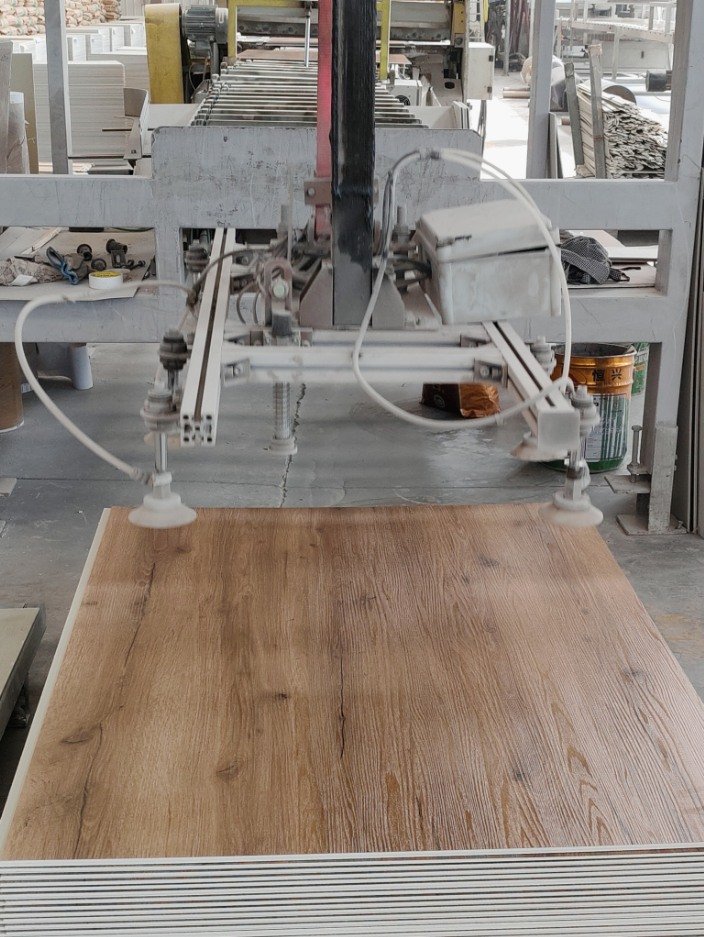
Which Installation Problems Make SPC Flooring Separate?
Even a perfectly manufactured plank can fail badly. This failure happens when the subfloor or the chosen installation method puts heavy, repeated pressure on the click system. A few specific jobsite conditions cause these failures very often.
Uneven or Unstable Subfloors
High bumps and low dips force rigid planks to bend under heavy foot traffic. This constant up-and-down movement focuses intense force right along the delicate joints. Eventually, the locking edges will loosen up or completely crack.
Before starting the installation, the subfloor must be perfectly flat, completely dry, totally clean, and very structurally stable. You must fill any deep depressions. You must also flatten any raised bumps and sweep away all loose dirt.
Missing Expansion Gaps
A floating SPC floor needs enough room to expand and shrink as indoor temperatures shift. Sometimes, planks are installed too tightly against walls, heavy door frames, built-in cabinets, thick columns, or other fixed objects. When this happens, massive pressure quickly builds up across the entire room.
This intense pressure will forcefully push joints apart. It might also lift large sections of the floor or form ugly peaked areas. Installers must always follow the specific expansion-gap rules provided by the flooring supplier. They should also install proper transition profiles whenever they are needed.
Excessive Assembly Force
Hitting plank edges directly with a heavy hammer causes instant damage. Using the wrong tapping block or forcing a badly aligned joint also ruins the locking lip. This destruction usually happens well before the whole installation is even finished.
Trapped dirt inside the groove easily stops the joint from closing fully. Every single plank needs to connect at the correct angle without fighting any strange resistance. If you see a plank with a clearly broken tongue or a damaged groove, you must throw it away and use a fresh one instead.
How Can SPC Click-Lock Quality Be Tested?
A truly trustworthy inspection requires pulling test samples from several different cartons. You must also check items from various times during the main production batch. Looking at just one flawless plank never shows the true quality of a massive order.
Visual and Assembly Checks
You must carefully examine the click edges for any tiny chips, sharp burrs, deep cracks, weird deformation, or badly crushed areas. Try connecting a few planks together. Then, check closely for wide visible gaps, uneven height differences, or the need for excessive assembly force.
The top surface needs to stay perfectly flat. The joints must close tightly and evenly along their entire length. Planks taken from completely different cartons should still lock together without any obvious differences.
Repeated Locking Tests
You should lock and unlock the test planks several times. Always use the officially recommended installation method for this check. The locking profile must stay completely unbroken and continue to hold the joint tightly.
This very easy test quickly reveals overly brittle locking lips. It also highlights weak profile designs that might actually survive the very first connection without breaking.
Strength and Dimensional Tests
Good factories often use specific pull-apart, tensile, heavy impact, rolling-load, or joint-strength tests. These tests accurately measure the locking performance. Smart buyers should always ask exactly what testing method the factory uses. They must also know the strict acceptance limits and check if the factory records these results for every single production batch.
The factory must also measure the exact length, width, thickness, squareness, overall flatness, and click-profile dimensions. Running heat-and-cold cycling tests is very helpful too. This cycling checks the dimensional stability for freezing cold regions, bright rooms with intense sunlight, or special underfloor-heating projects.
How Can You Identify the Real Cause of a Failure?
To figure out the real problem, you must look at the specific damage pattern. You also need to study the jobsite conditions and read the original production records. Looking at just one simple photograph almost never gives you enough solid proof.
If you see gaps spreading across multiple rooms or different product batches, you likely have a dimensional or profiling error. If the damage only happens near busy doorways, under heavy furniture, in bright direct sunlight, or over bumpy areas, the installation conditions are usually to blame.
Finding obvious impact marks around a shattered tongue strongly suggests rough assembly damage. If you find identical clean breaks inside several brand-new, unopened cartons, you are probably dealing with brittle core material or severe transportation shock.
The most helpful evidence always includes the original carton labels and the exact batch numbers. You should also gather subfloor flatness measurements, clear expansion-gap photos, daily room temperatures, and extremely close-up pictures of the broken locking profile.
Why Choose Shandong Lanhe Import and Export Co., Ltd. as an SPC Flooring Supplier?
Shandong Lanhe Import and Export Co., Ltd. perfectly combines strong production capabilities with excellent export services. They follow a highly structured quality-management process every day. Their official company materials highlight advanced automated equipment and very professional quality control. This strict control covers raw-material purchasing, daily production, final inspection, and safe delivery. Their premium products are successfully supplied to major markets, including Europe, Australia, and Southeast Asia.
Lanhe proudly offers many different plank sizes, various thicknesses, durable wear layers, beautiful surface finishes, and great underlay options. Their clearly listed locking-system choices feature famous names like Unilin and Valinge. These great options easily support diverse residential, commercial, OEM, and custom private-label flooring projects.
What Should Buyers Check Before Approving a Bulk Order?
You must base your bulk-order approval on highly measurable requirements. Never rely on just pretty colors and cheap prices alone. Smart buyers always verify the exact core formulation and the specific locking profile. They also check the strict dimensional tolerances, the required joint-strength test, the clear sample-retention rules, and the final inspection standard.
Both sides must sign and approve a physical reference sample before the mass production starts. The vital pre-shipment inspections must carefully check planks taken from several random cartons. For really big projects, hiring a professional third-party inspection team is a great idea. They will independently verify the profile dimensions, the assembly performance, the box packaging, and the wooden pallet protection.
Conclusion
SPC click locks typically break or pull apart for a few main reasons. These reasons include overly brittle core material, totally inaccurate milling, high dimensional stress, very uneven subfloors, tightly restricted expansion, or dangerously improper installation force. The absolute best way to prevent these failures is to combine highly consistent manufacturing with strict batch testing. You also need perfectly correct site preparation and very careful installation techniques.
Smart buyers clearly define all strict tolerances and required testing methods long before the production begins. This smart planning drastically reduces costly claims and strongly protects their valuable brand reputation. It also gives their happy customers a much more stable and totally reliable SPC floor.
FAQs
Can Separated SPC Flooring Be Clicked Back Together?
Sometimes, you can fix it. If the locking edges are completely unbroken and you fix the bad subfloor or the tight expansion problem, you might be able to reconnect the planks. However, if the profiles are clearly broken or badly deformed, you usually have to replace those damaged planks entirely.
Are Thicker SPC Planks Less Likely to Have Broken Locks?
Not always. Extra thickness can give the plank more rigidity. However, the true click strength heavily relies on the basic core toughness, the smart profile design, the exact milling accuracy, and the actual installation conditions. A perfectly manufactured thinner plank will often perform much better than a badly formulated thicker plank.
Should Adhesive Be Used to Stop SPC Joints from Separating?
Using adhesive is never a standard or recommended repair for most normal floating click-lock floors. The glue will easily stop the floor’s natural movement. It might also completely void your valuable warranty coverage. You must always find the actual root cause first. After that, you should only use the specific repair method that the original flooring supplier officially approves.
