

SPC flooring is widely known for its strong structure and good dimensional stability. However, some buyers open a fresh carton only to find planks that are bent, cupped, or no longer flat. Since the flooring is not yet installed, people cannot just blame the subfloor or a lack of expansion gaps. Pre-installation warping can actually start during raw-material preparation. It might also happen during extrusion, cooling, annealing, profiling, packaging, storage, or transport. Importers, flooring brands, contractors, and homeowners need to check the exact deformation pattern. They should also look at the production records before deciding where the real issue started.
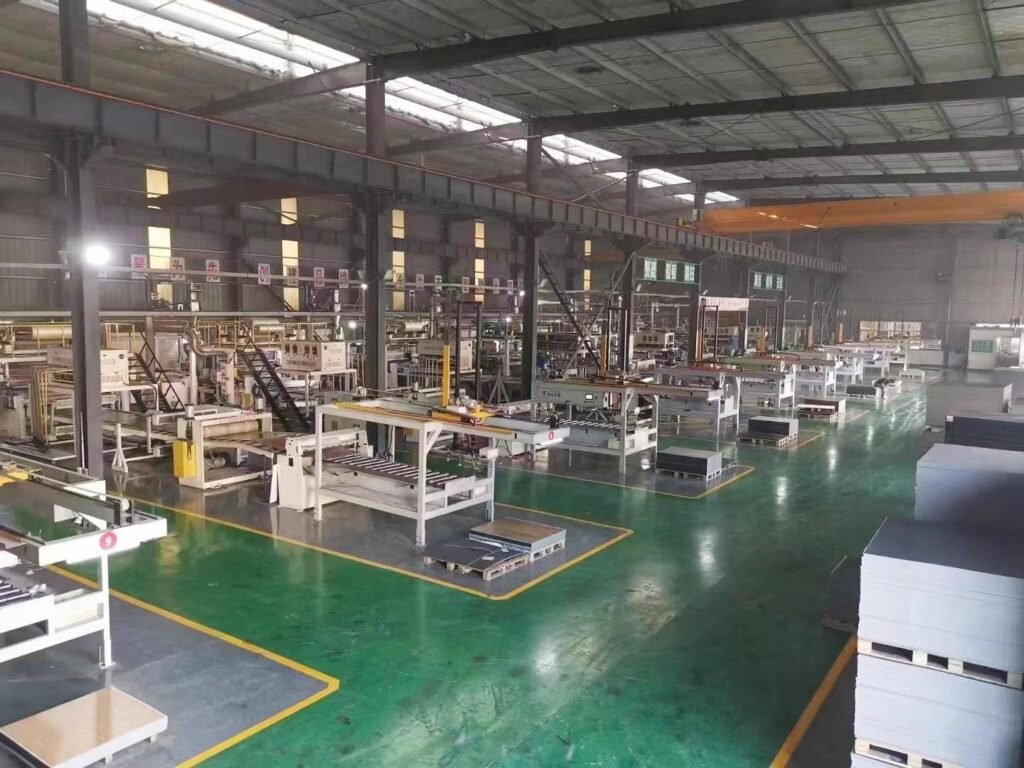
Why Can SPC Flooring Warp Before It Is Installed?
A warped plank has built up uneven internal forces. Alternatively, it was exposed to conditions causing one part to expand or shrink differently than another part. This visible distortion can start during factory production. It can also show up later if the carton faces high heat or bad stacking.
How Can You Identify the Type of Warping?
Bowing usually means the plank curves along its main length. Cupping happens when the outside edges rise higher than the middle area. Crowning, on the other hand, means the center sits higher than the edges. Twisting creates a diagonal bend, meaning opposite corners no longer rest on a flat surface.
The specific pattern can really help narrow down the search. If most planks from a single production batch bend the same way, factory processing or batch conditioning needs a close look. If only cartons near the top or side of a shipping container have issues, then transport heat, pallet pressure, or storage conditions likely played a role.
Is Every Bent Plank a Manufacturing Defect?
Not always. Flooring might leave the factory perfectly flat but bend later on. This happens if cartons are stored upright, placed on a bad pallet, left in direct sunlight, or put under heavy pressure. Big temperature shifts between the top, sides, and middle of a shipping container can also expose cartons to totally different conditions.
Buyers need to take clear photos of unopened cartons, pallet spots, container conditions, batch numbers, and the actual bending right after delivery. This proof helps separate factory-based instability from simple handling or storage damage.
How Does the SPC Core Formulation Affect Stability?
The rigid core acts as the main structural base of an SPC plank. Lanhe explains that SPC flooring is a solid composite made from calcium powder, PVC, stabilizers, and related processing materials. These are mixed before extrusion and lamination.
A good, stable formula needs to offer enough stiffness. However, it must not make the plank too brittle or hard to process.
Why Must PVC, Mineral Filler and Additives Be Balanced?
PVC holds the core together. Meanwhile, calcium carbonate adds rigidity, weight, and dimensional control. Stabilizers keep the PVC safe during hot processing. Processing aids and lubricants help the whole mix move smoothly through the extruder.
Just adding mineral filler does not automatically make a better board. Particle size, spread, filler amount, and the bond with the polymer matrix all change the final product. Studies on particulate-filled thermoplastics point out that calcium carbonate can boost stiffness, surface quality, and dimensional stability. However, bad mixing or weak filler-matrix bonds can cause empty spots, stress points, or lower overall toughness.
A formula that is way too rigid might create weak click-lock edges. An uneven mix can cause different shrinking behavior inside the very same sheet. This increases the chance of bending after the board cools down.
Why Does Mixing Consistency Matter?
Raw materials must be weighed correctly and spread out evenly across the dry blend. Bad mixing can leave certain spots with different amounts of PVC, filler, stabilizer, or lubricant.
These differences might not look obvious when the sheet first comes off the extrusion line. They can show up later after the plank cools, sits for a while, or faces heat during shipping. Because of this, factories must closely track batch records, mixing time, material heat, feeder accuracy, extrusion pressure, and sheet thickness.
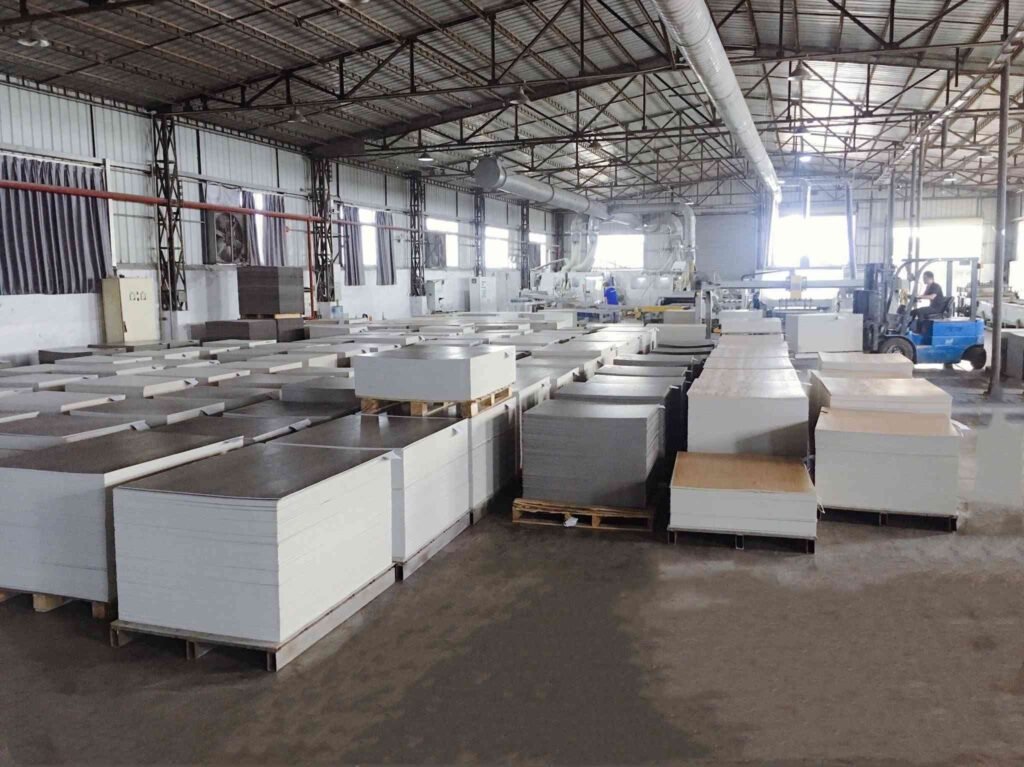
How Do Cooling and Annealing Affect SPC Flooring?
SPC sheets come out of the extrusion and lamination steps at very high temperatures. They must then lose that heat in a steady and fairly even way before cutting, profiling, backing application, and packing.
If one side or part cools down faster than another, leftover stress can get trapped right inside the plank.
What Happens When Cooling Is Too Fast or Uneven?
The outer part of a sheet might become set in its shape while the inner material is still shrinking. Shifts in roller heat, line speed, water temperature, airflow, sheet thickness, and contact pressure can all cause uneven cooling.
A plank might look totally flat at first because rollers, stacks, or packaging hold it in place. Once you remove that outside force, the trapped stress can make the board bow or twist.
Long and wide plank styles can make tiny dimensional shifts much more obvious. Lanhe’s product details list several sizes, from normal 1,220 mm planks to longer 1,800 mm choices, plus different thicknesses and click systems. Large styles need very steady processing and flat storage to stay right.
What Does Factory Annealing Do?
Annealing is often called tempering or conditioning in flooring production. It lets the material go through a controlled heating and resting phase. This allows some of the internal stress to ease up before final cutting.
The exact heat level and time depend on the core formulation, plank thickness, factory tools, and the specific process. More heat or a longer time is not always better. A bad cycle can hurt the decorative film, surface finish, plank size, or factory speed.
After conditioning, the sheets need to return to a normal temperature before exact cutting and click-lock profiling. Machining a sheet that is still changing shape can cause edge sizes to shift after packing.
How Should Factories Test SPC Dimensional Stability?
Just looking at a plank cannot prove it will stay stable after shipping or facing temperature changes. Production control needs to mix simple flatness checks with standard dimensional testing.
What Does a Heat-Exposure Test Measure?
ISO 23999:2025 gives clear rules for measuring dimensional stability and curling, or upward bending, of resilient floor coverings after heat exposure, reconditioning, or both. This standard works for items like tiles, panels, and planks.
The test shows if a sample changes its length, width, or vertical shape after facing controlled heat. Buyers should ask for the test method, sample conditioning details, batch date, exact result, and passing rule instead of just accepting a vague claim that the floor is “stable.”
Which Other Dimensions Should Be Checked?
A flat plank can still cause fitting issues if its side length, edge straightness, or squareness falls outside the safe limit. ISO 24342:2024 offers methods for checking these physical traits in resilient flooring tiles and planks.
Factories must also check thickness evenness, click-lock shape, surface sticking, backing grip, and carton flatness. They should take measurements at different times during a production run, rather than just pulling from one finished pallet.
What Should Buyers Inspect Before Approving a Bulk Order?
A solid inspection plan starts well before mass production begins. Buyers need to set the right product structure, sizes, bending limits, packing style, and test rules right in the purchase agreement.
The approved sample must stay as the main guide for the whole production batch.
What Records Should Buyers Request?
Ask for the core formulation type, production batch number, plank dimensions, annealing or conditioning details, dimensional-stability scores, and final flatness check records. Buyers should also make sure the bulk order uses the agreed wear layer, decorative film, backing, click system, and packing materials.
Open random cartons from several different pallets. Place the planks on a proven flat table. Then, check for bowing, corner lifting, twisting, edge straightness, and smooth click connection.
How Should SPC Flooring Be Packed and Stored?
Cartons must stay flat on level, well-supported pallets. The packing materials should stop moving around without pushing the boards into a bent shape.
Storage spots should keep away from direct sunlight, really hot areas, wet floors, and bad stacking setups. At the job site, workers must follow the maker’s rules for storage and resting before they open and fit the floor.
Why Choose Shandong Lanhe Import and Export Co., Ltd.?
A trusted SPC flooring supplier needs to manage raw materials, production, checking, custom designs, and export steps, instead of just looking at how the final product appears.
How Does Lanhe Support SPC Flooring Buyers?
Shandong Lanhe Import and Export Co., Ltd. provides SPC flooring in many plank sizes, thicknesses, wear layers, surface styles, click systems, and backing choices. Their company details show automated machines and strict quality checks from buying raw materials straight through to production, testing, and shipping.
Lanhe also notes that it holds over 15 years of making experience. It has its own production and R&D teams, and it ships to more than 60 countries. Buyers can send their needed sizes, designs, wear layer, backing, packing, target market, and testing rules for a sample and production review.
What Is the Final Conclusion?
SPC planks can warp before fitting due to a weak core formulation, bad mixing, uneven extrusion, poor cooling, not enough conditioning, early cutting, bad packing, or wrong storage and moving conditions.
Buyers should not guess the cause from just one picture. They need to look at batch trends, carton spots, factory records, dimensional-stability tests, and shipping details. Good, stable SPC flooring comes from matching formulation, strict process control, proper annealing, careful checking, and safe handling—not just from having a stiff core.
FAQs
Can Slightly Bowed SPC Planks Still Be Installed?
You should stop the work until the supplier checks the bending issue. Forcing bent planks into the click system puts constant stress on the joints. This can lead to gaps, lifting, or broken locks. Check a few cartons and write down how much and which way the boards bow.
Does Thicker SPC Flooring Warp Less?
Not automatically. A thicker core might offer more stiffness. However, formulation steadiness, cooling, annealing, plank length, packing, and heat exposure still matter a lot. A well-made thinner plank can actually hold its shape better than a badly made thicker one.
What Information Should I Send Lanhe When Reporting Warped Flooring?
Share the order number, SKU, batch number, plank size, and thickness. Also include pallet and carton spots, the number of bad pieces, storage conditions, delivery date, and clear photos or videos on a flat surface. Keep unopened cartons and samples safe so the supplier can check them against factory and shipping records.
