

Laminate click-lock flooring is built to form a secure floating floor without needing glue or nails. Yet, workers sometimes find chipped tongues. They might also see cracked grooves. Sometimes, the locking edges break right while the planks are being connected. The root cause could be weak core material. Inaccurate milling might be to blame. Worn cutting tools, shipping damage, or improper installation are other possible reasons. Importers, distributors, contractors, and homeowners need to check exactly where and when the breakage happens. This helps before deciding if the flooring truly has a manufacturing flaw.
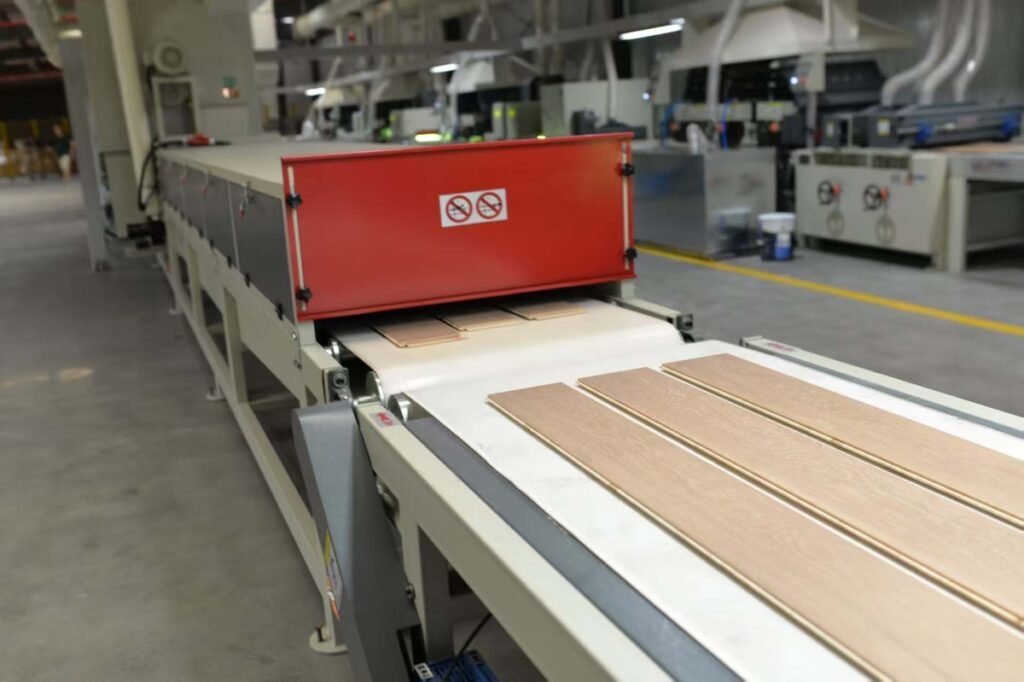
Why Are Click-Lock Edges More Vulnerable Than the Rest of the Plank?
A laminate plank often looks very tough across its top surface. However, it still has fairly fragile locking profiles underneath. The tongue and groove are shaped into very thin, specific forms. They must fit together perfectly without giving up too much solid material.
Therefore, the locking edge relies heavily on two things. It depends on the actual physical toughness of the core. It also depends on the exact precision of the profiling steps.
How Does a Mechanical Locking System Work?
Mechanical locking systems rely on special profiles carved into the sides and ends of every single plank. When put together properly, these profiles fight against pulling apart sideways. They also stop up-and-down movement. At the same time, they let the entire floor float smoothly over the subfloor.
The European Producers of Laminate Flooring points out a key fact. Modern click systems are much more advanced than old-school tongue-and-groove joints. Their specially crafted profiles help with setting up the floor. They add to floor stability. They also make taking the floor apart and fixing it much easier, all without needing any adhesive.
Because the profile features very thin lips, tiny hooks, and small supporting shoulders, there is a risk. Even a tiny chip can stop the joint from closing tight. It can also lower the overall locking power.
Where Does Edge Damage Usually Appear?
Damage often shows up on the sticking-out tongue. It can also appear on the top edge of the groove. Sometimes, it happens on the slim hook underneath the plank. Chipping might be easily seen before the installation even begins. It can also happen right when the plank is tilted into its spot. Alternatively, it might show up after hitting the plank repeatedly.
Suppose similar damage shows up in many different cartons. Also, imagine it happens at the exact same spot on the profile. In that case, the factory needs to check the core board and the milling steps. On the other hand, random corner damage found in just a few cartons tells a different story. This is usually linked to bad packaging, poor loading, or rough handling during transit.
How Does HDF Density Affect Click-Lock Strength?
The core board provides the main mechanical backing for a laminate locking system. Density is highly important here. The profile needs to stay tough even after a large part of the board edge is cut away during the milling stage.
However, having just a high density number does not promise a long-lasting click joint on its own.
Is Higher HDF Density Always Better?
HDF is a very popular choice for mechanically locked laminate flooring. This is because its tight fiber setup allows for very detailed edge shaping. An EPLF technical bulletin explains HDF clearly. It describes it as fiberboard with a density over 800 kg/m³. It also points out that mechanically locked laminate flooring routinely uses HDF. This is to get excellent click-profile milling results.
The Lanhe product information lists both HDF and MDF core choices. These have densities going from roughly 720 up to 1,000 kg/m³. The company also provides Unilin, Välinge, single-click, and double-click setups.
Even so, the basic average density does not tell the whole story about the core structure. Edge density and fiber spread matter a lot. Internal bonding, moisture levels, and resin curing are also key. All these factors affect whether a thin locking part will chip or bend.
How Can Core Quality Cause Breakage?
A badly bonded core might drop fibers when it gets cut or put under weight. A board that is way too dry can turn brittle. Meanwhile, uneven moisture can alter its size during storage or while it is being laid down.
Sometimes, the fibers close to the board surfaces are tight, but the middle part is weak. When this happens, the profile might look fine on the outside. However, it can easily break right under the locking hook. Therefore, buyers need to check the actual strength of the finished joint. They should not rely only on basic density papers.
How Can Milling Tolerance Cause Locking Failure?
A click system has to be cut within a very strict size range. A profile that is just a bit too big might need too much force to install. On the flip side, one that is too small might click together easily. But it could pull apart later during everyday use.
Thickness and plank width are important. Straightness and the exact profile spot also change how two boards lock together.
What Happens When the Profile Is Too Tight?
A very tight profile puts a lot of pressure on the tongue or groove while putting it together. Workers might feel that the plank simply will not close. They might react by hitting it much harder. The thin locking lip can then chip. It might crack or even break clean off from the core.
Heat and moisture can make this issue stand out even more. This happens if the boards change size slightly after being cut. Because of this, the production line must carefully watch plank conditioning. They must check board thickness and machine settings. They also need to verify the final profile sizes.
What Happens When the Profile Is Too Loose?
A loose joint might look much easier to put together at first. But it can leave clear gaps. It might also allow the boards to slide sideways. Constant walking can then push heavy weights onto very small parts of the locking profile.
ISO 24334:2019 sets a clear way to check the locking power of joints. This is for laminate panels using vertical and horizontal mechanical locking systems. This standard was checked and approved again in 2025. It is still the active rule today.
For large orders, buyers can ask for joint-strength results. They can also request assembly tests taken from various points during the manufacturing run.
How Does Tool Wear Lead to Chipped Edges?
Click profiles are made using cutting tools that run non-stop at very fast speeds. As the sharp cutting edges get worn down, the profile can slowly lose its exact shape. The surface quality drops too.
A factory has to keep a close eye on the tool condition. They must do this before clear damage shows up everywhere.
What Does a Worn Tool Do to HDF?
A nice, sharp tool slices through fibers neatly. A worn-out tool acts differently. It might crush, drag, rip, or burn them. This leaves behind rough edges and loose fibers. It can also cause burrs or tiny cracks.
Studies on long-term MDF milling exactness showed something important. Slow tool wear ruins size accuracy. It might force workers to fix the machine settings. Other studies looked at melamine-faced fiberboard. They discovered that more tool wear greatly boosted peeling issues caused by machining.
In laminate making, this kind of wear can slowly alter the sizes of the tongue and groove. The very first pallets might fit together perfectly. However, later pallets from that exact same batch might feel too tight. They might also start showing chipped edges.
How Should a Factory Control Tool Wear?
The profiling line needs to follow strict tool-life rules. They should not just wait for huge flaws to appear. Factories can check the cutting edges often. They can watch the production numbers and measure the profile sizes. They should look at surface roughness and run routine click-assembly tests.
Test pieces need to be grabbed at the start, the middle, and the finish of a production run. Doing this is much safer than just looking at the very first finished boards.
Could Installation or Transport Be Causing the Damage?
Not every single chipped click edge means there is a factory mistake. Bad handling and poor installation can cause damage. This damage can look just like weak-core or milling troubles.
When and where the breaking happens gives very helpful clues.
Which Installation Mistakes Can Break the Lock?
The plank has to be connected exactly following the locking-system guide. Using an incorrect angle can hurt it. Hitting the bare tongue straight on is bad. Forcing a dirty joint together is risky. Using the wrong tapping block can also ruin the profile.
Workers need to clean all dust and dirt out of the groove. They must make sure the row before is perfectly straight. They should stop right away if they feel weird resistance. Flooring that has clearly broken edges or damaged locking systems must not be used. Maker installation guides also usually suggest looking at every single plank before and while putting it down.
A bumpy subfloor or weak underlay can put extra strain on joints after they are laid. However, these issues usually lead to gaps or cracks later on. They do not usually cause identical chips found inside brand-new, unopened cartons.
How Can Buyers Separate Product Defects from Handling Damage?
Issues from the factory often show up over and over at the exact same profile spot across many cartons. Transport damage acts differently. It is more likely to hit the corners or carton ends. It also affects pallets sitting close to the container walls.
Installation damage usually only shows up after hitting or pushing the plank hard. Buyers need to keep the broken parts. They should save the carton labels, batch numbers, and pallet spots. They should also keep installation videos to compare later.
Why Choose Shandong Lanhe Import and Export Co., Ltd.?
A good laminate flooring provider has to manage core picking carefully. They must ensure profiling exactness and solid surface building. Proper packaging and strict finished-product checking are also vital.
How Does Lanhe Support Laminate Flooring Buyers?
Shandong Lanhe Import and Export Co., Ltd. provides laminate flooring in many different patterns. They offer various thicknesses, abrasion classes, and groove looks. They also have different locking systems. Their product lineup features both HDF and MDF cores. They have 6–12 mm thickness choices and AC1–AC5 surfaces. They also do special sizes and custom designs.
The company’s documents explain their quality control process. This goes from buying raw materials right through to processing, checking, and shipping. Buyers can state their needed core density and locking system. They can pick the thickness, surface finish, and packaging. They can also share their target market and test needs before asking for samples and full production.
What Is the Final Conclusion?
Laminate click-lock edges might chip or snap for several reasons. The core material could be weak or brittle. The HDF density might be uneven. The profile sizes could be wrong. Worn cutting tools, shipping bumps, or pushing too hard during installation can also be the cause.
A good check should look at where the break is. It should count the affected cartons and check batch sameness. It needs to look at the core structure and profile sizes. Tool logs and the installation way must be reviewed too. Buyers should ask for actual finished-joint tests. They should not judge quality just by looking at plank thickness or how the surface looks. When core quality, milling exactness, and tool care are all managed together, things go better. The locking system is much more likely to go together easily and stay strong during use.
FAQs
Can a Laminate Plank with a Small Chipped Locking Edge Be Installed?
It should usually be put to the side. Even a tiny chip might lower the joint strength. It could stop the boards from locking fully. It might also cause a gap later on. Putting down a clearly broken plank is risky. It makes it very hard to figure out who is at fault if the joint breaks later.
Does a Thicker Laminate Plank Have a Stronger Click System?
Not always. Extra thickness might give more material around the profile area. But core density and internal bonding are still huge factors. Profile design, milling exactness, and how it is installed matter just as much. A perfectly cut 8 mm product might actually work way better than a badly made 12 mm plank.
What Evidence Should Buyers Send Lanhe When Reporting Broken Edges?
Please send the order number and product code. Include the production batch, carton, and pallet numbers. State the plank thickness and the click-system type. Tell them the number of broken boards. Also, send clear close-up pictures of the broken profiles. Add videos showing exactly how the planks were put together. Keep the unopened cartons and the broken pieces safe for more checking later.
