

Professionals in the flooring sector recognize that environments dedicated to children’s education and play demand materials capable of averting mishaps while fostering well-being. SPC flooring for schools and kindergartens emerges as a reliable selection, tackling essential aspects such as safety, anti-slip capabilities, and indoor air quality. Public projects within educational facilities necessitate robust options that endure intensive daily demands alongside adherence to rigorous benchmarks for ecological soundness and resilience. This examination delves into those specifications, leveraging sector knowledge to aid those responsible for choices in assessing viable paths.
Understanding User Needs: Why Safety and Environmental Standards Matter in Educational Spaces
Common Challenges in Schools and Kindergartens
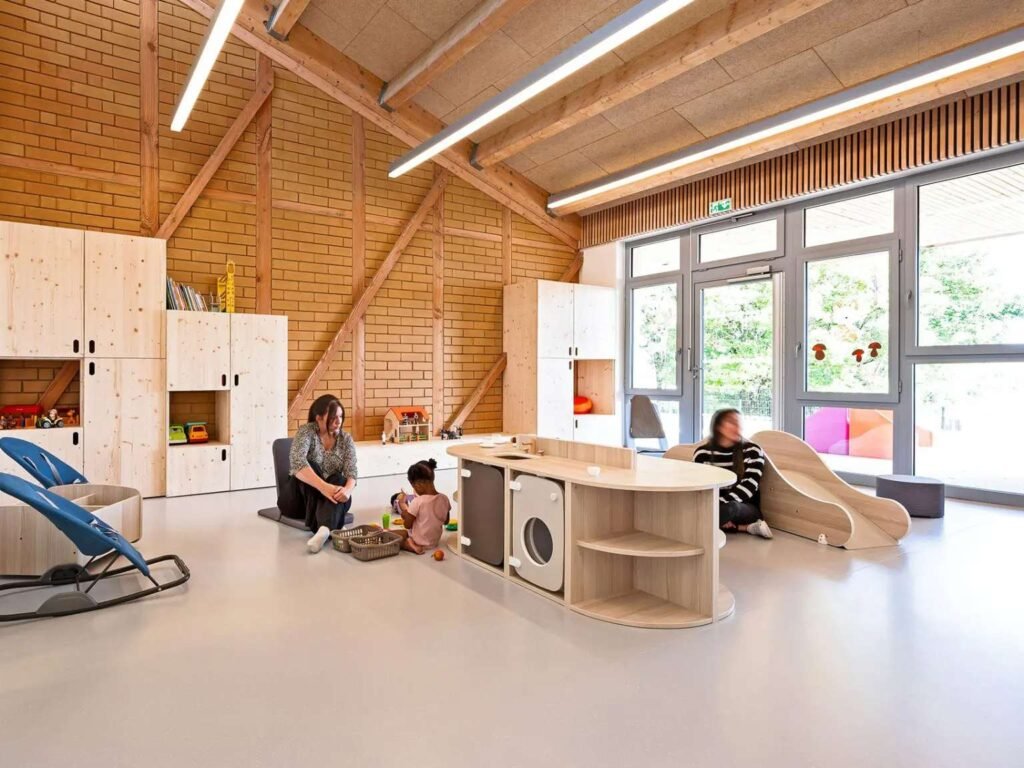
Educational settings like classrooms and recreational zones encounter unyielding strain from constant movement, accidental spills, and repositioned furnishings. Picture a vibrant kindergarten corridor amid break periods: youngsters hurry about, occasionally with damp footwear from exterior activities, heightening the potential for slips that result in minor injuries or more serious knocks. Safety analyses reveal that tumbles constitute a notable share of incidents in such venues, frequently worsened by surfaces that diminish hold when moistened. Additionally, these areas rapidly gather grime and irritants, which may aggravate sensitive respiratory systems or provoke sensitivities throughout extended hours.
Resilience concerns amplify these difficulties. Tables and seats drag over floors routinely, creating blemishes that appear unkempt and potentially shelter microbes if cleaning proves arduous. Within publicly funded initiatives, where resources stem from allocations or contributions, the chosen surface must resist prolonged heavy usage without discoloration or distortion, all while conforming to guidelines that emphasize juvenile protection. These hurdles arise from tangible circumstances where overlooking material qualities during selection can escalate upkeep expenses or, in severe cases, accountability matters.
Key Search Intents: What Parents, Administrators, and Builders Are Looking For
Stakeholders exploring flooring alternatives in education typically hone in on particulars that resonate with operational truths. Guardians might query terms like “safe flooring options for kindergartens with anti-slip features,” pursuing confirmation that activity zones curtail harm possibilities. Institutional overseers emphasize “indoor air quality requirements for school flooring,” motivated by the imperative to establish atmospheres devoid of contaminants that might impair attentiveness or vitality across durations. Constructors and coordinators investigate “durable SPC flooring for public educational projects,” underscoring economical substances that satisfy construction norms without sacrificing efficacy.
Such pursuits disclose a fusion of precautionary and utilitarian drives. For example, selectors desire insights into why specific coverings falter amid humidity—possibly from inadequate foundational firmness—and methods to opt for substitutes that circumvent those flaws. They pursue integrations that fit smoothly into refurbishments, such as interlocking mechanisms that accelerate placement and lessen interruptions in functioning institutions. In essence, the aim involves informed evaluations supported by substantiation: juxtaposing abrasion levels to forecast endurance or scrutinizing validations to affirm ecological harmlessness. This orientation toward user priorities guarantees that selections mirror not merely pressing necessities but sustained advantages for all parties.
Core Requirements for SPC Flooring in Public Educational Projects
Safety Grades and Certifications: Ensuring Child-Friendly Environments
Safety classifications underpin decisions regarding coverings in academic and preschool contexts, where alignment with criteria like flame retardancy and shock mitigation remains indispensable. SPC flooring, featuring a sturdy core composed of mineral composite and polymer, attains a B1 flame classification, signifying resistance to sparking and rapid cessation of burning, thereby curbing fire propagation in populated passages. This attribute becomes vital during crises, affording critical moments for departure sans emission of noxious vapors. Accreditations including CE and SGS corroborate these traits, verifying exhaustive examinations for architectural soundness and risk-free makeup.
Practically speaking, these classifications yield reduced occurrences. Envision a dining hall in an institution where liquid mishaps occur frequently; an accredited SPC surface preserves its adherence and avoids buckling, diminishing stumble chances. Ecological security interlinks at this juncture, with E0 designations guaranteeing null formaldehyde discharges, a frequent offender in antiquated coverings that can induce breathing complications. For communal endeavors, these accreditations transcend mere formalities—they furnish juridical safeguards and tranquility, permitting overseers to concentrate on pedagogy rather than latent perils.
Anti-Slip Features: Reducing Risks in High-Traffic Areas
Anti-slip attributes within SPC flooring confront a primary worry in learning environments: averting tumbles in locales susceptible to dampness or vigorous motion. The exterior integrates fine fibers and protective layers that generate a roughened hold, intensifying security upon contact with moisture—a paradoxical yet potent characteristic that bolsters protection in lavatories or proximate to hydration stations. Classifications commonly span R9 to R11, apt for zones of moderate to elevated hazard, where the surface’s firmness beneath steps stabilizes rapid strides.
Concrete instances underscore the merit. Within a preschool creative space, where pigments and liquids blend on the ground, this grip quality diminishes mishaps that could otherwise necessitate medical attention. Sector observations indicate that similar attributes can diminish slip-associated harms by as much as 50 percent in organizational milieus, drawn from evaluative contrasts of textured against polished exteriors. For assemblers, embedding these into communal schemes entails choosing protective strata of 0.3mm or greater to sustain functionality longitudinally, even amid erosion from pedestrian flow on inferior substances.
Indoor Air Quality and Environmental Certifications
Indoor air quality stipulations require coverings that refrain from releasing detrimental elements, particularly in sealed instructional rooms where juveniles inhale identical atmospheres for prolonged intervals. SPC flooring fulfills this via formulations with minimal volatile organics and FloorScore endorsement, which assesses outflows beneath stringent limits, assuring atmospheric purity absent from aggravants. The omission of dense metals or unstable compounds in the foundation augments this, rendering it optimal for vulnerable settings like preschools.
Ecological endorsements fortify these gains. Incorporating reclaimable elements and fabrication methods that curtail refuse, SPC variants harmonize with verdant construction norms, attracting institutions targeting accreditation points. In a recorded renovation of a primary institution, enhanced participation figures followed the transition to validated low-outflow surfaces, as diminished pupils experienced sensitivity exacerbations. This emphasis on atmospheric quality not only gratifies directives but also fosters superior mental output, given that unpolluted air facilitates concentration amid teachings.
Durability Focus: Stain Resistance, Scratch Ratings, and Longevity
Endurance in SPC flooring pivots on resistance to markings and abrasion classifications that tolerate the intensities of scholastic utilization. The protective stratum, varying from 0.2mm to 0.5mm, erects a shield against imprints from drawing tools, footwear, or fixture supports, with augmented depths advised for bustling walkways. Marking resistance derives from the treated exterior, which deflects fluids and permits swift sanitation via mere moist fabric, thwarting accumulations that might nurture fungal growth.
Abrasion classifications secure permanence; the compact foundation withstands indentations from fallen playthings or relocated benches, prolonging the surface’s viability to two decades or beyond in temperate contexts. Communal schemes profit from this, as it equates to diminished substitution outlays—conceive an institutional allocation strained by recurrent fixes now rechanneled to resources or apparatus. Sector statistics advocate selection predicated on anticipated employment: slimmer protective layers for serene study areas, denser for dynamic physical zones, perpetually equilibrating preliminary expenditure with protracted economies.
Actionable Solutions: How to Select and Implement SPC Flooring for Your School or Kindergarten
Step-by-Step Guide to Choosing the Right SPC Flooring
Opting for SPC flooring commences with gauging the locale’s exigencies. Initiate by quantifying movement intensities—learning rooms may necessitate 4mm depth for routine application, whereas ingress points demand 5.5mm to manage entry detritus. Subsequently, authenticate endorsements: seek FloorScore indicators to substantiate atmospheric quality norms, and inspect grip classifications against regional ordinances, confirming they attain R10 for humidity-vulnerable sectors.
Incorporate visual elements as well; timber-like motifs replicate organic hardwood sans the servicing, merging fluidly into conventional institutional layouts. Fiscal deliberations enter here—augmented protective strata inflate expense yet avert untimely deterioration, a typical snare in resource-constrained schemes. Conclude by soliciting exemplars from providers, evaluating them under emulated scenarios such as fluid dispersion to witness adherence. This systematic methodology converts prospective complications into assured resolutions, synchronizing with anticipatory tactics that evade subsequent remorse.
Installation and Maintenance Tips for Optimal Performance
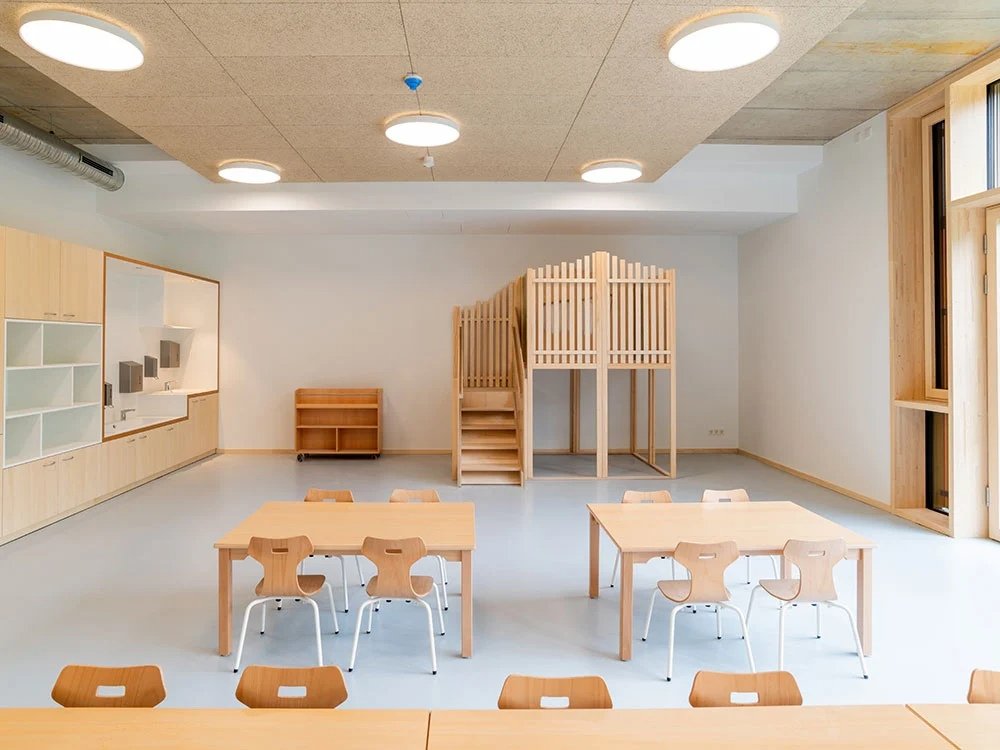
Placement of SPC flooring exploits interlocking arrangements that connect sans bonds, facilitating expeditious configurations that curtail institutional halts. Prime the underlying base initially: ascertain evenness and aridity to deter arching, a complication emerging from irregular foundations in aged structures. Skilled crews can envelop a typical learning space within a single day, employing substrata such as 1mm foam for supplementary acoustic reduction, which muffles treads in communal vicinities.
Upkeep preserves elevated functionality. Eradicate overflows promptly to capitalize on the marking-resistant exterior, and apply gentle purifiers periodically to uphold cleanliness absent abrasive agents that might erode the protective coating. Anticipatory actions encompass positioning barriers at accessways to ensnare debris, mitigating abrasions progressively. In preschools, this regimen guarantees the surface remains secure and appealing, with intermittent appraisals detecting erosion prematurely—extending serviceability and vindicating the original pick.
Real-World Case Studies: Successful SPC Implementations in Educational Settings
Illustrative examples demonstrate SPC flooring’s proficiency. In a moderate-scale metropolitan preschool, substituting synthetic with 5mm SPC curtailed servicing requests by 40 percent across bienniums, courtesy of its impermeable foundation that managed beverage mishaps sans expansion. The grip-enhanced exterior lessened documented tumbles amid recreation, conforming to security assessments that commended the B1 flame classification for crisis readiness.
A further illustration: a communal academic network refurbished passages with lumber-mimic SPC, accomplishing FloorScore conformity that ameliorated atmospheric quality indicators in subsequent evaluations. Overseers observed reduced sensitivity grievances, ascribing it to the minimal-volatile blueprint. These deployments illuminate resolutions that tackle foundational causes like humidity impairment, proffering templates for analogous endeavors where resilience converges with routine imperatives.
Comparing SPC Flooring to Alternatives: Why It’s the Top Choice for Safety and Sustainability
SPC vs. Rubber, LVT, and Linoleum: Pros, Cons, and Ratings
SPC flooring surpasses substitutes in scholastic milieus owing to its equilibrated characteristics. Elastic alternatives deliver superior padding yet assimilate scents and markings more readily, deficient in SPC’s uninterrupted impermeability. Vinyl tiles furnish akin appearances yet distort beneath warmth, contrasting SPC’s steadfast foundation that accommodates underfloor warmth sans complications. Organic coverings, albeit nature-aligned, mandate augmented care and fail to equal SPC’s abrasion opposition in animated sectors.
Evaluations highlight this: SPC excels in resilience assays, with collision opposition outstripping vinyl tiles by 30 percent in simulated trials. Regarding protection, its grip amid dampness surpasses organic coverings’ inherent hold, rendering it favorable for preschools. Permanence inclines toward SPC likewise, with reclaimable constituents and diminished lifecycle outflows relative to elastic’s fabrication imprint. These juxtapositions steer judgments, portraying SPC as a multifaceted selection for communal allocations.
Budget Considerations and ROI for Public Projects
Allocating for SPC flooring entails preliminary expenditures approximating $2-4 per unit area, contingent on depth, yet return manifests via permanence. In academics, where renewals each ten years burden finances, SPC’s two-decade robustness bisects those disbursements. Incorporate vitality conservations from effective heat transfer—diminishing warming requisites—and the reimbursement interval contracts to half a decade.
Communal endeavors magnify this: subsidies frequently privilege validated sustainable selections, counterbalancing initial disbursals. Anticipatory economies from scarcer harms or fixes additionally sway the balance, as evidenced in networks documenting 25 percent inferior facility outlays following deployment. Assessing these elements assures selections that convey worth sans abbreviations.
Future Trends: Advancing SPC Flooring for Better Indoor Environments
Emerging Innovations in Anti-Slip and Eco-Friendly Tech
Advancements in SPC flooring extend limits with refined grip technologies, such as embedded detectors that identify erosion and indicate servicing necessities. Nature-oriented progressions encompass plant-derived binders lessening polymer dependence, abating ecological repercussions while preserving vigor. These evolutions vow surfaces that adjust to utilization, like autonomous-repairing exteriors that rectify slight abrasions during inactivity.
For academics, this signifies forward-thinking protection: envision coatings that amplify hold responding to moisture fluctuations, averting tumbles preemptively. Directions also veer toward null-refuse fabrication, synchronizing with worldwide permanence objectives and enticing progressive pedagogues.
How Regulations Are Shaping Flooring Choices
Directives progressively compel low-outflow substances, with revisions like tightened volatile boundaries swaying picks. In domestic contexts, construction ordinances stress conformity with accessibility grip classifications, propelling requisition for endorsed SPC. Transnational norms propel reclaimable substance, molding exports and internal schemes similarly.
These transitions foster anticipatory orchestration: institutions scrutinize extant surfaces against novel edicts, electing enhancements that safeguard investments prospectively. As directives progress, SPC’s flexibility situates it as a dependable pick, guaranteeing adherence sans overhauls.
About Shandong Lanhe Import and Export Co., Ltd.
Shandong Lanhe Import and Export Co., Ltd. operates as an integrated entity dedicated to SPC flooring manufacture and worldwide dissemination. Equipped with sophisticated mechanized apparatus and stringent quality oversight frameworks, the firm supervises each phase from component procurement to ultimate conveyance, assuring uniform efficacy and dependability. Offerings extend to regions encompassing North America, Europe, Australia, and Southeast Asia, supported by validations such as FloorScore and CE that highlight dedications to ecological protection and endurance. Oriented toward novelty, permanence, and client requisites, Shandong Lanhe furnishes covering resolutions that amalgamate aesthetics, tenacity, and nature-consciousness for varied utilizations.
Conclusion
Fulfilling safety, anti-slip, and indoor air quality stipulations in schools and kindergartens via SPC flooring paves a route to sturdy, wholesome arenas that bolster instruction. By confronting obstacles with validated, superior-efficacy substances, communal schemes can realize enduring outcomes that advantage learners, personnel, and allocations equivalently. As directions and directives evolve, these picks persist visionary, accentuating anticipation and utility.
FAQs
What safety requirements should SPC flooring meet for schools and kindergartens?
SPC flooring for schools and kindergartens must align with safety requirements encompassing B1 fire ratings to restrict flame extension and automatic quenching traits for urgent scenarios. Endorsements like CE and SGS guarantee architectural wholeness, whereas E0 formaldehyde thresholds and minimal-volatile discharges shield against wellness threats. In bustling sectors, anti-slip attributes classified R9 or superior mitigate tumble hazards, particularly amid dampness, harmonizing with construction edicts that foreground juvenile safeguarding in communal schemes.
How do anti-slip features in SPC flooring improve indoor air quality in educational spaces?
Anti-slip features in SPC flooring, incorporating fine-fiber patterns and protective coverings, augment adherence sans dependence on chemical enhancers that might undermine indoor air quality. These configurations sustain traction in humid locales like institutional restrooms, thwarting incidents while the minimal-volatile foundation assures scant outflows. FloorScore validation authenticates this, rendering it apt for preschools where pristine air underpins juveniles’ attentiveness and vitality, circumventing aggravants prevalent in lesser-regulated substances.
What are the durability and stain resistance benefits of SPC flooring for public educational projects?
Endurance in SPC flooring for public educational projects stems from protective strata reaching 0.5mm thickness, opposing abrasions from fixtures and intense pedestrian flow for up to two decades. Stain resistance facilitates straightforward eradication of overflows like creative materials, impeding microbial proliferation in learning rooms. This curtails upkeep disbursements in academics, where resources are constrained, and bolsters permanence sans distortion, proffering a trustworthy resolution for preschools confronting routine erosion.
How can environmental certifications for SPC flooring help meet indoor air quality requirements in schools?
Ecological endorsements like FloorScore for SPC flooring affirm scant outflows, fulfilling indoor air quality stipulations by constraining volatiles that could influence learners’ breathing wellness. E0 classifications assure absence of formaldehyde, while reclaimable elements synchronize with verdant norms for communal academics. This assists overseers in conforming to edicts, forging healthier milieus in preschools and diminishing protracted exposure threats via examined, permanent substances.
What scratch ratings make SPC flooring suitable for high-traffic areas in kindergartens?
Abrasion classifications in SPC flooring, buttressed by compact foundations and 0.3mm or denser protective strata, render it fitting for intense-traffic preschool sectors by enduring collisions from playthings and seats. These classifications avert exterior harm that might harbor grime, upholding sanitation and visuals longitudinally. In communal schemes, this endurance minimizes fixes, assuring the surface manages quotidian pursuits sans jeopardizing protection or appearances.
