

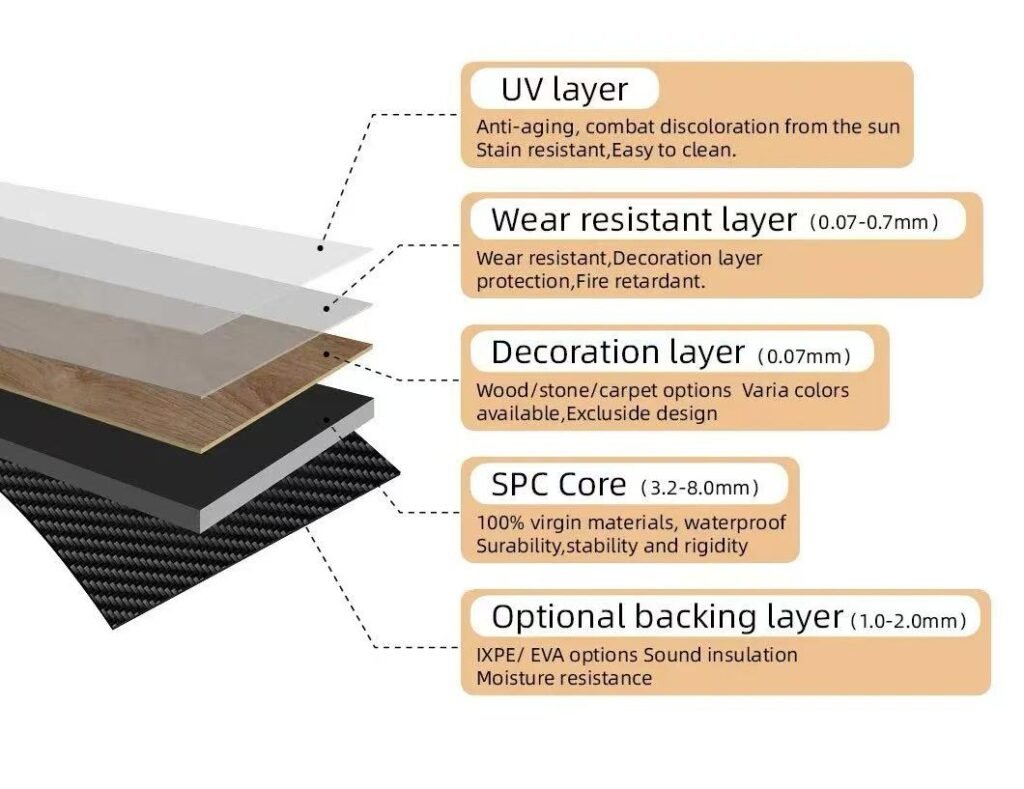
Buyers who spec thousands of square meters know the drill. A floor looks flawless in the sample room, but a year later the contractor calls with photos of dull patches in high-traffic lanes or black heel marks that won’t wipe off. In SPC flooring, everything the customer sees and touches rides on the UV coating. Get the curing energy wrong, skimp on the topcoat build, or cut corners on additives and the product fails long before the warranty expires. Evaluating UV coating performance means looking at lamp energy output, primer and topcoat structure, wear grades from AC3 to AC5, chemical resistance, and real-world stain behavior. These factors separate floors that stay sharp for a decade from those that disappoint in two seasons.
UV Lamp Energy: The Make-or-Break Step in Coating Hardness
UV curing happens in seconds on the line, but the energy delivered by the lamps decides how tough the finished film really is.
Energy Levels and Cross-Link Density
Lamps running 80–100 W/cm give a basic cure. Push to 120–140 W/cm and the coating cross-links deeper, creating a tighter network that resists scratching and chemical attack. Plants that hold energy steady run after run produce boards with consistent pencil hardness in the H to 2H range. Let the lamps drift 15 % low on a shift and hardness drops to HB or less. The difference shows up fast in commercial jobs—boards from the weak batch pick up scuffs from roller chairs while the properly cured ones shrug it off.
Gloss Retention and Color Stability
High-energy curing locks pigments and resins in place. Gloss stays above 90 % after thousands of cleaning cycles, and colors hold without yellowing under shop lights or sunlight. Lower energy leaves reactive sites that oxidize over time. Light oak decors turn faintly amber in south-facing windows within eighteen months. Factories chasing output sometimes dial lamps down to squeeze more meters per hour, but the trade-off shows up in callbacks.
Coating Structure: Primer and Topcoat Working Together
A good UV coating is never a single layer. Primer anchors everything, topcoat takes the beating.
Primer Thickness and Adhesion
Primer runs 5–12 microns and seals the wear layer print. A solid primer prevents delamination when the floor expands and contracts with temperature swings. Skip it or run it too thin and the topcoat peels at the seams in heated slabs. Plants that apply primer at 8–10 microns and cure it fully see peel strength above 5 N/cm in cross-hatch tests. Anything less and the floor starts lifting along high-traffic paths.
Topcoat Build and Particle Loading
Topcoat thickness ranges 20–50 microns depending on grade. Residential AC3–AC4 floors typically carry 25–35 microns with moderate aluminum oxide loading. Commercial AC5 pushes 40–50 microns and heavier ceramic or Al2O3 particles. Multi-roll application builds the film in passes, letting each layer flash off before the next. The result is a dense, even shield that distributes impact instead of cracking. Single heavy pass coatings often trap solvent and bubble later.
Wear Grades: AC3 to AC5 in Daily Use
Wear grades come from Taber abrasion tests, but real jobs tell the story.
AC3 and AC4 Residential/Moderate Commercial
AC3 boards handle 4,000–6,000 revolutions with minimal wear. They work fine in homes and light offices where traffic is mostly soft-soled shoes. AC4 steps up to 6,000–8,000 revolutions for busier spaces like small retail or hotel corridors. Coating hardness and particle density make the difference. AC4 with good ceramic loading stays looking new long after AC3 starts showing traffic lanes.
AC5 Heavy Commercial Performance
AC5 exceeds 8,000–10,000 revolutions and carries the thickest, hardest coatings. Shopping malls, airports, and big-box stores demand this level. The topcoat here uses high Al2O3 content and sometimes nano-ceramic additives. Roller chairs, shopping carts, and stiletto heels barely leave a mark. Factories achieve AC5 by running multiple topcoat passes and full-energy curing on every layer.
Chemical Tests: Resistance to Cleaners and Spills
Floors face more than foot traffic. Cleaners, spills, and accidents test the coating chemistry every day.
Standard Chemical Exposure Tests
EN 423 and similar protocols expose the surface to everything from red wine to bleach for 24 hours. A solid UV coating shows no discoloration, softening, or etching. The cross-linked film acts as a barrier that liquids cannot penetrate. Weak curing or cheap additives let chemicals migrate, leaving dull spots or hazy patches that never polish out.
Anti-Stain Performance in Practice
Coffee, ketchup, shoe polish, and marker pens hit floors regularly. Topcoats with fluoropolymer or silicone additives repel these stains, letting them wipe off with mild soap. Without that treatment, stains soak in and require aggressive cleaning that wears the surface faster. In hospital or school projects, anti-stain performance often decides the bid.
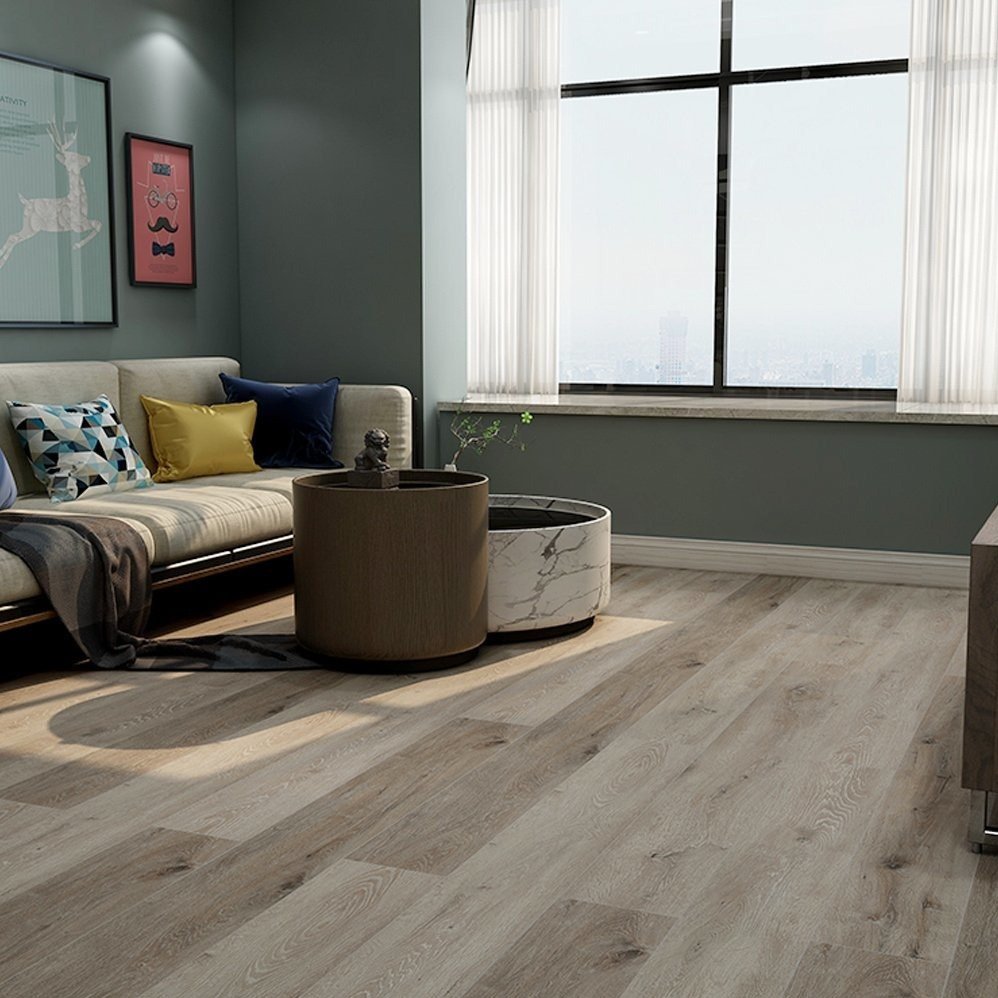
Introducing Shandong Lanhe Import and Export Co., Ltd.
Shandong Lanhe Import and Export Co., Ltd. has been producing SPC flooring for over fifteen years, shipping to more than sixty countries. Independent production lines and dedicated research teams allow tight control over coating processes from primer application to final cure. Lanhe uses high-energy UV lamps and multi-layer coating builds to deliver AC4–AC5 performance with strong chemical and stain resistance. The company focuses on virgin materials and thorough quality checks, producing floors that install clean and stay that way in residential and commercial settings.
Conclusion
UV coating technology determines how well SPC flooring stands up to daily punishment. Proper lamp energy creates hard, uniform films. Thoughtful primer and topcoat structure adds layered protection. Wear grades from AC3 to AC5 guide selection for traffic levels. Chemical and stain resistance keep the surface looking fresh. When these elements work together, the floor delivers lasting value with minimal maintenance. Buyers who understand UV coating details choose products that perform reliably from day one through year ten.
FAQs
How does UV lamp energy affect scratch resistance in SPC flooring?
Higher energy output cross-links the coating more completely, producing harder surfaces that resist scuffs and marks far better than under-cured films.
What role does coating structure play in SPC flooring surface quality?
Primer seals the wear layer and prevents delamination, while thick topcoats with particles handle abrasion and maintain gloss over time.
How do AC3 to AC5 wear grades translate to real-world SPC flooring performance?
AC3 suits homes, AC4 manages moderate commercial traffic, and AC5 withstands heavy retail use with minimal visible wear.
Why is chemical resistance testing important for UV coating in SPC flooring?
It confirms the surface can handle cleaners and spills without discoloration or softening that shows up in busy environments.
What makes anti-stain performance a key factor in SPC flooring UV coating quality?
Effective additives repel liquids and marks, allowing easy cleaning without damaging the finish in kitchens or high-traffic areas.
