

Importing SPC flooring from China persists as a primary channel for B2B buyers targeting favorable pricing on waterproof resilient flooring designed for commercial and residential applications. China sustains its leading position in SPC production with vertically connected facilities, substantial extrusion capacity, and sharp pricing on stone-plastic composite cores. Tariffs, batch quality inconsistencies, and ongoing freight constraints continue to elevate landed expenses or cause container rejections. Importers accustomed to the trade mitigate these through systematic procedures encompassing supplier assessment, contract detail, sequential quality confirmation, and strategic freight management.
The following sections map the prevailing difficulties in 2026, deliver tested procedures honed across numerous large-scale shipments, and point out targeted actions to reduce vulnerability. Insights stem from recurring patterns in consignments routed to North America, Europe, Australia, and Southeast Asia, where plank thickness uniformity, click-lock reliability, and documented low-emission characteristics draw the strongest attention.
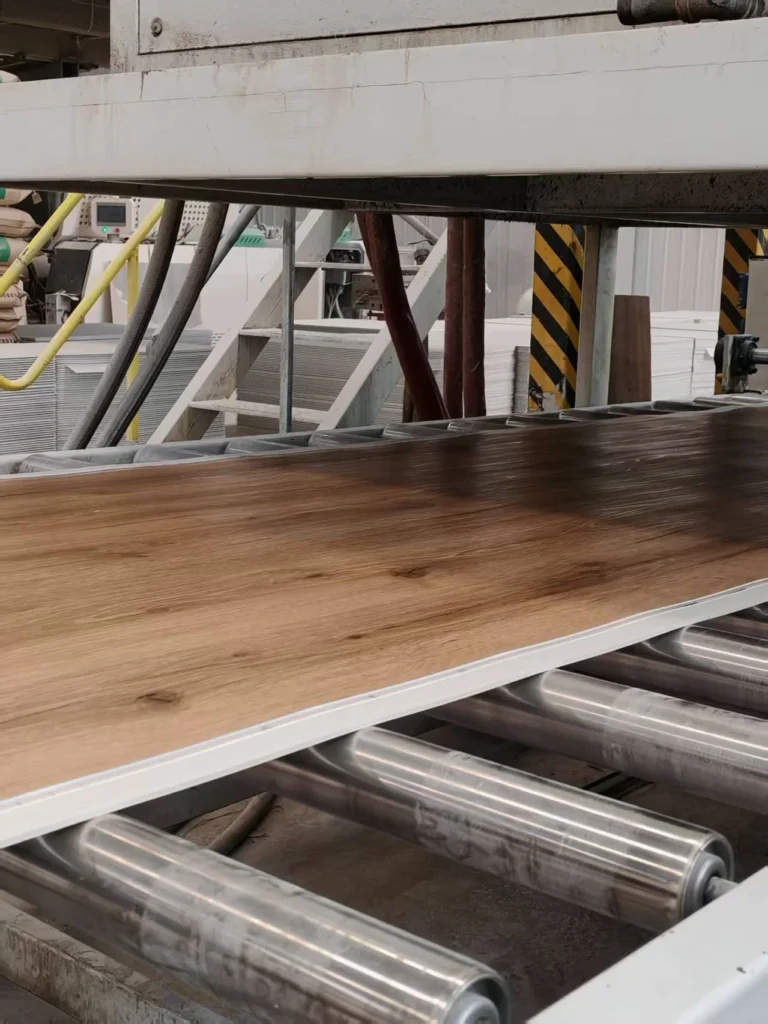
Current Challenges in Importing SPC Flooring from China (2026 Update)
Tariffs regularly reshape landed cost calculations. U.S. Section 301 duties on a wide range of resilient flooring categories hold steady around 25% for corresponding HTS codes, with incremental extensions and selective revisions carrying forward into late 2026 during prolonged trade examinations. Limited exclusions cover specific sub-categories, yet standard SPC ordinarily bears the full duty, elevating Vietnam and certain Southeast Asian alternatives at 0–5% rates. European purchasers sidestep broad tariffs but face intensified REACH formaldehyde and VOC stipulations demanding laboratory-backed evidence.
Quality inconsistencies surface routinely from budget-oriented lines. Prevalent defects involve click-lock profiles that release after installation, plank thickness deviations (generating visible subfloor irregularities), UV coating scratches during transit, cores susceptible to cracking from excessive filler loading, and dimensional movement leading to cupping or seam separation in fluctuating humidity. Underlying factors typically include variable raw material batches, imprecise locking groove machining, or inadequate in-process sampling.
Freight presents persistent complications. Ocean transit from Qingdao or Shanghai normally spans 4–8 weeks to U.S. West Coast terminals, with added time to East Coast or European ports, while container rates fluctuate sharply in response to international capacity. Customs clearance lengthens when records lack exact HTS alignment or emission supporting documents, tying up stock and working capital.
Step-by-Step Best Practices for Supplier Selection and Negotiation
Screening commences through platforms including Alibaba or producer websites, reinforced by cross-referencing trade fair attendance and export archives. Concentrate on manufacturers with established shipment volumes to parallel markets—those regularly moving 10–20 containers monthly to equivalent clients stand apart. Acquire business licenses, export histories, and reference contacts immediately.
Certifications operate as the initial threshold. FloorScore substantiates extensive VOC emission control for air quality compliance, CE accommodates European standards, ISO 9001 indicates disciplined quality frameworks, and SGS independent evaluations supply outside assurance. Operations employing licensed click systems (Unilin, Valinge, I4F) customarily deliver finer accuracy in locking profile execution.
Advance to sample scrutiny after initial filtering. Obtain 5–10 boxes covering assorted colors and gauges. Perform a trial layout to judge lock retention, joint alignment, and surface resilience under representative wear. Take thickness readings at dispersed points—variation should not exceed 0.05 mm. Apply controlled UV exposure or sunlight for 72 hours to reveal fading tendencies.
Negotiation concentrates on protective provisions. Determine MOQ consistent with efficient production cycles (generally 1–2 containers for SPC). Settle payment at 30% T/T deposit and 70% on bill of lading copy or L/C for higher volumes. Embed explicit specifications in the purchase order: wear layer thickness (0.3–0.7 mm), core density targets, click profile type, emission ceilings. Incorporate clauses for rectification or credit based on third-party inspection results.
Quality Control Processes to Minimize Risks
Defects largely arise from skipped production checkpoints. Construct layered verification to capture discrepancies before dispatch.
Pre-production validation confirms input components—calcium carbonate grade, PVC resin properties, stabilizer formulation. Verify conformance to the prescribed mix to forestall bonding failure or early core fracture.
In-process monitoring observes extrusion, lamination, and edge profiling. Inspect locking cuts for correct depth and angle; inaccuracies reduce joint integrity. Condition sample planks at 23°C/50% RH, then record dimensional shift after thermal or humidity stress.
Pre-shipment third-party audits (SGS, AsiaInspection) review 5–10% of the load per AQL 2.5 for major nonconformities. Examine surfaces for scratches or shade inconsistencies, execute pull tests on click joints, confirm thickness spread, and check pallet securing. Secure detailed reports on abrasion endurance, impact resistance, and water immersion performance.
Cautionary signs encompass batch color mismatch, perceptible chemical odor (indicating higher emissions), or planks deforming under light flexure. Nonconforming shipments require rejection or prompt rework to avert downstream rejection costs.
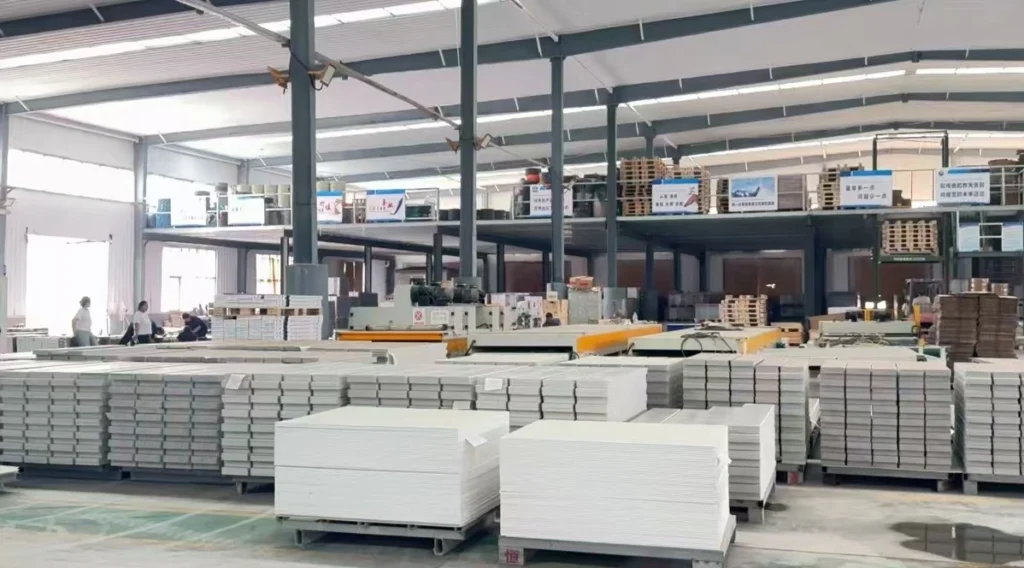
Logistics Optimization and Timelines
Incoterms choice shapes control level. FOB Qingdao or Shanghai assigns responsibility post-loading, permitting preferred forwarder and insurance arrangements. CIF delegates shipping management to the supplier but commonly embeds higher rates amid demand peaks.
Standard production timelines cover 4–6 weeks, plus 1–2 weeks for export clearance preparation. Sea freight durations average 25–35 days to West Coast, 40–50 days to East Coast or Europe. Utilize forwarder tracking to forecast weather or congestion-related interruptions.
Container loading safeguards contents. Install moisture barriers inside, fasten pallets securely, and fill voids to restrict shifting. Secure photographic records of the stuffing operation.
Calculate total landed cost during early planning: base price, tariff, ocean freight, insurance, customs entry, and inland haulage. Multi-container commitments typically obtain 5–15% price concessions and accelerated production slots.
Tariff Strategies and Cost-Benefit Analysis
Tariff burden aligns with HTS classification—most SPC lines encounter 25% under Section 301, with restricted exclusions continuing into late 2026. Partner with customs brokers for correct classification and assess drawback potential for goods processed further before re-export.
Compare China sourcing to competing locations. Vietnam supplies lower duties but higher base pricing from constrained scale. Factor lifecycle economics: well-constructed SPC rated for 20–30 years lowers replacement frequency compared with substandard grades.
Direct manufacturer connections eliminate distributor markups, decreasing per-square-meter costs on repeat business. Customized features (modified thickness, beveled edges, attached underlay) provide tangible performance gains at proportional added cost when volumes support initial tooling.
About Shandong Lanhe Import and Export Co., Ltd.
Shandong Lanhe Import and Export Co., Ltd. conducts operations from Jinan, dedicated to SPC flooring production and global export. Automated lines manage the full progression from limestone powder, PVC resins, and additives through extrusion, thermal pressing, UV coating, and precise grooving with licensed click profiles.
SPC ranges incorporate waterproof stone-plastic cores, durable wear layers, and formulations compliant with FloorScore and CE emission criteria. Testing protocols encompass VOC quantification, abrasion cycles, impact strength, and extended water resistance. The company accommodates OEM/ODM specifications, furnishing customized designs, thicknesses, and patterns for commercial requirements.
Exports span North America, Europe, Australia, Southeast Asia, and further markets, backed by factory-direct pricing, consistent lead times, and complete documentation including emission certificates and performance reports. Ongoing commitment to production uniformity and environmental standards establishes Lanhe as a stable supplier of resilient flooring.
Conclusion
Importing SPC flooring from China in 2026 requires vigilant handling of tariffs, quality variations, and freight uncertainties to preserve dependable supply and cost discipline. Thorough supplier screening, progressive quality assurance, precise specification enforcement, and proactive logistics planning convert inherent obstacles into manageable elements. These practices generate more consistent product outcomes, fewer operational setbacks, and superior supply chain performance for B2B endeavors.
FAQs
How do I avoid common defects when importing SPC flooring from China?
Apply third-party pre-shipment inspections featuring click-lock pull testing, multi-point thickness checks, and thorough surface inspection. Specify exact wear layer thickness and core formulation in the purchase order, then test samples for dimensional stability after thermal and humidity exposure to identify brittleness or expansion risks prior to shipment.
What are the current US tariffs on SPC flooring imported from China in 2026?
Section 301 duties generally stand at 25% for most SPC HTS classifications, with limited exclusions extended through late 2026. Verify the precise code with a customs broker and examine drawback eligibility for materials undergoing additional processing before re-export.
How long does it typically take to import SPC flooring from China to the US?
Production ordinarily occupies 4–6 weeks, ocean freight contributes 4–8 weeks depending on port, and customs clearance requires another 1–2 weeks. FOB terms paired with a dependable forwarder enhance tracking and minimize avoidable holdups.
What certifications should I require when sourcing SPC flooring from China?
Request FloorScore for broad VOC emission compliance, CE for European acceptance, and SGS reports documenting wear resistance, impact performance, and water endurance. These documents facilitate regulatory clearance and lower import rejection likelihood.
Is it better to use FOB or CIF terms when importing SPC flooring from China?
FOB grants greater influence over carrier selection and insurance, frequently yielding lower total freight costs for experienced importers. CIF reduces coordination effort but may include supplier premiums—compare forwarder quotations from several sources to select the most advantageous structure for shipment size and destination.
