

Commercial buildings in 2026 are being judged much more harshly on both how long the floors survive real daily punishment and how much environmental damage they cause during their entire life cycle. Facility managers, hotel operators, large-office fit-out teams and retail chain construction departments face the same reality: they need surfaces that can take extreme traffic while still helping the building achieve meaningful points toward LEED, WELL or similar green certifications.
The entire flooring industry keeps growing steadily — current serious projections place worldwide market size somewhere around 460–470 billion dollars in 2026 — with resilient flooring categories (especially the ones that can genuinely claim lower environmental footprint) clearly gaining the biggest share of new commercial square footage.
This movement is not marketing talk anymore. It comes from very concrete pressures: increasingly strict ESG reporting demands, real concern about indoor air quality for staff and guests, rapidly rising disposal costs, and very serious requirements from investment funds and insurance companies that want to see lower carbon exposure in the building materials portfolio.
Among all the options currently being seriously discussed and specified, recyclable SPC flooring keeps coming up as one of the most balanced real-world answers.
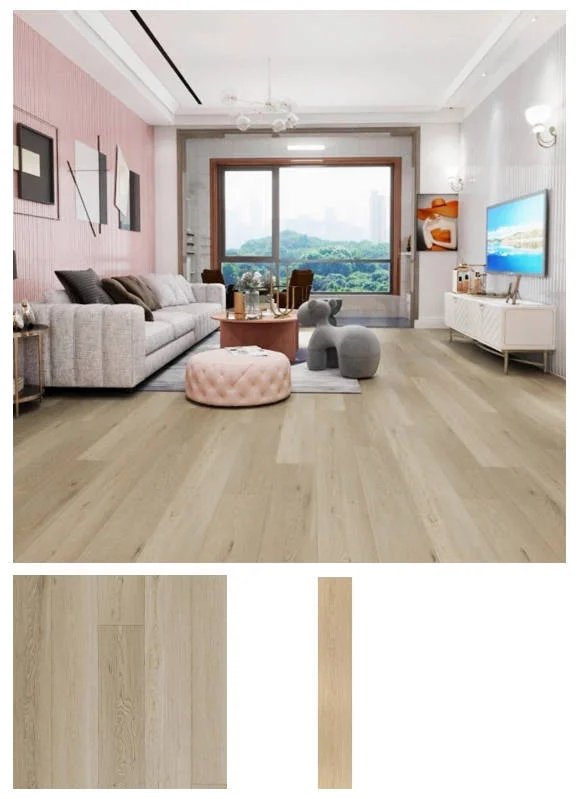
Why Sustainability Dominates 2026 Commercial Flooring Specifications
Sustainability stopped being a “nice to have” category about three years ago. Right now almost every serious commercial specification sheet lists low VOC / very low emission performance near the top — frequently even above initial price.
The reason is very straightforward: people spend 85–90% of their time indoors. Indoor air quality problems in offices, hotels, medical centers and schools create measurable productivity losses, higher sick leave rates and very expensive litigation when things go really wrong.
Because of that reality FloorScore certification (and similar very strict low-emission marks) moved from “preferred” to “mandatory” on a huge number of projects. Buyers also started reading the fine print much more carefully: how much post-consumer recycled content is actually in the product, where does the limestone come from, how transparent is the whole supply chain, what is the real embodied carbon number.
Market numbers show the direction very clearly: the share of genuinely resilient + recyclable / circular-economy-oriented commercial floors is growing significantly faster than the overall market.
When a material can be thermally reprocessed at the end of its very long commercial life with almost no quality drop, it suddenly becomes a lot easier to justify both the environmental story and the economic story in the same meeting.
Recyclable SPC Flooring — The Material That Keeps Winning Major Commercial Packages
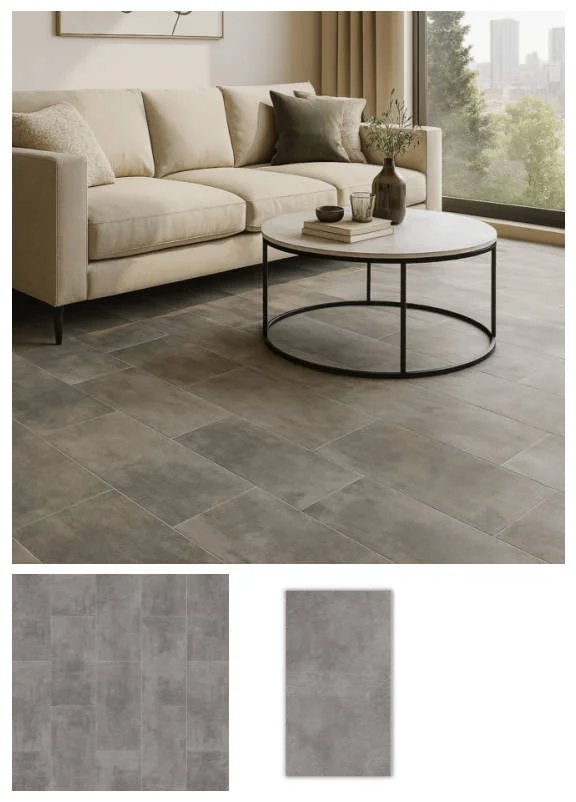
In real project rooms right now the discussion very frequently ends up focusing on one material type: rigid core SPC with serious recyclability credentials.
The main engineering advantages are actually very simple to explain: very high-density stone-plastic core → almost no dimensional movement with temperature and humidity changes very thick, high-quality wear layer → real resistance against aggressive rolling loads, furniture legs, high heels and constant cleaning machines completely waterproof composition → zero worries about leaks, spills, wet cleaning mistakes or even minor flooding events
Most commercial-grade SPC comes between 4.5–7.0 mm total thickness. The majority of serious projects choose products with 0.5–0.7 mm wear layer and integrated acoustic backing because those two specifications together solve about 85% of the most common complaints that used to come up after installation.
When experienced specifiers compare different SPC products they normally concentrate on five concrete points:
- actual core board density (higher = better long-term stability under heavy rolling loads)
- measured wear layer thickness in mils / mm
- click system geometry and locking strength (very important for future disassembly)
- which low-emission & fire-safety marks the product really carries
- whether the manufacturer can document consistent quality over long production runs
Shandong Lanhe Import and Export Co., Ltd. manufactures this type of commercial-grade recyclable SPC flooring using tightly controlled processes that focus on exactly those performance and consistency points.
Emerging Technologies That Are Already Changing Commercial Flooring Decisions
Digital tools stopped being “future stuff” — they are currently changing how fast and how accurately flooring decisions get made.
Modern digital printing + registered embossing lines can now create extremely realistic wood grains, concrete looks, stone patterns and even aged metal visuals. The visual realism is so good that many hospitality designers who used to insist on real materials are now comfortable specifying printed SPC for 90%+ of the public areas.
Very accurate 3D rendering + AR preview systems allow owners, operators and designers to walk through the exact proposed floor in the actual space lighting conditions before the first container is even ordered. Huge time and money savings — especially on renovation projects where the existing conditions are complicated.
Antimicrobial surface treatments that actually work long-term (not just the first few months) are becoming standard on healthcare and senior-living projects. When these treatments are applied on top of already very stable recyclable SPC cores, the maintenance people usually get one of the easiest-to-clean commercial floors they have ever dealt with.
Market Growth & Demand Drivers That Actually Matter in 2026
Hospitality came back very strong and keeps building new rooms. Retail keeps refreshing stores at a very high pace. Large flexible office concepts are still being tested and rolled out everywhere.
All three sectors have one thing in common: they want floors that can be installed extremely fast and still look good after five to seven years of really hard use.
The strongest growth drivers right now are:
- very fast renovation cycles in hotels and restaurants
- acoustic requirements becoming stricter in open offices
- strong investor pressure to reduce whole-life carbon numbers of buildings
- insurance companies quietly asking tougher questions about material fire performance and indoor environmental quality
Smart inventory planning right now means having good volume of the four to five most popular neutral colors + the most common plank widths already sitting in regional warehouses.
Real-World Case Studies — Hospitality Projects That Got It Right
One 180-room full-service hotel brand decided to replace all corridor and public-area carpet during a very tight 2025–2026 refresh window. They chose a 5 mm total thickness commercial SPC with 0.55 mm wear layer and attached acoustic pad.
Main results after 20 months:
- installation speed was 3–4× faster than glued-down products
- zero callbacks for buckling or peaking
- almost no visible wear in main traffic paths despite 24/7 use
- dramatic reduction in wet-area damage compared to the previous carpet
Another mid-luxury boutique chain that positions itself as “wellness oriented” installed low-emission FloorScore-certified SPC throughout lobbies, corridors and guest rooms. The indoor air quality improvement was measurable, the sound reduction was clearly noticed by guests, and the maintenance crew reported that keeping the floor clean took roughly half the labor time compared with the previous material.
Both projects followed essentially the same decision sequence:
- realistic evaluation of actual traffic + spill exposure
- strict focus on verified low-emission marks
- phased installation planning so revenue loss stays minimal
How Experienced Teams Are Choosing & Sourcing 2026 Commercial Flooring Right Now
The selection process normally starts with very detailed site audit: peak hourly traffic count, type of traffic (heels / carts / wheeled furniture), maximum expected moisture exposure, acoustic targets.
After that comes the technical datasheet deep-dive: abrasion class, impact sound reduction value, slip-resistance in wet and dry condition, certified emission numbers, fire classification.
Very few serious buyers still purchase large quantities without first doing serious sample testing in the real space under real usage conditions.
Total cost of ownership calculation is becoming standard practice — especially when comparing glued systems versus floating high-performance click systems.
Shandong Lanhe Import and Export Co., Ltd. — Manufacturing Background
Shandong Lanhe Import and Export Co., Ltd. is based in Jinan, Shandong Province, China. The company operates modern, highly automated flooring production lines with complete vertical integration from raw material preparation to final packing.
Main commercial products include rigid core SPC flooring and laminate flooring — both developed and tested specifically for demanding export markets. FloorScore, CE and multiple abrasion resistance certifications document consistent quality level. Export destinations cover North America, most of Europe, Australia, Southeast Asia and several other regions.
Conclusion
In 2026 the commercial flooring conversation is no longer about picking the cheapest or the prettiest surface. The winning combination is very clear: strong enough to survive brutal daily use + clean enough to help the building achieve real green certification points + smart enough to be installed fast and recycled later with minimum problems.
Projects that lock in high-quality, genuinely recyclable SPC flooring together with modern digital visualization tools are getting measurable advantages in speed, cost control, guest/employee satisfaction and ESG reporting.
The sooner teams start working with certified, performance-proven recyclable SPC options that already meet 2026 expectations, the smoother the transition will be.
FAQs
What makes recyclable SPC flooring a top choice for commercial projects in 2026?
The combination of extremely stable stone-plastic core, outstanding water resistance, thick commercial wear layers and realistic recyclability makes it one of the strongest overall packages when you have to specify flooring that will face very heavy traffic for many years.
Is SPC flooring suitable for high-traffic hospitality spaces in 2026?
Yes — especially the commercial grades with 0.5 mm+ wear layer and strong click system. These floors handle luggage carts, constant foot traffic, frequent wet cleaning and still look acceptable after five to seven years of real hotel use.
How does recyclable SPC compare to traditional laminate for commercial use in 2026?
In almost every commercial environment that sees any meaningful moisture exposure, recyclable SPC outperforms traditional laminate because of much better dimensional stability and total water resistance. When the project also cares about recyclability credentials, the gap becomes even larger.
What certifications should buyers look for in sustainable commercial flooring for 2026 projects?
Most experienced buyers put FloorScore (very low emissions), CE marking, documented abrasion class (AC4–AC5 commercial) and clear fire-resistance classification at the top of the list. These marks together give reasonable confidence that the product will perform under real commercial conditions.
Why is sustainability becoming essential in 2026 commercial flooring decisions?
Because owners, operators, investors and insurance companies are all applying increasing pressure to reduce whole-life carbon exposure, improve indoor air quality numbers and prove that the building materials can actually enter some kind of circular loop instead of going straight to landfill.
