

For many overseas importers, SPC flooring looks straightforward: PVC, stone powder, a click system, and a UV coating. But anyone familiar with factory sourcing knows that two SPC planks that appear identical in a catalog can behave very differently after installation. The real distinction starts inside the factory—how materials are mixed, how the extrusion line is calibrated, how the calender controls stress, and how the UV line treats the final surface.
This article walks you through the full SPC flooring manufacturing process, from raw materials to finished product, highlighting the technical checkpoints global buyers should understand before choosing a long-term supplier.
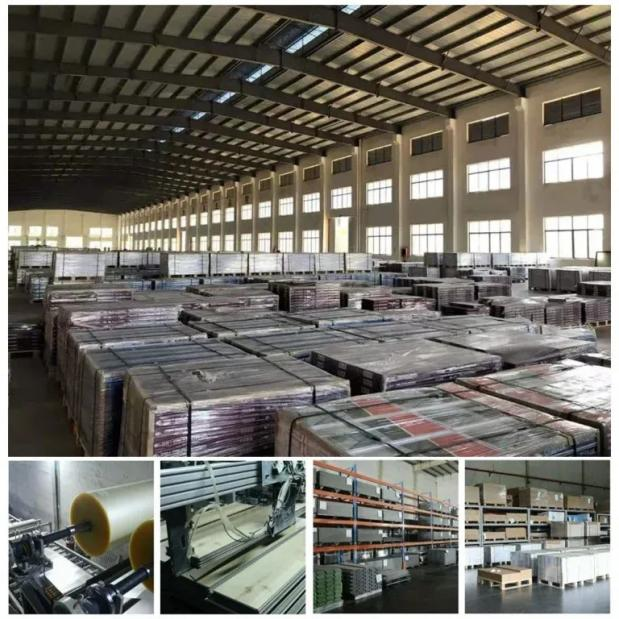
Img.The Complete SPC Flooring Manufacturing Process From Virgin PVC to Finished Planks.png
Raw Materials: Why Formula Ratios Matter More Than You Think
The core SPC formula
SPC flooring is built on a rigid core made from:
- Virgin PVC resin
- Calcium carbonate (CaCO₃)
- Stabilizers and processing aids
A common industry ratio is roughly 65–75% CaCO₃ + 25–35% PVC, but high-quality manufacturers control this ratio tightly based on product thickness and density requirements. Too much CaCO₃ makes planks brittle. Too little raises costs and creates dimensional instability.
Why buyers should ask about formula consistency
Raw material fluctuations directly affect:
- plank density
- locking strength
- shrinkage rate
- product weight
- stability during temperature changes
Buyers evaluating factories should ask how raw batches are recorded and whether digital traceability exists for each production lot. Factories using closed, automated feeding systems typically achieve more consistent density and lower defect rates.
High-Speed Mixing: Building the Foundation for Stability
Temperature-controlled mixing
Before extrusion, raw materials enter a hot-cold mixer where they are heated to disperse stabilizers and then cooled to protect PVC from premature fusion. Good factories maintain a narrow temperature window so the material enters the extruder in optimal condition.
What buyers should confirm
- Is the mixer automated?
- Are batch weights measured by sensors, not by hand?
- Does the factory record batch numbers for later quality audits?
These small details determine whether the floor will show color drift or density variation between containers.
Extrusion: Where SPC Flooring Takes Shape
Twin-screw extruders and their role
A professional SPC factory uses twin-screw extruders, which blend the PVC-CaCO₃ mixture uniformly and push it through a die to form a continuous sheet. Buyers should pay attention to:
- screw diameter
- heating zone arrangement
- die temperature uniformity
- line speed monitoring
These factors affect how stable the sheet is when it enters the calendering unit.
Visible problems caused by poor extrusion
If extrusion parameters fluctuate, the sheet may show:
- internal voids
- stress waves
- thickness inconsistencies
- poor click-lock strength later on
High-end factories maintain close-loop temperature controls and continuous digital logging.
Calendering: The Most Critical Step in SPC Manufacturing
Why calendering determines plank performance
During calendering, the hot sheet passes through 3–4 rollers that determine:
- thickness accuracy
- density uniformity
- embossed texture clarity
- internal stress distribution
If roller pressure or temperature is unstable, the finished plank may curl, warp, or lose click strength.
What buyers should look for inside the calendering room
A reliable SPC factory will have:
- large-diameter rollers for stable pressure
- servo-controlled thickness adjustment
- multiple texture rollers
- separate temperature zones
- enclosed calendering environments to prevent dust
Noise levels are usually low, and operators continuously observe thickness data on screens.
Cooling, Stress Relief & Cutting
As the sheet exits the calender, it enters a cooling conveyor. This stage determines long-term dimensional stability.
A proper cooling section provides:
- slow, uniform cooling
- tension control
- controlled shrinkage
- stable flatness before milling
Factories that rush this step often face customer complaints months later—typically curling or gaps after installation.
CNC Milling: Crafting Strong and Smooth Click-Lock Systems
Why the click system matters
Even a perfect SPC core becomes unusable if the locking edges chip, crack, or fail to hold during installation. CNC milling machines shape the click profile with diamond-coated blades.
What buyers should check
- CNC brand and milling speed
- blade type and sharpening schedule
- edge carbide testing
- tolerance consistency
Factories with precise milling setups produce planks that install smoothly and resist breakage even under forceful tapping.
UV Coating: Protecting the Surface for Real-World Use
Multi-layer coating structure
A quality SPC plank typically includes:
- base coating
- wear-layer reinforcement
- top UV coating
Each layer plays a role in scratch resistance, stain protection, and gloss uniformity.
What a reliable UV line looks like
- dust-free room
- multiple UV lamps
- gloss measurement sensors
- separate coating tanks for consistency
Signs of poor coating include streaks, pinholes, and uneven texture.
Automated Inspection & Packing
Advanced factories integrate:
- automatic defect scanners
- inline thickness gauges
- color-deviation monitors
- batch labeling systems
This is also where MES systems track each pallet back to its production date and formulas—an essential feature for buyers who value repeat-order consistency.
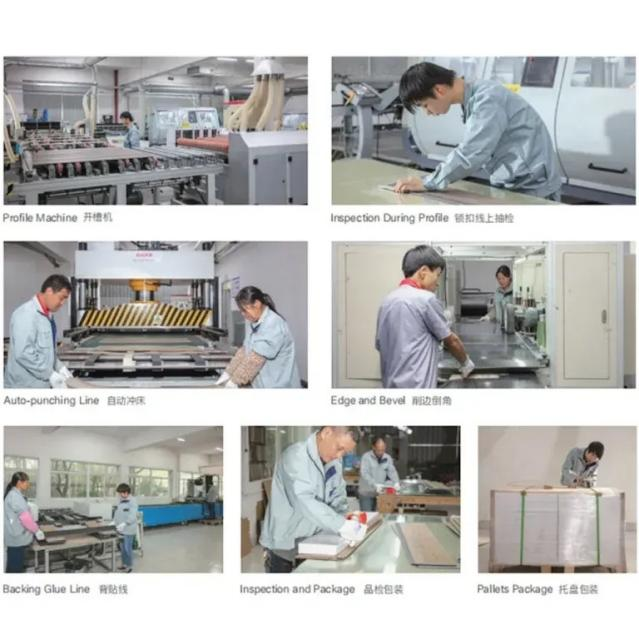
Img.SPC Flooring Manufacturing Process.png
Shandong Lanhe Import and Export Co., Ltd.: A Supplier Focused on Stable SPC Manufacturing
According to its company profile, Shandong Lanhe Import and Export Co., Ltd. works closely with streamlined SPC production facilities equipped with extrusion, calendering, UV, and CNC systems. The company emphasizes raw-material control, stable production scheduling, and technical support for overseas orders. Its product line covers SPC flooring categories with different thicknesses, wear layers, sizes, and locking structures—providing importers with consistent specifications and repeatable quality across shipments.
Lanhe’s experience in export documentation, logistics coordination, and quality inspection allows global buyers to manage procurement more easily, especially when handling multiple container orders or long-term flooring programs.
Conclusion
Understanding the SPC flooring manufacturing process is not just helpful—it’s essential for importers, distributors, and flooring brands. Every stage, from raw-material batching to CNC milling, influences how the product performs after installation. Factories that invest in automation, stable calendering, dust-controlled UV lines, and precise click milling deliver planks that resist curling, install easily, and hold up under long-term use.
For buyers seeking stable supply and technical reliability, working with experienced partners such as Shandong Lanhe Import and Export Co., Ltd. provides confidence throughout the sourcing process.
FAQs About SPC Flooring Manufacturing
What affects the density and stability of SPC flooring during manufacturing?
The raw-material formula, especially the CaCO₃:PVC ratio, directly affects density, brittleness, and temperature resistance. Controlled batching and uniform mixing produce more stable flooring.
Why is the calendering unit considered the most important part of SPC production?
Calendering defines thickness, density, stress distribution, and embossed texture. Poor roller control often leads to warping and inconsistent surface quality.
How does UV coating affect SPC flooring performance?
UV layers determine scratch resistance, stain behavior, and gloss consistency. A clean coating line and proper curing schedule are essential for long-term durability.
Why do click-lock failures happen in SPC flooring?
Failures usually come from inaccurate CNC milling, dull blades, or improper cooling before milling. Precise cutting equipment improves locking strength.
What makes a factory capable of handling large, repeated orders?
Stable extrusion lines, continuous calendering capacity, MES tracking, and strong supply-chain planning help maintain consistent color, density, and delivery times across multiple orders.
