

If you buy SPC the way many teams still do—by copying a competitor’s SKU list or asking for “a standard 6mm”—you’ll usually pay for it later. Claims show up as loose joints in a corridor, squeaks in a rental unit, or a floor that looks tired before the project’s first anniversary. The fix is not a “better” floor in the abstract; it’s choosing the right spc flooring specifications as a package: spc thickness, spc wear layer, spc click system, and spc underlayment working together for the job site you actually have.
This guide is written for B2B buyers—importers, distributors, project contractors, and private-label teams—who need a spec that holds up from quotation to installation to after-sales. You’ll see how to translate common spec language into real-world outcomes, how to avoid the typical failure points, and how to write an RFQ that gets comparable quotes instead of marketing blur.
What Specs Control in the Field (and Why Buyers Argue About Them)
Most disputes around rigid core aren’t about whether SPC is “good.” They’re about mismatched expectations. A purchasing team reads “waterproof” and assumes the floor will tolerate a wet mop schedule in a restaurant. An installer reads “easy click” and assumes the subfloor can be a little rough. A property manager reads “commercial wear layer” and expects rolling loads, grit at entries, and daily cleaning to be non-issues. When something goes wrong, everyone points at the spec sheet—and usually the sheet was vague.
A cleaner way to buy is to treat specs like a stack. Think of it as a simple engineering rule: the spc click system can only perform as well as the flatness and support it receives; the spc underlayment can improve comfort and acoustics but can also amplify problems if it’s mismatched; the spc wear layer protects the surface from abrasion but can’t save a joint that’s failing; and spc thickness affects stiffness and feel, but it’s not a magic number.
Lanhe’s own technical data table reflects how buyers typically specify SPC in practice—thickness options spanning 3.5–8mm, wear layer thickness choices from 0.2–0.5mm, back foam options such as IXPE or EVA, and multiple click system options depending on project needs.
SPC Thickness: Don’t Confuse “Total Thickness” With Performance
When someone asks for “thicker SPC,” they might mean three different things. They might want a stiffer plank that bridges minor subfloor imperfections better. They might want more underfoot comfort. Or they might simply be using thickness as a shortcut for quality. In procurement, shortcuts are expensive.
Total thickness vs core behavior
Total thickness is what gets printed on a carton, but performance lives in the core and in how the profile resists bending at the joint. Two floors can both be “6mm” and behave differently if one uses a denser core or a different geometry at the locking edges. That’s why a practical RFQ doesn’t just say “SPC thickness 6mm.” It asks for the total thickness range the supplier can offer, the intended traffic level, and the installation conditions.
Lanhe lists multiple thickness options—3.5/4/4.5/5/5.5/6/6.5/7/8mm—and notes that customized thickness is available. That range is useful because it lets you match the product to the job rather than forcing every project into a single SKU.
How to choose spc thickness by use case
For typical residential replacement and light rental turnover, buyers usually want a floor that installs quickly, hides minor substrate imperfections, and looks consistent under mixed lighting. In those jobs, you’re balancing stiffness against cost and logistics. Move into light commercial—small offices, boutique retail, clinics—and the conversation changes: chairs roll more, grit enters more often, and cleaning is more frequent. The floor’s “feel” matters less than joint integrity and surface durability over time.
In heavy traffic corridors, hotel back-of-house routes, and mixed-use spaces, thickness is often chosen because it supports the locking system under repeated point loads. But the best purchasing move is to treat thickness as a supporting actor. You’ll get a more reliable outcome by specifying thickness together with the click profile requirements and underlayment approach, rather than chasing millimeters.
A field check buyers should care about
Here’s a real pattern integrators see: a project uses a softer pad because the bid needed a better acoustic story, but the subfloor has small waves. The floor feels great on day one, then a month later you see tiny gaps at end joints in the high-traffic path. The spec wasn’t “wrong,” but it wasn’t complete. When you specify spc thickness, add two sentences about substrate conditions (new concrete vs renovation, and expected flatness tolerance) and you’ll reduce surprises.
SPC Wear Layer: Translate Thickness Into Service Expectations
A spec sheet that lists only “commercial grade” isn’t actionable. Buyers need to know what the spc wear layer is expected to survive: entry grit, chair wheels, routine cleaning, or rolling carts.
Lanhe lists wear layer options of 0.2/0.3/0.4/0.5mm (or as required). Those numbers matter, but only when paired with the reality of the space.
What a spc wear layer does—and what it doesn’t
The wear layer protects the printed decor and contributes to scratch and stain resistance, especially in areas where abrasion is the real enemy: sand at an entry, small debris under shoes, and frequent dry sweeping that drags grit. It does not prevent every dent from a narrow furniture leg, and it does not fix an installation issue at the joint. If your main risk is joint failure due to an uneven substrate, you can overbuy the wear layer and still end up with claims.
Choosing wear layer thickness by maintenance reality
In a rental property with frequent tenant turnover, the floor often faces inconsistent cleaning and occasional drag marks from furniture. A moderate wear layer is typically chosen because the floor needs to look good quickly and stay acceptable with basic maintenance, not because it must withstand constant commercial abuse.
In retail and public-facing commercial space, the wear layer becomes a more direct business decision. If the store runs daily cleaning and has high foot traffic, the cost of early surface wear is not just cosmetic; it affects brand presentation and refit timing. In those cases, buyers often move up in wear layer thickness and also specify the surface finish to control gloss changes and visible scuffing.
The “entry zone” rule of thumb
If you only upgrade one thing for a commercial space, upgrade the entry strategy first. It’s boring, but it works. Better walk-off mats and basic housekeeping often protect the spc wear layer more effectively than paying for a spec you don’t need elsewhere. A good blog post should say this out loud because it’s how real budgets get protected.
SPC Click System: Fast Installation Is Easy; Durable Joints Are Not
A lot of spc click system content online focuses on installation speed. Speed matters, but B2B buyers should be more interested in what causes joint failures: repeated point loads, rocking planks over subfloor high spots, and installers forcing a lock where tolerances are off.
Lanhe’s technical data table indicates that multiple click system options can be supplied depending on requirements. The important move for buyers is to describe the job conditions that stress the joints, then ask the supplier to match the click geometry and plank format accordingly.
How buyers should specify a click system without naming brands
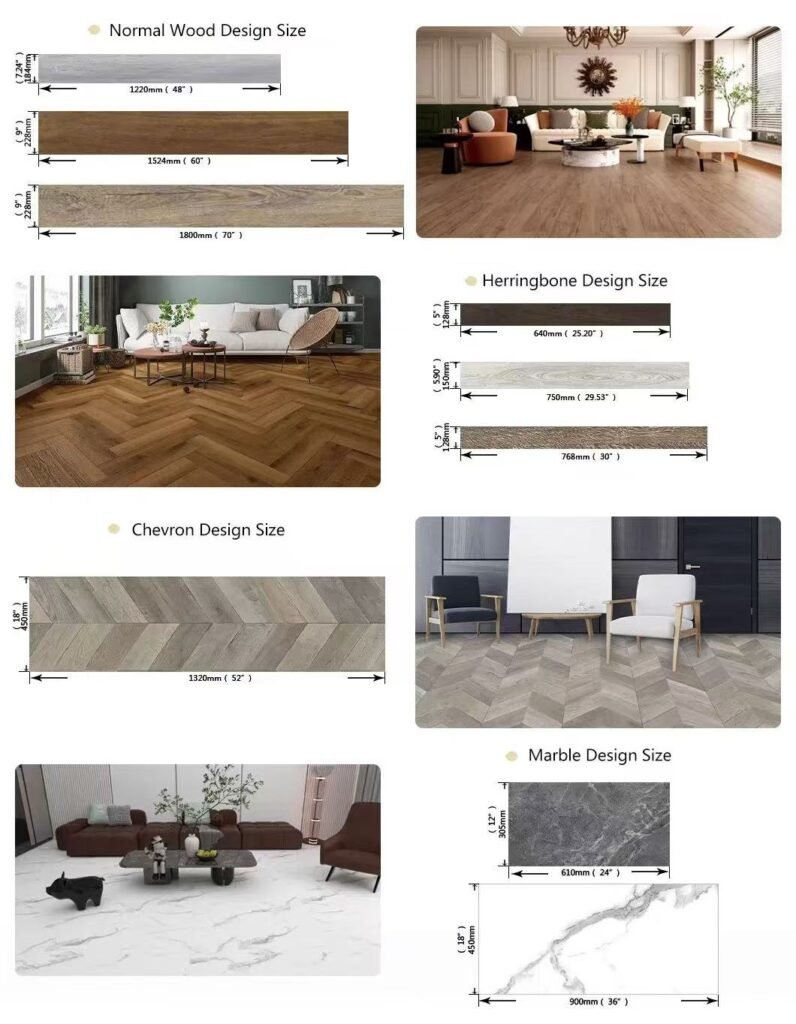
You do not need brand names to specify correctly. What you need is behavior. In your RFQ, describe whether the job is a fast floating installation on new concrete, a renovation over existing tile, or a space with frequent rolling loads. Add plank size, edge style (micro-chamfered vs square), and whether installers will be working in tight rooms with frequent cuts. Lanhe lists micro-chamfered or non-chamfered edges as options, which is exactly the kind of detail that affects installation and visual outcomes.
A practical failure point to prevent
One common claim is “end joints separating” in a high-traffic path. Often the root cause isn’t the click system alone; it’s a combination of subfloor flatness and underlayment compression. If you want fewer disputes, define a basic acceptance method: a small mock-up area installed on site, walked for a few days under normal traffic, then inspected for joint stability. That’s not theoretical. It’s the fastest way to catch mismatches before a full rollout.
SPC Underlayment: Comfort, Acoustics, and the Hidden Tradeoffs
Most buyers add spc underlayment for two reasons: noise and feel. Both matter, especially in multi-family housing and hospitality. But underlayment also changes how loads transfer into the click joints.
Lanhe specifies back foam options such as IXPE or EVA. That’s useful, because it allows you to choose based on project goals instead of treating the pad as a fixed accessory.
When underlayment helps the most
If the site has a hard substrate, occupants often complain about “hollow” sound and impact noise. A pad can reduce that perception and make a rigid floor feel less harsh. In practical terms, the buyer is purchasing fewer complaints and less churn. In a hotel corridor, it can also reduce the sharp sound of rolling luggage, which is a common pain point.
The double-padding trap
A quiet floor can still become a claims headache if someone installs an additional soft underlayment under a product that already has an attached pad. Excess compression can create a springy base that stresses joints under repeated walking and rolling loads. If your purchasing team sells into multiple installer networks, add a clear sentence in your spec: whether additional underlayment is permitted and, if so, what type and thickness. That single sentence prevents a lot of “we didn’t know” conversations later.
Building a “Spec Stack”: Three Configurations Buyers Can Copy
This is where spc flooring specifications become a business tool. You’re not just picking parts; you’re managing risk.
Rental turnover and residential replacement
In fast-turn residential, the priority is smooth installation, stable joints, and a surface that stays presentable with basic care. Buyers typically choose a practical spc thickness, a wear layer that matches light-to-moderate use, a click profile suited to installers working quickly, and an spc underlayment choice that supports comfort without turning the floor into a trampoline. The key is to specify what “success” looks like: no visible joint gaps in common walking paths, acceptable sound levels for the building type, and a cleaning routine that doesn’t require specialty products.
Light commercial: offices, studios, clinics
In light commercial, chair wheels and more frequent cleaning change the wear story. Buyers should treat spc wear layer as a service-life decision and treat the spc click system as a warranty-risk decision. If the space includes rolling chairs and frequent movement of small equipment, joint integrity becomes as important as the surface. This is also where a micro-chamfer can help visually in long runs, while a square edge can look cleaner in tighter rooms—both options are commonly requested in commercial projects.
Hospitality and high-traffic corridors
High-traffic doesn’t just mean “more people.” It means repeated impact, faster grit accumulation, and higher expectations for consistent appearance. Buyers should spec the wear layer and surface treatment with that in mind, and they should avoid underlayment choices that feel great in a sample board but compress too much in service. If you can, require an on-site mock-up and treat it as part of acceptance. It’s a small cost compared to rework.
RFQ and Acceptance: Make Quotes Comparable and Claims Avoidable
A good RFQ doesn’t ask suppliers to guess. It tells them how the floor will be used, then requests the matching spc flooring specifications in a format you can compare.
Start with the basics you already know you need to specify: spc thickness, spc wear layer, spc click system, and spc underlayment. Then add context: the project type, the subfloor condition (new, renovated, over tile), the expected traffic pattern, and whether the job will have rolling loads. This extra context forces suppliers to quote the right configuration, not the cheapest interpretation of your sentence.
Lanhe’s published technical data section includes standard procurement details such as MOQ (800 square meters) and delivery time (15–21 days), which are the practical constraints B2B buyers need in order to plan sampling and shipment windows. If your team is quoting multiple sites or building a private-label line, linking your readers to the product hub can shorten the back-and-forth: SPC flooring product and technical data hub.
About Shandong lanhe import and Export Co. , Ltd.
Shandong lanhe import and Export Co. , Ltd. positions itself as an integrated production-and-export enterprise with a complete quality management system and professional, automated manufacturing capacity that covers raw material procurement through production, inspection, and delivery.
The company describes exports to multiple overseas markets, including North America, Europe, Australia, and Southeast Asia, and notes that its products are recognized by customers in those regions.
From a buyer’s perspective, what matters is operational reliability: consistent specifications across batches, stable supply, and a team that can translate a project spec into production and packaging that arrives as expected. Lanhe’s corporate profile highlights experience, completed projects, and a track record of international deliveries, which is the sort of baseline evidence many importers want before moving to sampling and RFQ.
If you need the company overview for internal vendor onboarding, you can reference Shandong lanhe import and Export Co. , Ltd. company profile.
Conclusion
The best SPC procurement outcomes come from treating specifications as a system, not a single number. When spc thickness, spc wear layer, spc click system, and spc underlayment are chosen as a “spec stack,” you reduce installation friction, keep joints stable under real traffic, and avoid the small mistakes that turn into large claims. If you’re building a catalog for distribution or quoting a project with tight deadlines, write your RFQ in operational language, require a simple mock-up for high-risk installs, and use published technical ranges to keep supplier quotes comparable. Done right, the spec sheet becomes a tool for speed and consistency—not a document you argue about after shipment.
FAQs
What does “spc flooring specifications” mean for a B2B buyer?
For a buyer, spc flooring specifications are the set of measurable choices that control performance and risk: spc thickness, spc wear layer, spc click system, and spc underlayment, plus the plank format and edge style that affect installation and appearance. The goal is to define what the floor must do in the field, not just how it should look in a sample.
Is higher spc thickness always better?
Not always. Higher spc thickness can improve stiffness and feel, but it won’t solve a poor substrate or an underlayment mismatch. The right spc thickness depends on traffic, subfloor condition, and how the click system will be stressed over time.
How should I choose spc wear layer thickness for commercial projects?
Choose spc wear layer thickness based on abrasion reality—entry grit, cleaning frequency, and visible scuff risk. In many commercial spaces, wear layer selection should be paired with an entry protection plan, because that often extends service life more than upgrading a spec in isolation.
What should an RFQ include for an spc click system?
A useful RFQ for an spc click system includes the installation context (new build vs renovation), subfloor condition, plank size, edge style, and whether the space sees rolling loads. That information helps suppliers propose a click profile that reduces joint issues, rather than quoting a generic lock.
Do I need spc underlayment if the product already has an attached pad?
Sometimes yes, often no. If the SPC already includes a pad, adding extra spc underlayment can create excessive compression and increase joint stress, especially under rolling loads. If you allow additional underlayment, specify the type and thickness so installers don’t guess.
