

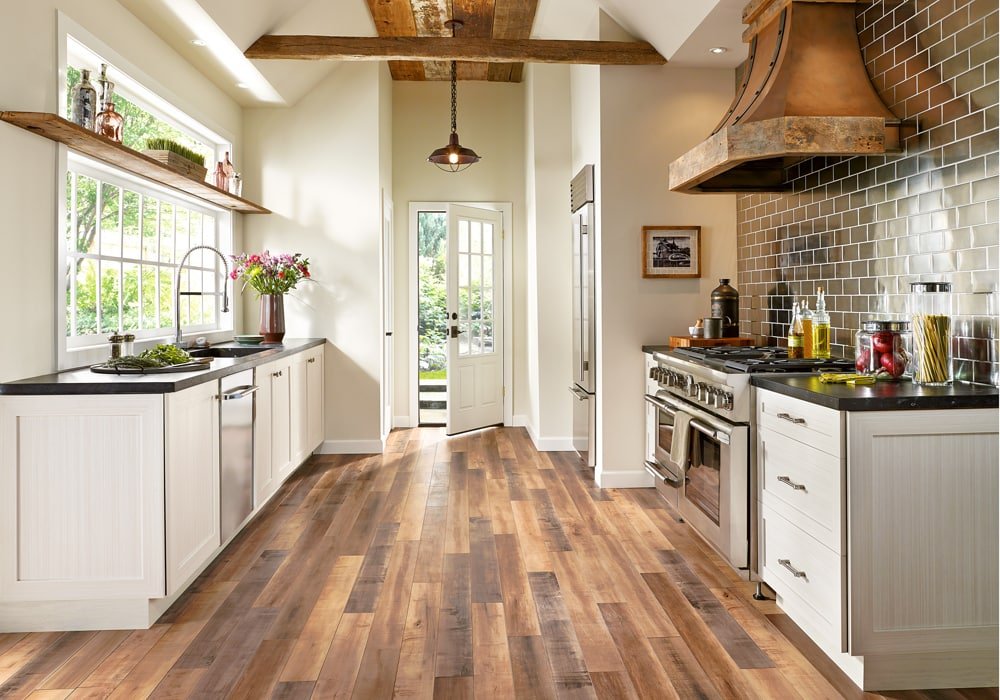
If you’re hunting for flooring for a busy office, a retail store, or a lively hotel lobby, you’ve probably caught wind of the chatter. Laminate flooring? Just for homes, too weak for the rough-and-tumble of commercial life. I’ve been in this game long enough to know that’s nonsense. Let’s dig in and crush that durability myth with some real-world insight. We’re talking straight-up facts here, not just shiny sales pitches.
What Makes Laminate Flooring Tick?
Laminate flooring isn’t some flimsy knockoff. It’s built sturdy, layer by layer. The core is high-density fiberboard, packing a punch at 720 to 1000 kg per cubic meter. A tough wear layer sits on top, coated with stuff like aluminum oxide. That’s the shield against scratches and scuffs. And the designs? They nail the look of wood, stone, or even herringbone so well you’d bet it’s the real thing.
Busting the "It’s Not Tough Enough" Myth
Folks love to dunk on laminate, calling it cheap and flimsy. That’s way off base. Sure, older versions from way back might’ve buckled under heavy foot traffic. But today’s laminate has stepped up big time. AC ratings tell the story—they’re like a toughness scorecard. AC1 works fine for a quiet bedroom. But AC4 or AC5? Those are built for commercial spaces, handling daily chaos like shoes, carts, and spills without blinking.
I was chatting with a pal who runs a coffee shop chain. He ditched carpet for AC5 laminate five years ago. Spilled coffee? No sweat—it’s waterproof, thanks to wax-sealed edges. Thousands of customers tromp through weekly, and it still looks sharp. No warping, no fading. That’s not just talk; that’s what’s happening out there.
Why Laminate Shines in High-Traffic Zones
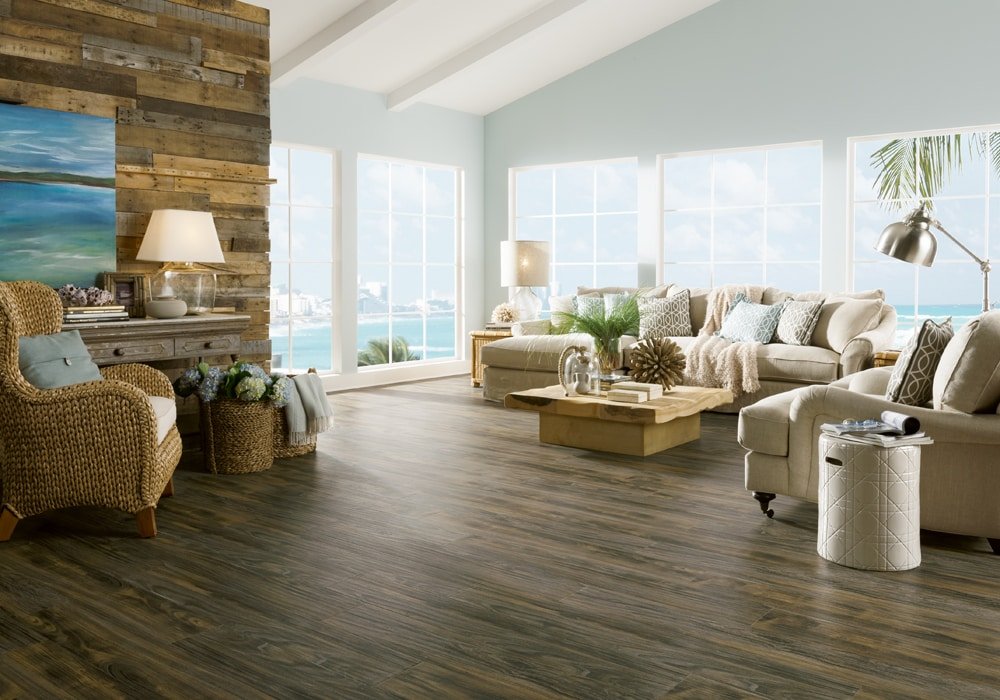
Durability isn’t just about surviving. It’s about standing strong. In commercial spaces, floors face a gauntlet—office chairs rolling, high heels clicking, shopping carts rumbling. The myth says laminate can’t keep up, but let’s get real.
The wear layer on good laminate can be 0.5mm thick or more. It laughs off scratches that’d ruin weaker materials. The core, made of high-density fiberboard, stays stable and fights off moisture better than solid wood, which can swell or crack in damp spots like doorways. Here’s how laminate stacks up against other options for commercial spaces. It holds its own against carpet, which wears out fast and traps spills, leading to mold. Tile’s tough but cracks, and grout stains are a pain. Laminate’s click-lock systems make installation a snap, often done in a day, unlike carpet’s glue mess or tile’s long drying time. Cost-wise, laminate runs $2.5-$5.6 per square foot, beating tile’s $5-$10 and often undercutting carpet’s $3-$7. Maintenance is a breeze—just wipe it down, no polishing needed, unlike carpet’s daily vacuuming or tile’s grout scrubbing.
Laminate also brings anti-slip surfaces, like embossed textures that grip without feeling rough. In a store, where a slip could mean a lawsuit, that’s a big win. But nothing’s foolproof. I saw a bad laminate job once in a gym lobby—edges weren’t sealed right, and moisture from sweaty shoes sneaked in. The takeaway? Hire pros who know their stuff, from V-grooves to U-grooves.
Real-Life Wins: Laminate in Action
Imagine an office in Jinan, Shandong, dealing with rainy seasons and heavy client traffic. They laid down 12mm laminate with a wood grain finish. Two years later, it’s still pristine, even with conference rooms full of rolling chairs. The herringbone pattern gives a classy vibe without the crazy cost or upkeep of real parquet. Hotels are another win. Lobbies see it all—luggage wheels, kids darting around, bar spills. Waterproof laminate with AC4 ratings handles it like a champ. Industry reports I’ve dug into show laminate lasting 15-25 years in commercial spots with proper care. That’s not just talk; that’s proof.
Retail’s another story. A boutique owner I know went with stone-grain laminate. The matte finish hides dirt, and the embossed texture feels real. Her sales floor sees heavy traffic, but there’s no dents or fading. Plus, cleaning’s a snap—just a quick mop, and she’s done. It cut her maintenance time in half, letting her focus on running her shop.
Picking the Right Laminate for Your Space
Not all laminate is the same, so you’ve gotta be choosy. Thickness matters—7mm for quieter areas, but go 12mm for busy spots like hallways. Click systems like Unilin or Valinge make installation quick, no glue needed. Colors and grains give you options. Oak brings warmth to an office, while gray stone screams modern. Check the core, too—E0 or E1 levels keep emissions low, which matters for commercial spaces with strict air quality rules.
Here’s a tip: order samples. Lay them out, let people walk on them, and see how they hold up. It’s better than guessing and regretting later.
Keeping It Fresh: Maintenance Tips
Durability pops when you treat laminate right. Sweep daily to clear out grit—it’s the silent killer. Spills? Blot them fast; don’t let them sit. Felt pads under furniture legs are a small move that pays off big. In commercial spaces, plan a deep clean every few months. Skip harsh chemicals; mild soap works fine. I’ve seen laminate floors from the early 2000s still holding strong with this kind of care. It’s not rocket science—just consistent effort.
Meet Lanhe: Your Go-To Laminate Flooring Supplier
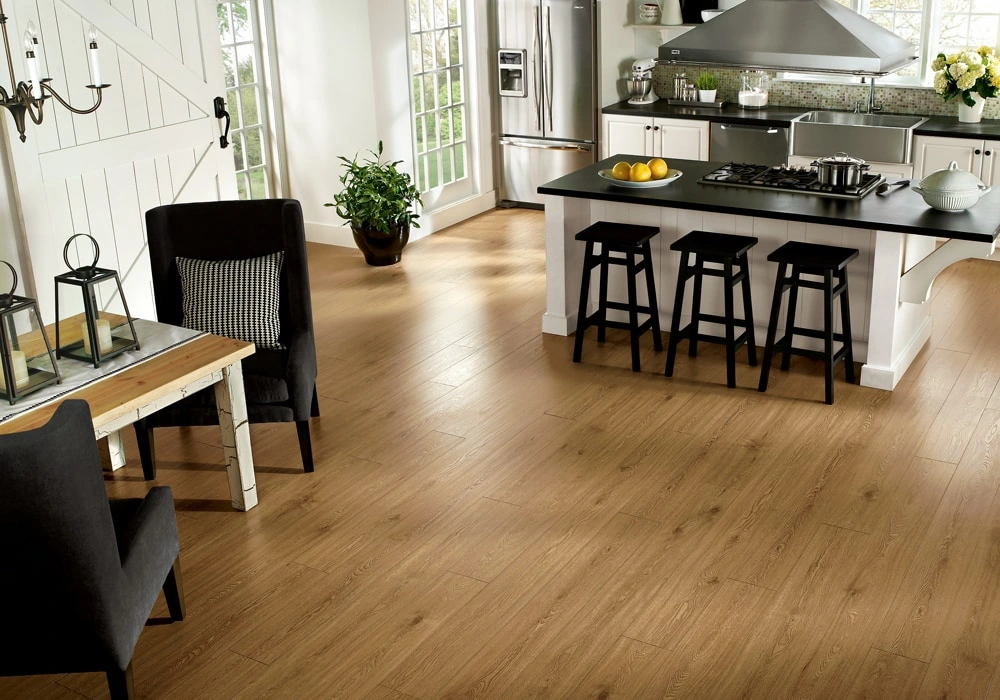
Before we wrap up, let’s talk about Lanhe, a solid player in the laminate game. Based in Jinan, Shandong, China, they’re all about quality from start to finish. They handle everything—raw materials, production, quality checks, and shipping to places like North America, Europe, and Australia. Their laminate lineup includes waterproof, wear-resistant options in 7mm to 12mm thicknesses, with AC ratings up to AC6. They offer eco-friendly cores and custom looks, from wood grains to stone effects. If you’re sourcing for a commercial project, their site’s worth checking out.
Conclusion
So, there you go—laminate flooring in commercial spaces isn’t the delicate option some folks claim. It’s tough, versatile, and budget-friendly, smashing the durability myth to bits. Pick the right type, take care of it, and it’ll transform your space without the hassle. Ready to rethink your next flooring project?
FAQs
Is laminate flooring tough enough for busy commercial spaces?
You bet. Modern laminate flooring in commercial spaces crushes the durability myth. AC4 to AC6 ratings handle heavy foot traffic, spills, and daily wear like a pro. Think offices or retail—it can last 15-25 years with little effort.
Why pick laminate flooring over other options for commercial settings?
It’s about getting the most bang for your buck. Laminate’s waterproof, easy to install, and a cinch to maintain, often at half the cost of tile. It looks like wood or stone without the upkeep, proving the durability myth is just old news.
How do I keep laminate flooring in a commercial space looking good for years?
Keep it simple. Sweep regularly, mop with mild cleaners, and don’t let water pool. In commercial spaces, a deep clean every few months does the trick. This keeps laminate flooring in commercial spaces looking sharp and shuts down that durability myth.
Can laminate flooring handle moisture in places like lobbies?
Yep, especially waterproof types with sealed edges. They’re ready for spills or damp entryways, showing that the durability myth about laminate in commercial spaces doesn’t hold water—pun intended.
What’s the best thickness for laminate flooring in commercial spaces?
Aim for 10-12mm for heavy traffic—it’s rock-solid. For quieter spots, 7-8mm does fine. Either way, laminate flooring in commercial spaces stands up to the grind, kicking that durability myth to the curb.
